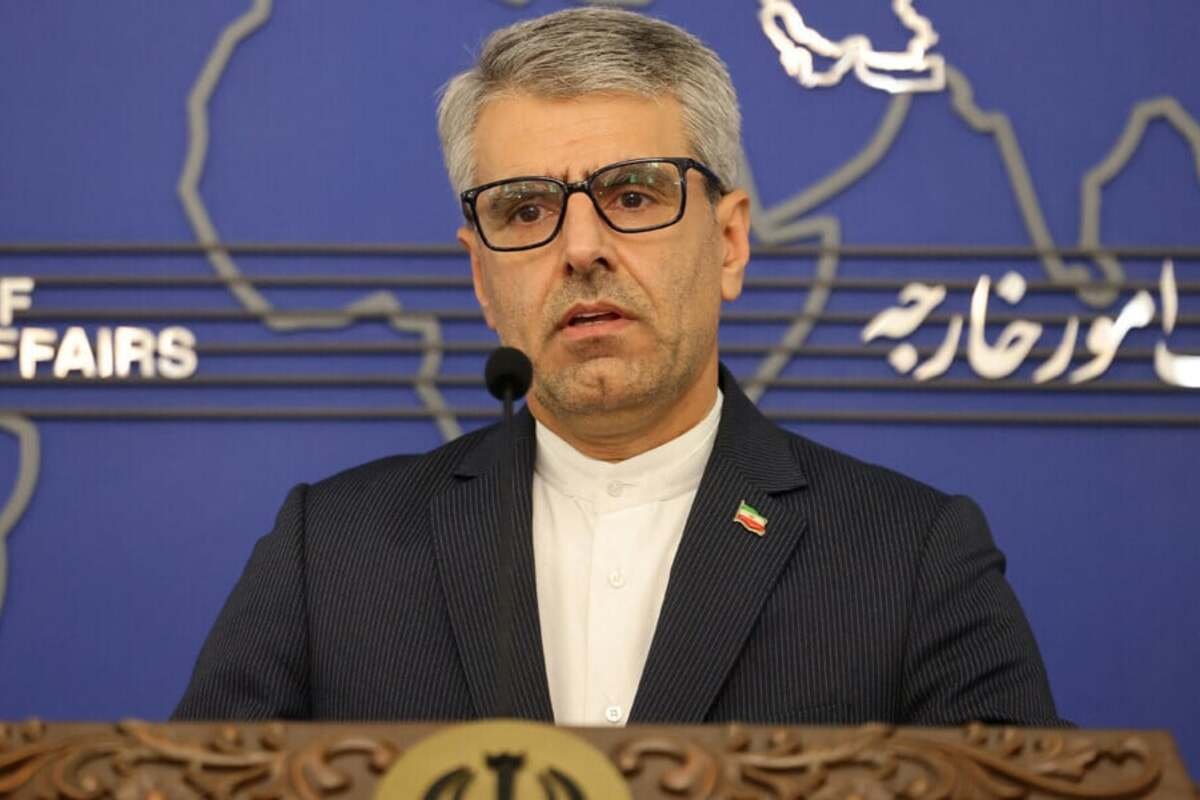
The Esmaeil Baghaei statement has drawn international attention after Iran’s Foreign Ministry spokesperson outlined Tehran’s position on the ongoing regional tensions. Speaking to local media, Baghaei stressed that Iran would determine the future course of the conflict based on its own national interests and rejected what he described as external attempts to influence the country’s decisions. His remarks also touched on Iran’s sovereignty, regional security, diplomatic efforts, and the country’s commitment to defending its territory.
Iran Rejects External Pressure
In the Esmaeil Baghaei statement, the spokesperson emphasized that decisions regarding the conflict would be made by Iran alone. He argued that no foreign country could dictate Iran’s policies or determine how the situation would end.
Baghaei criticized the United States, claiming that it had initiated hostile actions without sufficient justification and had attempted to damage Iran’s international image through negative narratives. According to him, Iran remains committed to protecting its national interests regardless of international pressure.
His remarks reflect Tehran’s longstanding position that its security and foreign policy decisions are matters of national sovereignty.
Commitment to National Sovereignty
A central message in the Esmaeil Baghaei statement was Iran’s emphasis on protecting its sovereignty.
The spokesperson declared that Iran would not accept any compromise that undermines its independence or territorial integrity. He said national sovereignty remains one of the country’s highest priorities and would guide all future decisions.
Iranian officials have repeatedly maintained that preserving independence is fundamental to the country’s foreign policy. Baghaei’s latest comments reinforce that position by highlighting Tehran’s determination to make strategic decisions without outside influence.
Position on Regional Waterways
Baghaei also addressed issues related to regional maritime routes.
According to his remarks, the current status of regional waterways remains linked to Iran’s broader security considerations. While discussing diplomatic developments, he stated that Iran’s communications with Oman should not be interpreted as negotiations involving the United States.
His comments suggested that Tehran views its diplomatic engagements independently and does not consider every regional discussion part of broader negotiations with Washington.
The statement underscores Iran’s effort to distinguish its bilateral diplomatic contacts from its relationship with the United States.
Response to International Claims
Another important aspect of the Esmaeil Baghaei statement involved Iran’s response to international narratives surrounding the conflict.
Baghaei alleged that the United States was attempting to present its own version of recent events in order to create what he described as a favorable public image. According to him, the reality on the ground differs from those portrayals.
Such exchanges of competing narratives are common during periods of geopolitical tension, with governments often presenting different interpretations of military and diplomatic developments.
International observers generally seek information from multiple sources when assessing claims made by parties involved in ongoing disputes.
Remarks on Regional Security
The spokesperson also commented on broader regional security issues.
He stated that Iran would continue monitoring developments closely and would respond to actions it considers threats to its national security. During his remarks, Baghaei referred to an alleged incident involving an Iranian vessel and indicated that Iran reserved the right to respond through appropriate channels.
Although he did not provide operational details, the comments reinforced Iran’s position that it would defend its interests whenever necessary.
Statements of this nature reflect the tense security environment that continues to shape relations across the Middle East.
Diplomatic and Military Balance
While emphasizing Iran’s military preparedness, the Esmaeil Baghaei statement also highlighted the importance of diplomacy.
Iran has consistently maintained that dialogue remains an important tool for addressing regional challenges, provided that discussions take place on the basis of mutual respect and equality.
At the same time, Iranian officials frequently state that diplomatic engagement should not come at the expense of national sovereignty or security.
This combination of diplomatic messaging alongside strong security rhetoric reflects Tehran’s broader foreign policy approach in recent years.
International Reactions Expected
Statements from senior Iranian officials often attract close attention from governments, international organizations, and policy analysts around the world.
Regional tensions involving Iran have significant implications for international trade, energy markets, maritime security, and diplomatic relations across the Middle East.
As a result, comments regarding military readiness, sovereignty, and regional stability are closely monitored by global stakeholders seeking to assess future developments.
Observers generally expect continued diplomatic engagement alongside efforts to reduce the risk of further escalation.
The Esmaeil Baghaei statement reinforces Iran’s position that decisions affecting the country’s future will be made independently and based on national priorities. By emphasizing sovereignty, rejecting external pressure, and reaffirming Iran’s commitment to defending its interests, the spokesperson delivered a message intended to highlight Tehran’s determination during a period of heightened regional uncertainty.
Although political tensions remain elevated, diplomacy continues to play an important role in managing regional challenges. The coming weeks may provide greater clarity regarding future negotiations, security developments, and the direction of broader regional relations.
Baghaei’s remarks underline Iran’s view that national sovereignty, strategic independence, and territorial integrity will remain central to its approach as regional events continue to evolve.