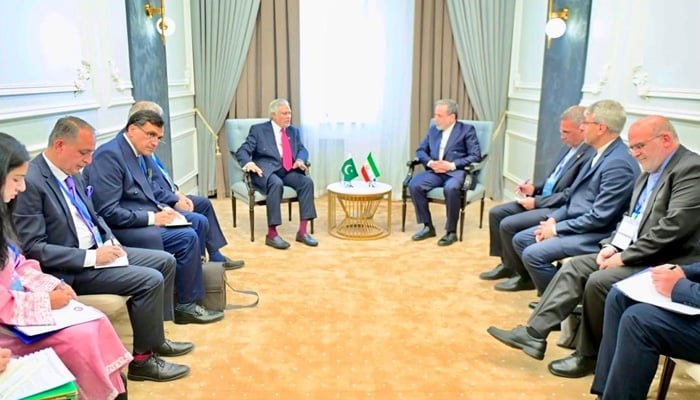
The Islamabad MoU remains at the center of Pakistan’s diplomatic efforts to promote peace and stability in the Middle East. During a meeting on the sidelines of the Shanghai Cooperation Organisation (SCO) Council of Foreign Ministers, Pakistan’s Deputy Prime Minister and Foreign Minister Senator Ishaq Dar and Iranian Foreign Minister Abbas Araghchi reaffirmed their commitment to strengthening bilateral ties while emphasizing the importance of building on the understandings reached under the Islamabad MoU. The discussions reflected both countries’ shared interest in reducing regional tensions through dialogue and sustained diplomacy.
Pakistan Calls for Dialogue and Restraint
At the meeting, Senator Ishaq Dar expressed Pakistan’s concern over the recent escalation of tensions in the Gulf region. He stressed that peaceful dialogue, restraint, and diplomatic engagement remain the most effective ways to resolve disputes and prevent further instability.
Dar emphasized that all parties should avoid actions that could increase regional uncertainty. He highlighted Pakistan’s longstanding policy of encouraging negotiations over confrontation, especially at a time when geopolitical tensions continue to affect regional security and global economic stability.
The Islamabad MoU was described as an important framework that can help maintain communication and reduce the risk of conflict between the concerned parties.
Iran Appreciates Pakistan’s Diplomatic Role
Iranian Foreign Minister Abbas Araghchi welcomed Pakistan’s continued diplomatic support and acknowledged its constructive efforts to promote peace in the region.
He thanked Pakistan for facilitating the safe return of Iranian fishermen and crew members, including individuals whose vessels had been intercepted during recent regional incidents. According to the Iranian minister, Pakistan coordinated with multiple authorities to ensure the safe transit and return of these individuals.
Araghchi also praised Islamabad’s consistent efforts to encourage diplomatic solutions during periods of heightened regional tensions.
Strengthening Pakistan-Iran Relations
The meeting also focused on the broader relationship between Pakistan and Iran. Both ministers reaffirmed their commitment to maintaining close cooperation in areas of mutual interest, including regional security, economic collaboration, and diplomatic coordination.
The two neighboring countries agreed to continue regular consultations as part of their shared objective of promoting peace, stability, and prosperity across the region.
The Islamabad MoU was highlighted as one of the important diplomatic understandings supporting these ongoing efforts.
Regional Tensions Remain a Concern
The discussions took place against the backdrop of renewed tensions involving Iran and the United States, particularly surrounding the Strait of Hormuz.
The strategic waterway remains one of the world’s most important maritime routes for global energy supplies. Any disruption in the area could have significant consequences for international oil markets and global trade.
Pakistan has repeatedly urged all parties to exercise restraint and avoid actions that could further destabilize the region.
Maritime Security in Focus
Maritime security has become an increasingly important issue following recent attacks targeting commercial shipping routes in the Red Sea.
The ministers discussed the need to protect international shipping lanes and ensure the uninterrupted movement of lawful maritime commerce. Safe navigation remains essential not only for regional economies but also for global energy markets that rely heavily on these strategic waterways.
The Islamabad MoU continues to provide an important diplomatic platform for encouraging communication during periods of heightened regional uncertainty.
Pakistan’s Balanced Foreign Policy
Pakistan has consistently presented itself as a country willing to facilitate dialogue among regional stakeholders. Rather than taking sides in ongoing disputes, Islamabad has focused on promoting negotiations, confidence-building measures, and diplomatic engagement.
This balanced approach has allowed Pakistan to maintain positive relations with multiple regional partners while contributing to efforts aimed at reducing tensions.
Officials believe that continued diplomacy offers the best opportunity for achieving long-term peace in the Gulf region.
Cooperation Beyond Diplomacy
In addition to political discussions, Pakistan and Iran also continue to explore opportunities for expanding bilateral cooperation in trade, border management, energy, and regional connectivity.
Both countries recognize that stronger economic partnerships can contribute to greater regional stability by creating shared economic interests and encouraging peaceful cooperation.
Regular diplomatic engagement also helps both governments coordinate their responses to emerging regional challenges.
Support for Regional Stability
The meeting between Dar and Araghchi came shortly after Pakistan intensified its diplomatic outreach with several regional countries, including Saudi Arabia.
Pakistan has consistently emphasized the importance of protecting maritime trade routes, maintaining regional security, and preventing further escalation in ongoing conflicts.
By maintaining communication with multiple regional stakeholders, Islamabad seeks to encourage peaceful solutions that benefit all parties involved.
Importance of the Islamabad MoU
The Islamabad MoU continues to serve as an important diplomatic reference point for discussions related to regional peace. Although challenges remain, both Pakistan and Iran believe that dialogue established through diplomatic understandings provides a valuable foundation for future negotiations.
Building on previous agreements can help reduce misunderstandings, strengthen mutual trust, and encourage practical cooperation in addressing shared security concerns.
Conclusion
The recent meeting between Pakistan and Iran demonstrates both countries’ commitment to diplomacy, regional cooperation, and peaceful conflict resolution. By reaffirming support for the Islamabad MoU, both sides signaled their willingness to continue engaging through dialogue rather than confrontation.
As tensions persist across the Gulf region, sustained diplomatic efforts, regular consultations, and respect for international cooperation will remain essential for promoting stability, protecting maritime security, and supporting long-term peace. Pakistan’s continued role as a facilitator highlights its commitment to encouraging constructive engagement among regional partners while working toward shared prosperity and lasting regional security.