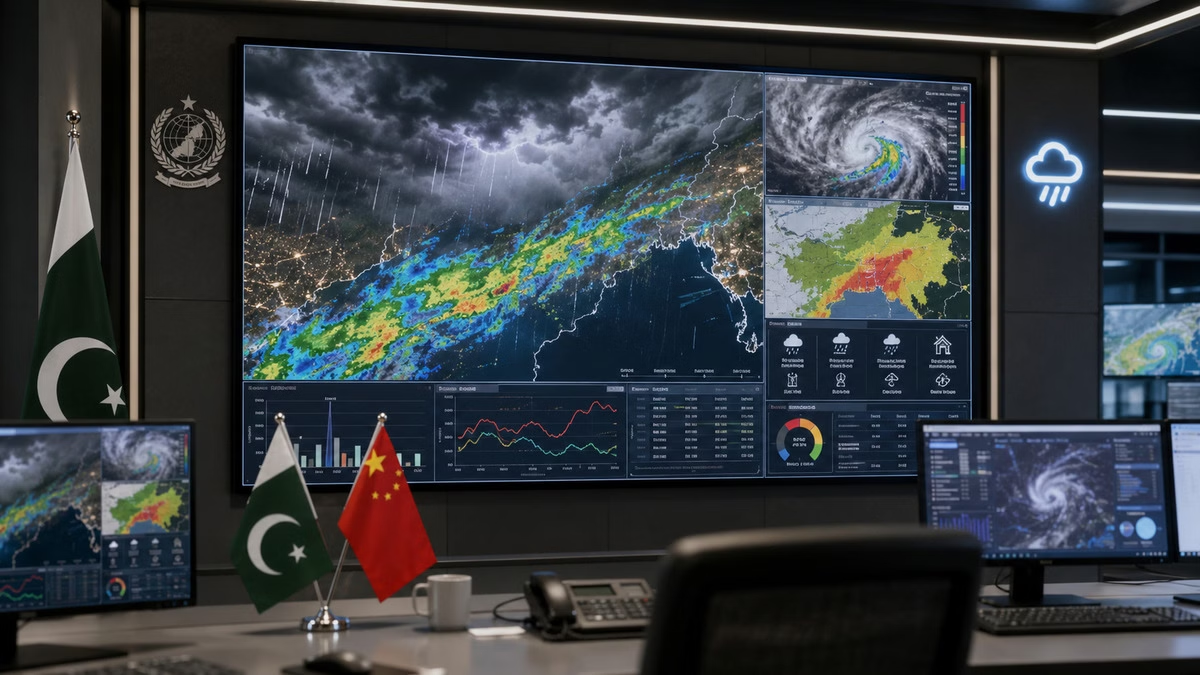
The MAZU-Urban AI System is helping Pakistan improve weather monitoring and disaster preparedness as the country experiences another challenging monsoon season. Developed by the China Meteorological Administration, this advanced artificial intelligence platform provides real-time monitoring, early warnings, and predictive insights for multiple weather-related hazards. Its adoption marks an important step toward strengthening Pakistan’s ability to respond to climate-related emergencies and protect communities from natural disasters.
Pakistan is among the countries increasingly affected by extreme weather events, including heavy rainfall, floods, droughts, heatwaves, and landslides. As climate change continues to intensify these challenges, authorities are exploring innovative technologies that can improve forecasting accuracy and support faster emergency responses. The MAZU-Urban AI System offers a promising solution by combining artificial intelligence with meteorological data to generate timely and reliable forecasts.
What Is the MAZU-Urban AI System?
The MAZU-Urban platform is an AI-powered, multi-hazard early warning system designed to help developing countries reduce the impact of climate-related disasters. It uses advanced algorithms to analyze weather patterns, identify potential risks, and generate emergency response recommendations for different disaster scenarios.
Unlike traditional forecasting tools that mainly focus on weather predictions, the MAZU-Urban AI System supports broader disaster management by providing decision-makers with actionable information before emergencies occur. This allows governments and disaster management agencies to prepare more effectively and minimize potential losses.
An important feature of the platform is its open-source design, allowing countries to customize the system according to their local environmental conditions and forecasting requirements.
Supporting Pakistan During the Monsoon Season
Pakistan faces significant challenges during the annual monsoon season, with heavy rainfall often triggering floods, landslides, and infrastructure damage. Accurate forecasting plays a critical role in reducing the impact of these disasters.
The MAZU-Urban AI System provides real-time weather monitoring and helps authorities identify areas that may be at greater risk. Early warnings allow emergency services to prepare evacuation plans, issue public safety advisories, and coordinate relief efforts before severe weather strikes.
By improving prediction capabilities, Pakistan can respond more quickly to changing weather conditions and reduce risks to lives and property.
Enhancing Forecasting Capabilities
Officials at the Pakistan Meteorological Department believe the AI platform has the potential to strengthen the country’s weather forecasting services.
According to meteorological experts, artificial intelligence can help generate more specialized forecasting products by analyzing large volumes of weather data much faster than conventional methods. This enables forecasters to better predict extreme events such as flash floods, prolonged droughts, and severe storms.
The MAZU-Urban AI System may also support long-term climate monitoring by identifying patterns that contribute to recurring weather risks, helping policymakers make informed decisions regarding disaster preparedness and climate adaptation.
AI for Multiple Disaster Risks
One of the platform’s greatest strengths is its ability to monitor several types of climate-related hazards simultaneously.
The system supports forecasting and risk assessment for:
- Floods
- Agricultural risks
- Severe rainfall
- Typhoons
- Other weather-related emergencies
This multi-hazard approach makes the MAZU-Urban AI System particularly valuable for countries like Pakistan, where different regions experience a wide range of environmental challenges throughout the year.
China’s AI Cooperation Initiative
The deployment of MAZU-Urban reflects China’s broader efforts to promote artificial intelligence cooperation with developing countries.
Chinese officials have emphasized that open-source AI technologies can help bridge technological gaps while supporting sustainable development. By providing accessible AI tools, China aims to assist partner countries in improving disaster management, scientific research, and public services.
The initiative also highlights the growing importance of international collaboration in addressing global challenges such as climate change and natural disasters.
Open-Source Technology Benefits
A key advantage of the MAZU-Urban platform is its flexibility.
Because the system is open source, local experts can adapt its features to match Pakistan’s unique geography, weather patterns, and disaster management needs. This customization capability enables researchers and meteorologists to continuously improve forecasting accuracy while developing specialized applications for local communities.
The MAZU-Urban AI System also encourages collaboration between scientists, software developers, and government agencies working to improve environmental monitoring.
Artificial Intelligence and Disaster Preparedness
Artificial intelligence is rapidly transforming weather forecasting around the world.
AI systems can process enormous amounts of satellite imagery, atmospheric data, and historical weather records within seconds, allowing forecasters to identify developing weather systems more efficiently than traditional methods alone.
For countries vulnerable to climate-related disasters, these technologies can significantly improve preparedness by providing earlier warnings and more detailed risk assessments.
Pakistan’s adoption of the MAZU-Urban AI System reflects a growing recognition that advanced technologies will play an increasingly important role in strengthening disaster resilience.
As climate challenges become more frequent and severe, investment in modern forecasting technologies will remain essential. AI-powered platforms like MAZU-Urban have the potential to improve public safety, protect infrastructure, and support more effective emergency planning.
Continued cooperation between Pakistan and international technology partners can further strengthen meteorological research while expanding access to innovative climate solutions.
The successful integration of artificial intelligence into weather forecasting may also encourage broader adoption of AI across other sectors, including agriculture, environmental management, and public services.
The MAZU-Urban AI System represents an important advancement in Pakistan’s efforts to improve weather forecasting and disaster preparedness. By combining artificial intelligence with real-time meteorological monitoring, the platform helps authorities anticipate climate-related risks more accurately and respond more effectively to emergencies.
As Pakistan continues facing increasingly unpredictable weather patterns, technologies like MAZU-Urban can play a vital role in protecting lives, supporting sustainable development, and strengthening national resilience against future climate challenges. With continued innovation and international collaboration, AI-powered forecasting is set to become a valuable component of Pakistan’s long-term disaster management strategy.