The Egypt World Cup referee complaint has become one of the most talked-about football stories following Egypt’s dramatic 3-2 defeat to Argentina in the FIFA World Cup Round of 16. The Egyptian Football Federation (EFA) has formally requested FIFA to investigate the officiating team, claiming that crucial refereeing decisions unfairly influenced the outcome of the match. The complaint has reignited debates about VAR consistency, refereeing standards, and fairness in football’s biggest tournament.
Egypt Files Official Complaint to FIFA
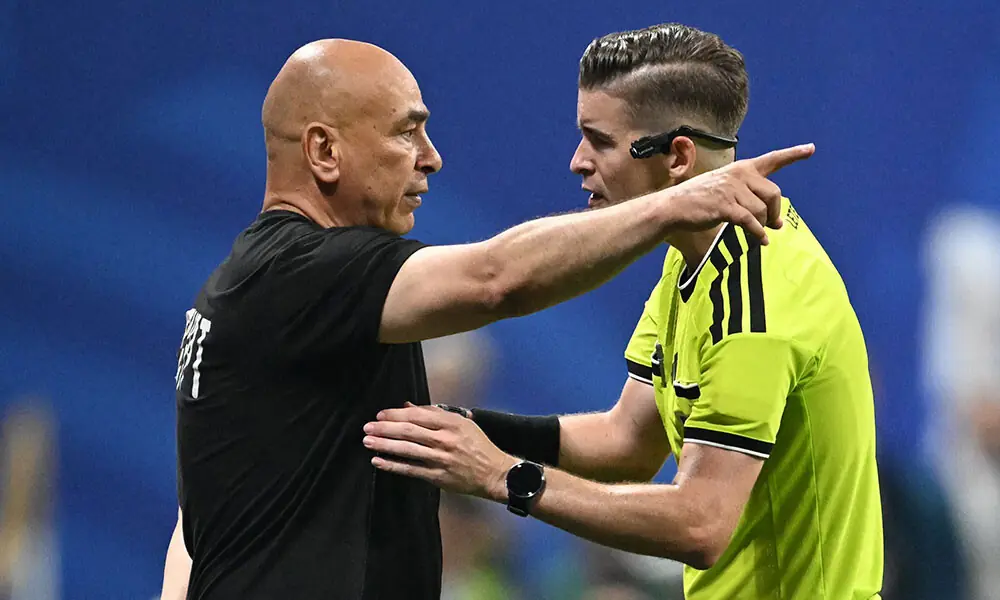
The Egyptian Football Federation wasted little time after the controversial defeat, submitting an official complaint to FIFA. Led by federation president Hany Aburida, the complaint calls for a full investigation into French referee François Letexier and the entire officiating crew, including the Video Assistant Referee (VAR) officials.
According to the federation, several key decisions demonstrated inconsistent officiating and double standards that ultimately contributed to Egypt’s elimination from the World Cup.
The Egypt World Cup referee complaint argues that multiple incidents deserved further review and that the officiating team failed to apply the Laws of the Game consistently throughout the match.
Controversial Decisions Changed the Match
The biggest talking point came when Egypt believed they had taken an early lead through Mostafa Ziko. The goal was initially awarded before VAR intervened, ruling it out because of a foul earlier in the attacking move involving Argentina defender Lisandro Martinez.
Although VAR protocols allow officials to review attacking phases leading directly to goals, many Egyptian supporters questioned whether the intervention was appropriate, considering how far back the alleged foul occurred.
Shortly afterward, Ziko successfully scored another goal to give Egypt a 2-0 advantage, placing the Pharaohs within touching distance of a historic quarter-final appearance.
However, Argentina staged a remarkable comeback through Cristian Romero and Lionel Messi before Enzo Fernandez scored the winning goal late in the match.
Egypt Questions Missed Penalty Decision
The second major issue raised in the Egypt World Cup referee complaint concerns a potential penalty during the closing stages of the match.
Egyptian officials argue that midfielder Hamdy Fathy was pulled by Alexis Mac Allister during the buildup to Argentina’s winning goal. They believe the referee should have stopped play, reviewed the incident through VAR, and awarded Egypt a penalty instead.
The federation insists that the failure to review this challenge represents one of the most significant officiating mistakes of the tournament.
Officials believe this incident directly impacted the final result and prevented Egypt from advancing further in the competition.
Calls to Remove the Officiating Team
The Egyptian Football Federation has gone beyond requesting an investigation. It has also asked FIFA to remove the referee and the entire officiating team from the remainder of the World Cup.
According to the federation’s statement, officials believe the investigation will prove serious refereeing errors occurred during the match.
The complaint emphasizes that referees must maintain fairness and consistency, particularly in high-stakes knockout matches where every decision carries enormous consequences.
Such requests are rare in international football and demonstrate the seriousness with which Egypt views the situation.
Coach Hossam Hassan Voices Frustration
Following the match, Egypt head coach Hossam Hassan strongly criticized the officiating during his post-match interviews.
Rather than accepting the defeat as simple bad luck, Hassan argued that his team had been treated unfairly throughout the contest.
He claimed the players did not receive equal treatment from the refereeing team and questioned whether football’s biggest tournament had provided a level playing field.
Although emotional reactions often follow major defeats, Hassan’s comments reflected the widespread frustration shared by Egyptian players, officials, and supporters.
VAR Once Again Under the Spotlight
The controversy has once again placed VAR at the center of global football discussions.
Introduced to reduce clear refereeing mistakes, VAR has undoubtedly improved decision-making in many situations. However, debates continue regarding consistency, interpretation, and when officials should intervene.
Supporters of VAR argue that technology helps ensure more accurate outcomes.
Critics, however, believe that inconsistent reviews create confusion and frustration, especially when similar incidents receive different treatment across matches.
The Egypt World Cup referee complaint adds another chapter to the ongoing debate about how VAR should be applied during international tournaments.
Argentina Advances Despite Controversy
While Egypt continues pursuing its complaint, Argentina moves forward in the tournament after completing an impressive comeback.
Trailing by two goals, the defending world champions demonstrated resilience by equalizing before Enzo Fernandez scored the decisive winner.
Lionel Messi once again played an important role in inspiring Argentina’s comeback, keeping alive hopes of another successful World Cup campaign.
Despite the controversy, Argentina will now focus entirely on preparing for the next knockout round.
FIFA’s Possible Response
FIFA regularly reviews referee performances after every World Cup match, regardless of whether official complaints are submitted.
The governing body may examine video footage and assess whether established refereeing protocols were correctly followed.
However, overturning a completed match result is extraordinarily unlikely under FIFA regulations unless there is evidence of rule violations beyond normal refereeing judgment.
Most likely, the investigation if conducted would focus on evaluating the officials’ performances rather than changing the tournament outcome.
Impact on Future Officiating
Major complaints like this often encourage governing bodies to improve referee training and VAR procedures for future competitions.
FIFA has consistently emphasized transparency and continuous improvement in officiating standards.
Whether or not Egypt’s complaint results in disciplinary action, it highlights the growing expectations placed on referees working with advanced technology.
Supporters expect every crucial decision to be both accurate and consistently applied.
The Egypt World Cup referee complaint has become one of the most significant controversies of the tournament, raising fresh questions about refereeing consistency and VAR implementation. Egypt believes key decisions altered the course of a dramatic Round of 16 encounter, while Argentina celebrates an unforgettable comeback victory.
Although FIFA’s investigation may clarify aspects of the disputed decisions, the result itself is unlikely to change. Nevertheless, the controversy serves as another reminder that officiating remains one of football’s most heavily scrutinized aspects, especially when matches carry World Cup stakes. As the tournament continues, fans worldwide will be hoping for greater consistency, transparency, and fairness in every match.