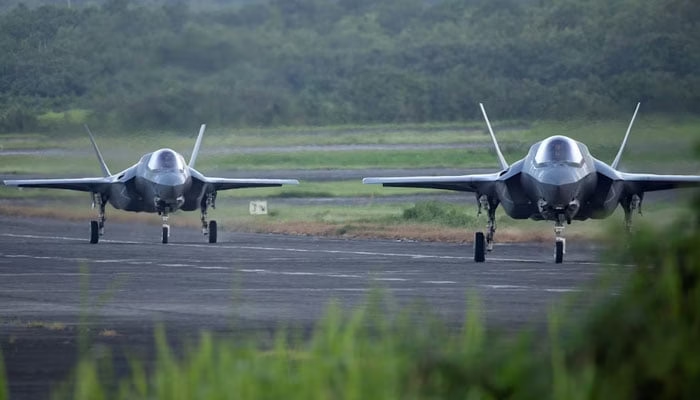
The future of transatlantic security is once again under discussion as reports suggest that the United States is preparing to reduce its military presence in Europe. This development has sparked widespread debate among policymakers, military analysts, and NATO allies who view the alliance as a cornerstone of regional stability. The evolving NATO Defense Strategy is expected to play a central role in shaping how European nations respond to these proposed changes.
According to recent reports, the United States plans to significantly reduce the number of military assets deployed in support of NATO operations across Europe. These reductions could include fewer fighter jets, aerial refueling tankers, reconnaissance aircraft, warships, and other strategic military resources. While no final decisions have been officially confirmed, the reported plans have already generated considerable attention among alliance members.
The discussion surrounding the NATO Defense Strategy comes at a critical time. Since the outbreak of the Russia-Ukraine conflict in 2022, European countries have increased defense spending and strengthened military cooperation to address growing security concerns. Many governments have viewed the American military presence as a key deterrent against potential threats in the region.
Reports indicate that the United States may reduce the number of fighter jets stationed in Europe by approximately one-third. Additionally, several aerial refueling tankers and maritime surveillance aircraft could be withdrawn. Other strategic assets reportedly under review include missile-launching submarines, aircraft carriers, bomber groups, and various naval vessels.
These proposed changes reflect a broader shift in Washington’s approach to European security. American officials have increasingly emphasized the need for European nations to take greater responsibility for their own defense capabilities. The evolving NATO Defense Strategy appears to align with this objective by encouraging member states to strengthen their military readiness and reduce dependence on U.S. resources.
Supporters of the proposed reductions argue that Europe possesses the economic strength and technological capability necessary to assume a larger role in regional defense. Over the past few years, several NATO members have increased military budgets, modernized equipment, and expanded defense cooperation programs. These investments are intended to create a more balanced alliance where responsibilities are shared more equally among member nations.
However, critics warn that a rapid reduction in American military support could create security challenges. The presence of U.S. forces has long served as a symbol of NATO’s collective commitment to defending member states. Any significant withdrawal may raise concerns about deterrence and alliance cohesion, particularly among countries located near areas of geopolitical tension.
The debate over the NATO Defense Strategy also reflects broader discussions about the future of international security partnerships. As global power dynamics continue to evolve, many governments are reassessing defense priorities and resource allocation. Military planners must balance emerging threats, technological advancements, and budgetary constraints while maintaining readiness across multiple regions.
NATO itself remains one of the world’s most influential military alliances. Founded in 1949, the organization operates on the principle of collective defense, meaning that an attack on one member is considered an attack on all. This commitment has helped maintain stability across Europe for decades and continues to serve as the foundation of the alliance’s security framework.
European leaders have responded to recent reports by accelerating discussions about defense cooperation and strategic autonomy. Several countries are investing in advanced fighter aircraft, missile defense systems, cybersecurity capabilities, and intelligence-sharing networks. These efforts are intended to strengthen Europe’s ability to respond independently to potential threats while remaining fully committed to NATO obligations.
The upcoming NATO summit is expected to provide an important platform for addressing these issues. Alliance members will likely discuss defense spending targets, military modernization programs, and future force structures. The meeting may also clarify how the proposed changes fit within the broader NATO Defense Strategy and whether additional measures will be implemented to ensure continued security across the region.
For many observers, the key question is not whether NATO can adapt, but how quickly it can do so. The alliance has demonstrated resilience throughout its history, responding to changing geopolitical circumstances and evolving security challenges. Current discussions may ultimately lead to a stronger and more balanced partnership between North America and Europe.
In the coming months, policymakers will continue evaluating the implications of any military adjustments. While uncertainty remains regarding the final scope of potential reductions, one thing is clear: the future of the NATO Defense Strategy will significantly influence the security landscape of Europe and the broader international community.
As global tensions continue to evolve, cooperation, preparedness, and strategic planning will remain essential components of maintaining peace and stability. The decisions made today could shape the direction of NATO and transatlantic relations for years to come.