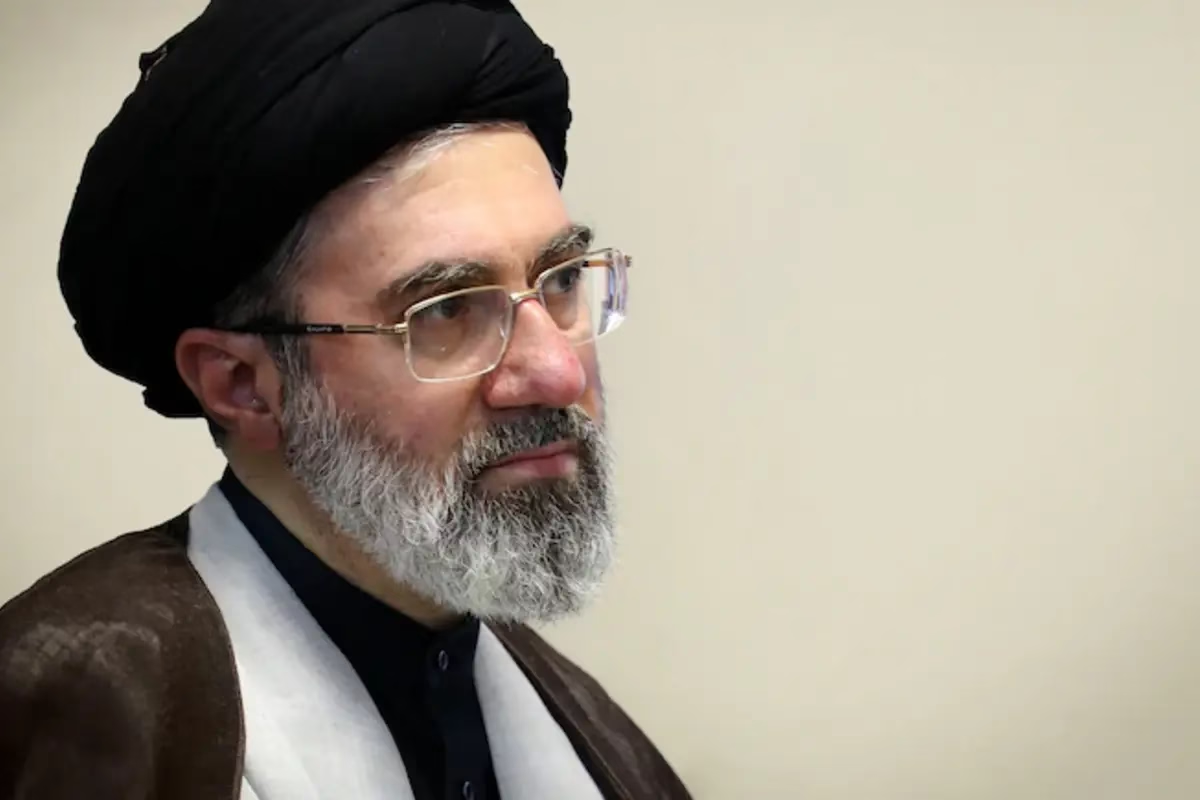
The recent statement from Iran’s leadership has once again brought global attention to the ongoing tensions in the Middle East. In a written message delivered during a major national commemoration, Iran’s Supreme Leader Mojtaba Khamenei accused the United States and Israel of trying to create division among the Iranian people after what he described as a major setback for their regional objectives.
The message comes at a sensitive time for the region, where political uncertainty, military tensions, and diplomatic efforts continue to shape the future of the Middle East. The latest developments have made the topic of Iran unity message increasingly important both inside Iran and internationally.
According to the statement, foreign powers are attempting to spread fear, mistrust, despair, and internal division among Iranians. Khamenei urged citizens to remain united and resist what he called efforts to weaken the country from within. He emphasized that national unity and public awareness are essential for protecting Iran’s stability during difficult times.
The Iran unity message was delivered during a ceremony marking the 37th anniversary of the death of Ayatollah Ruhollah Khomeini, the founder of Iran’s Islamic Revolution. Thousands of supporters attended the gathering, waving Iranian flags and banners associated with regional allies such as Hezbollah.
The annual event has historically carried symbolic importance in Iran’s political and religious landscape. This year’s ceremony gained even more attention because it was held after months of heightened regional conflict involving Iran, the United States, and Israel.
Political analysts believe the leadership’s message was aimed not only at the Iranian public but also at foreign governments watching developments in the region. The speech highlighted concerns about psychological warfare and attempts to influence public opinion during periods of instability.
The Iran unity message also reflects broader fears within the country about external pressure and ongoing geopolitical tensions. Since the conflict escalated earlier this year, Iran has repeatedly accused Western powers of attempting to weaken its regional influence and political system.
At the same time, the Iranian leadership is trying to reassure citizens that the country remains stable despite military confrontations and economic challenges. Calls for unity often become stronger during periods of political uncertainty, especially when governments believe external threats could impact internal stability.
Another important aspect of the situation is the ongoing ceasefire negotiations in the Middle East. Although military clashes slowed after the April ceasefire agreement, long-term peace efforts have faced repeated setbacks. Iran has stated that any future agreement with the United States should include wider regional arrangements, particularly concerning Lebanon and Hezbollah.
The broader regional picture remains highly complex. Israel and Hezbollah continue to exchange attacks across the Lebanese border, while tensions in Gaza and the Strait of Hormuz continue to create concerns for global security and energy markets.
The Iran unity message also carries emotional significance for many supporters of the Iranian government because it follows the death of former Supreme Leader Ali Khamenei earlier this year during attacks linked to the regional conflict. His absence was strongly felt during this year’s ceremony, where state media showed an empty chair carrying his portrait.
Mojtaba Khamenei, who succeeded his father, has mostly remained away from public appearances and has communicated through written messages since taking office. This has increased speculation about the future direction of Iranian leadership and the country’s political strategy.
Observers say the leadership is attempting to maintain continuity and national confidence during a period of transition. Public ceremonies, national anniversaries, and statements focused on unity are often used to reinforce political stability during uncertain times.
International reactions to Iran’s recent statements have been mixed. Some analysts view the message as an attempt to strengthen domestic support, while others see it as part of Iran’s broader diplomatic strategy during ongoing negotiations with Western countries.
Meanwhile, ordinary citizens across the region continue to face the consequences of prolonged conflict. Rising energy prices, economic uncertainty, and regional instability remain major concerns for millions of people living in the Middle East.
The latest Iran unity message highlights how deeply connected politics, security, and public sentiment have become in the region. As diplomatic efforts continue, the world will closely watch whether regional leaders can move toward long-term stability or whether tensions will once again escalate.
Iran’s leadership appears focused on promoting unity at home while continuing to push for broader regional negotiations abroad. The coming months may prove critical in determining whether peace efforts succeed or whether the Middle East enters another period of instability.