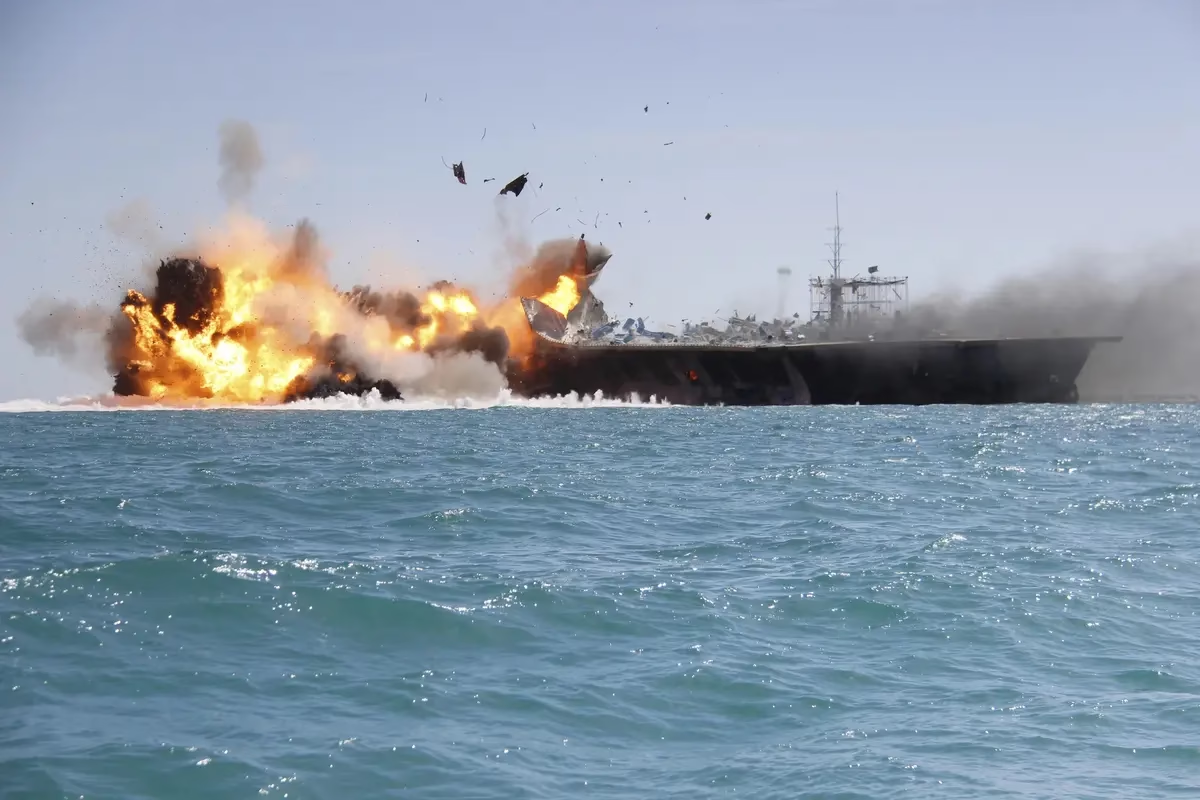
The latest IRGC retaliatory strikes have intensified tensions across the Middle East after Iran’s Islamic Revolution Guards Corps announced attacks on American military targets and an enemy vessel following alleged US aggression against Iranian assets. The growing conflict has once again raised fears of a wider regional confrontation, with the IRGC retaliatory strikes drawing global attention due to their strategic and political implications.
According to the statement released by the Islamic Revolutionary Guard Corps, the operation was launched after an Iranian oil tanker was attacked near the Strait of Hormuz. Iranian officials claimed the strike caused serious damage to the vessel’s engine room and described it as an act of aggression by the United States.
What triggered the IRGC retaliatory strikes?
Iran says the latest IRGC retaliatory strikes were a direct response to two separate attacks targeting Iranian interests. The first involved the reported strike on an oil tanker near the Strait of Hormuz, one of the world’s most strategically important shipping lanes.
The second alleged attack reportedly targeted Iranian infrastructure, further increasing tensions between Tehran and Washington. Iranian authorities argued that such actions violated international law and threatened regional stability.
In response, the IRGC announced strikes against an enemy vessel, the headquarters of the US Fifth Fleet in Bahrain, and a regional American airbase.
Strait of Hormuz remains at the center of the crisis
The Strait of Hormuz continues to play a major role in the rising conflict. This narrow waterway is one of the most important global energy routes, carrying a significant portion of the world’s oil exports every day.
Because of its importance, any military escalation in the region immediately impacts international markets and energy security. The recent IRGC retaliatory strikes have increased concerns that instability near the Strait of Hormuz could disrupt oil shipments and create uncertainty in global trade.
Analysts say the situation remains highly sensitive because both military operations and political statements are increasing pressure on already fragile diplomatic efforts.
Regional military tensions continue to rise
The Middle East has experienced repeated military escalations in recent months, but the latest IRGC retaliatory strikes mark another dangerous phase in the confrontation between Iran and the United States.
Iranian officials insist that their actions are defensive and aimed at protecting national sovereignty. At the same time, the United States and its allies continue to maintain a strong military presence across the Gulf region.
Military experts warn that continued retaliatory actions from both sides could lead to a broader regional conflict involving multiple countries and strategic military sites.
Impact on global oil markets
The news of the IRGC retaliatory strikes has already caused renewed anxiety in international oil markets. Investors are closely watching developments near the Strait of Hormuz because even minor disruptions can affect global energy supplies.
Oil prices often rise sharply whenever tensions increase in the Gulf region. Traders fear that military actions targeting oil infrastructure or shipping lanes could reduce supply and increase transportation costs worldwide.
Economists also warn that prolonged instability could increase inflation and create additional pressure on global economies already dealing with uncertain energy markets.
Diplomatic challenges ahead
The current crisis highlights the growing difficulty of maintaining diplomatic stability in the Middle East. While several countries continue calling for dialogue and restraint, repeated military exchanges are making negotiations increasingly complicated.
The IRGC retaliatory strikes also demonstrate how quickly regional conflicts can escalate when trust between nations breaks down. Political observers believe that without serious diplomatic intervention, the risk of wider confrontation may continue to grow.
International organizations and regional powers are expected to intensify efforts to prevent further escalation and protect vital shipping routes.
International reactions and concerns
Governments around the world are closely monitoring the situation following the IRGC retaliatory strikes. Many countries are concerned that any disruption in Gulf shipping routes could damage international trade and energy security.
Security analysts believe the latest developments may also lead to increased military preparedness across the region. Gulf countries hosting foreign military bases could face heightened tensions if retaliatory actions continue.
Meanwhile, global leaders are urging restraint and encouraging all sides to avoid actions that could further destabilize the region.
The recent IRGC retaliatory strikes have added another dangerous chapter to the ongoing tensions in the Middle East. Iran’s response to alleged US attacks reflects the deepening confrontation surrounding the Strait of Hormuz and regional military activity.
As fears of escalation grow, the international community faces increasing pressure to support diplomatic efforts and prevent further conflict. Stability in the Gulf remains critical not only for regional peace but also for global economic and energy security.