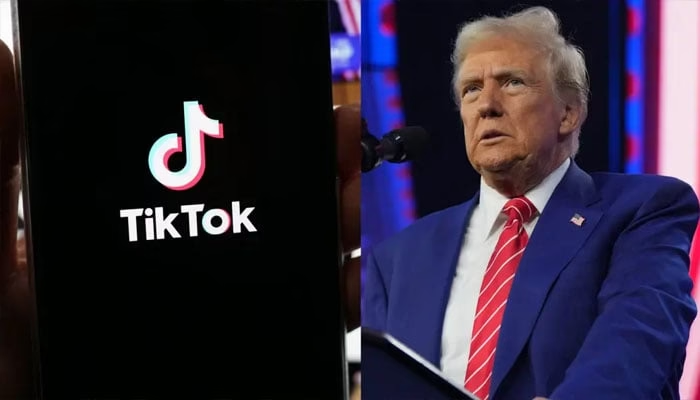
US President Donald Trump has signed a new executive order broadening sanctions against Cuba, in a significant escalation of pressure on Havana following recent developments in Venezuela. The move is part of a wider strategy to tighten economic restrictions and increase diplomatic leverage against the Cuban government.
According to US officials, the fresh sanctions target individuals, entities, and affiliates that support Cuba’s security apparatus or are involved in corruption and serious human rights violations. The measures also extend to government agents, officials, and supporters, signaling a broader crackdown on those linked to the ruling system.
While the exact names of those sanctioned have not yet been disclosed, the executive order significantly expands the scope of enforcement. A White House statement revealed that the sanctions could apply to “any foreign person” operating in major sectors of the Cuban economy, including energy, defence, metals and mining, financial services, and security.
A key element of the order is the introduction of secondary sanctions, which allow the United States to penalize companies or financial institutions that conduct or facilitate transactions with sanctioned entities. This means even non-American businesses could face restrictions, such as loss of access to the US financial system, if they continue dealings with Cuba.
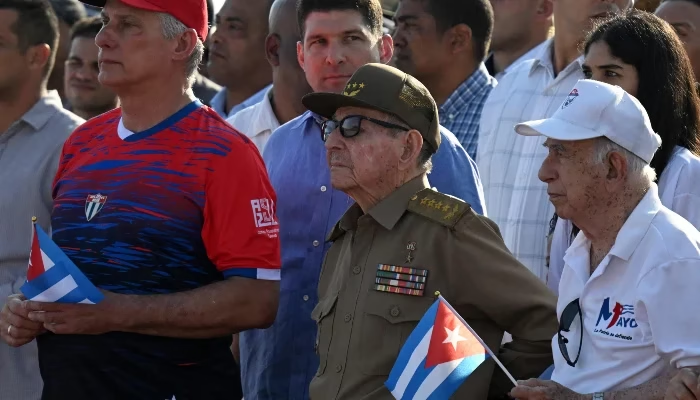
Cuban leadership strongly condemned the move. President Miguel Díaz-Canel described the sanctions as “coercive” and accused Washington of reinforcing a long-standing blockade that has harmed the island’s economy. He criticized what he called the “brutal” and “genocidal” nature of US policy, arguing that it reflects the behavior of a dominant global power.
Similarly, Foreign Minister Bruno Rodríguez said the measures amount to “collective punishment” of the Cuban people. He emphasized that the country would not be intimidated and rejected the legitimacy of unilateral sanctions imposed by the United States.
Experts say the move represents one of the most significant expansions of US sanctions in recent years, particularly for international businesses. Analysts note that companies in sectors like oil, gas, mining, and banking that previously tried to separate their Cuban operations from US ties may now face increased risk under the new framework.
The sanctions are part of a broader campaign by the Trump administration, which has repeatedly described Cuba as being in a state of decline. The policy follows earlier actions, including restrictions on oil supplies and threats of tariffs on countries exporting fuel to the island. These steps have contributed to fuel shortages and widespread power outages, worsening economic conditions in Cuba.
US officials have also justified the sanctions on national security grounds, accusing the Cuban government of maintaining ties with countries like Iran and groups such as Hezbollah. Washington argues that Cuba provides a platform for hostile intelligence and military activities close to US territory, increasing strategic concerns.
For decades, the United States has called on Cuba to reform its state-controlled economy, compensate for properties nationalized after the revolution led by Fidel Castro, and hold free and fair elections. However, Cuban authorities have consistently rejected these demands, maintaining that their socialist system is not open to negotiation.
The latest sanctions mark a major escalation in US-Cuba tensions, with potential global economic implications. By extending restrictions beyond its borders and targeting international actors, Washington has increased pressure not only on Havana but also on businesses worldwide that engage with the Cuban economy.