The push for virtual assets regulation Pakistan has taken a significant step forward as Shehbaz Sharif directed authorities to make the regulatory framework fully operational as soon as possible. This move is aimed at strengthening the country’s digital economy while improving investor confidence through alignment with international standards.
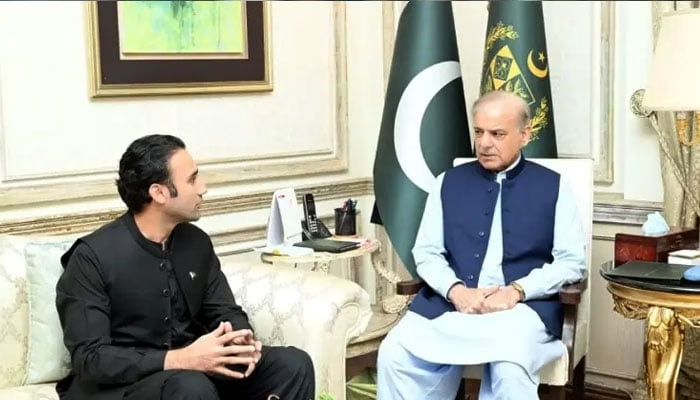
During a recent meeting in Lahore, the prime minister emphasized the importance of timely implementation of policies related to digital finance and virtual assets. The discussion included key updates from Bilal bin Saqib, who also serves as chairman of the Pakistan Virtual Assets Regulatory Authority. He briefed the prime minister on the progress made so far and the steps being taken to operationalize the regulatory body.
The focus on virtual assets regulation Pakistan reflects the government’s broader strategy to position the country as a competitive player in the global digital economy. With increasing global adoption of blockchain technology and digital currencies, having a clear regulatory framework is essential for attracting both local and international investors.
One of the key highlights of the meeting was the introduction of a regulatory sandbox. This initiative allows businesses and startups to test innovative financial products in a controlled environment before full-scale implementation. It is expected to play a crucial role in supporting innovation while ensuring compliance with legal and financial standards.
The development of virtual assets regulation Pakistan is not just about rules and oversight—it is also about preparing the workforce for the future. The prime minister stressed the need to equip young people with skills in emerging technologies such as artificial intelligence and digital finance. By doing so, Pakistan aims to create a workforce that can actively participate in the evolving digital landscape.
Another important aspect discussed was the integration of AI-powered payment systems and regulated virtual asset services. These innovations have the potential to transform how financial transactions are conducted in the country. With proper regulation, they can enhance efficiency, transparency, and security in financial operations.
The progress in virtual assets regulation Pakistan comes shortly after the State Bank of Pakistan allowed financial institutions to open accounts for licensed virtual asset service providers. This decision marks a major shift, as it formally brings digital asset businesses into the regulated financial system. It also signals growing confidence in the sector’s potential.
Under the Virtual Assets Act 2026, PVARA has been established as the central authority responsible for licensing, regulating, and supervising all virtual asset activities in Pakistan. This includes areas such as cryptocurrency trading, digital wallets, blockchain-based services, and other related technologies. The establishment of such an authority is a key milestone in the journey toward a fully regulated digital economy.
The implementation of virtual assets regulation Pakistan is expected to bring several benefits. For investors, it offers greater security and transparency, reducing the risks associated with unregulated markets. For businesses, it provides a clear framework within which they can operate and innovate. And for the government, it opens up new opportunities for economic growth and revenue generation.
However, the transition to a regulated environment also comes with challenges. Authorities must ensure that regulations are flexible enough to support innovation while being strict enough to prevent misuse. Striking this balance will be critical for the long-term success of the sector.
In addition, public awareness and education will play an important role. As more people begin to engage with digital assets, understanding the risks and opportunities becomes essential. This is why the government’s emphasis on training and skill development is particularly important in the context of virtual assets regulation Pakistan.
The success of these efforts will depend on how quickly and effectively the regulatory framework is implemented. Collaboration between government bodies, financial institutions, and technology experts will be key to building a robust and sustainable ecosystem.
The progress in virtual assets regulation Pakistan marks a significant step toward modernizing the country’s financial system. By focusing on regulation, innovation, and skill development, Pakistan is positioning itself to take advantage of the growing global digital economy. If implemented effectively, these measures could pave the way for long-term growth, increased investment, and a more inclusive financial future.