The ongoing Iran uranium enrichment talks have once again drawn global attention as new details emerge about proposals and disagreements between Iran and the United States. According to recent reports, Iran has suggested suspending its uranium enrichment program for five years, but the United States has rejected the proposal, demanding a much longer suspension period.
These Iran uranium enrichment talks reflect the continued complexity of negotiations surrounding Tehran’s nuclear program. Despite hours of discussions and multiple proposals exchanged between both sides, no final agreement has been reached so far.
Iran’s Proposal and US Response
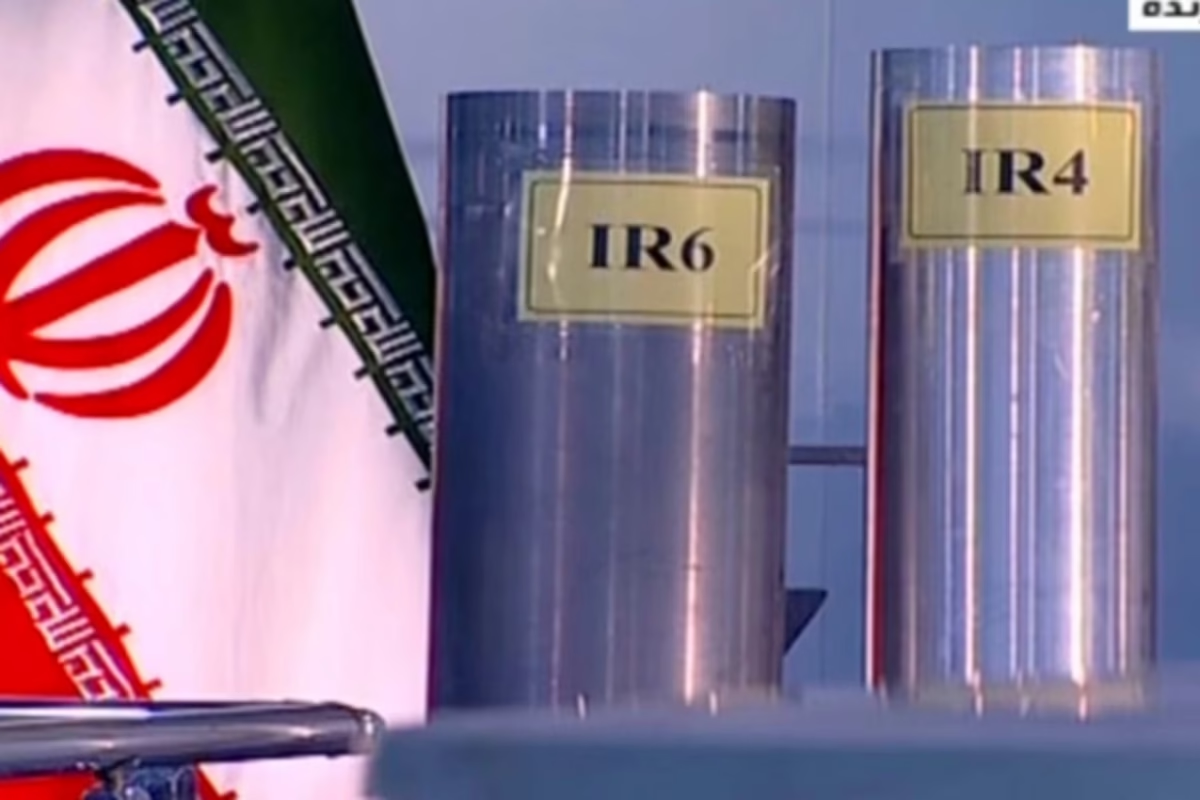
At the center of the Iran uranium enrichment talks is Iran’s offer to pause uranium enrichment activities for five years. This move appears to be an attempt to ease tensions and create a pathway toward a broader agreement.
However, the United States has taken a firmer stance, insisting that Iran suspend its enrichment activities for up to 20 years. This significant gap between the two positions highlights the challenges both sides face in reaching common ground.
The difference in timelines shows how each country views the issue differently. Iran seems to prefer a shorter-term commitment, while the United States is pushing for a longer-term guarantee to ensure stability and compliance.
Talks Held in Pakistan
An important aspect of the Iran uranium enrichment talks is that recent negotiations took place in Islamabad, marking Pakistan’s role as a host for high-level diplomatic discussions. The first phase of these talks occurred on April 11 and lasted approximately 21 hours.
Despite the lengthy discussions, both sides were unable to finalize an agreement. Still, the continuation of dialogue itself is being seen as a positive sign, indicating that both parties remain engaged in the process.
Pakistan’s involvement as a host reflects its growing importance in facilitating regional and international diplomacy. Hosting such talks can contribute to diplomatic trust-building and open communication channels between conflicting parties.
Exchange of Proposals
During the Iran uranium enrichment talks, both American and Iranian officials exchanged several proposals regarding the suspension of nuclear activities. These proposals aimed to find a balance between Iran’s interests and international concerns over nuclear development.
However, negotiations did not lead to a breakthrough. The inability to agree on key issues, particularly the duration of suspension, remains a major obstacle. Each side is trying to secure terms that align with its strategic priorities, which makes compromise difficult.
Statements from US Officials
The Iran uranium enrichment talks also received attention following comments from US Vice President JD Vance. In a recent interview, he stated that there has been positive progress in the negotiations.
According to him, the United States has presented its proposals clearly, and now the responsibility lies with Iran to respond. His statement suggests that while differences remain, the dialogue is still moving forward.
Such remarks indicate cautious optimism, even though no formal agreement has been achieved yet. Diplomatic language often reflects progress in small steps rather than immediate outcomes.
Challenges in Reaching an Agreement
One of the main challenges in the Iran uranium enrichment talks is the lack of alignment on key conditions. The gap between a five-year and a 20-year suspension is significant and requires serious negotiation to bridge.
Additionally, trust remains a critical issue. Both sides need assurances that any agreement reached will be fully implemented. Without mutual confidence, even well-structured agreements can face difficulties in execution.
Political considerations also play a role. Decisions made during these talks are influenced not only by international pressure but also by domestic expectations within each country.
Global Significance of the Talks
The Iran uranium enrichment talks are not just a bilateral issue between Iran and the United States. They have broader implications for regional stability and global security.
A successful agreement could reduce tensions in the Middle East and contribute to non-proliferation efforts. On the other hand, continued disagreement may keep uncertainties alive, affecting international relations and strategic balance in the region.
Future Outlook
Looking ahead, the Iran uranium enrichment talks are expected to continue, with both sides likely to refine their proposals. Diplomatic processes often take time, especially when dealing with sensitive issues like nuclear programs.
There is still hope that a middle ground can be found. Negotiators may explore compromise solutions, such as phased agreements or conditional timelines, to address concerns from both sides.
The Iran uranium enrichment talks highlight the complexity of modern diplomacy, where multiple interests and concerns must be carefully balanced. While Iran’s proposal for a five-year suspension and the US demand for a longer timeline remain far apart, ongoing dialogue keeps the possibility of an agreement alive.
Although no deal has been reached yet, the continued engagement between both sides suggests that efforts toward a resolution are still underway. The coming rounds of negotiations will be crucial in determining whether these talks can lead to a meaningful and lasting agreement.