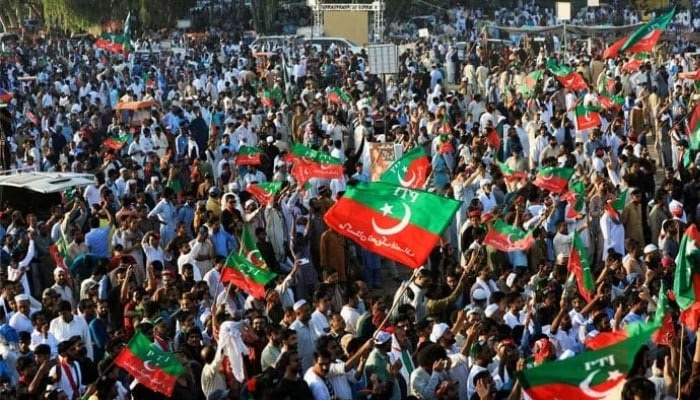
The recent PTI rally postponement Rawalpindi highlights a rare moment in Pakistan’s political landscape where national interests have taken precedence over party activities. Pakistan Tehreek-e-Insaf (PTI) decided to defer its planned April 9 public gathering at Liaquat Bagh, citing the importance of upcoming high-level peace talks between the United States and Iran in Islamabad.
The decision was formally announced by Allama Raja Nasir Abbas after successful negotiations between government representatives and opposition leaders at Parliament House. This development came at a crucial time, as Pakistan prepares to host sensitive diplomatic discussions aimed at stabilizing tensions in the Middle East.
The PTI rally postponement Rawalpindi followed a direct request from the federal government, which emphasized the need for unity during this significant diplomatic phase. A delegation including Azam Nazeer Tarar, Khawaja Asif, Raja Pervaiz Ashraf, and Naveed Qamar met opposition leaders to request reconsideration of the rally. Their message was clear: political calm is essential as Pakistan steps into a global mediating role.
On the National Assembly floor, Law Minister Azam Nazeer Tarar urged the opposition to prioritize national unity over political demonstrations. His appeal reflected a broader consensus that internal stability would strengthen Pakistan’s position as a credible mediator in the ongoing conflict between the US and Iran. The PTI rally postponement Rawalpindi is therefore not just a political decision but a strategic move aligned with national interests.
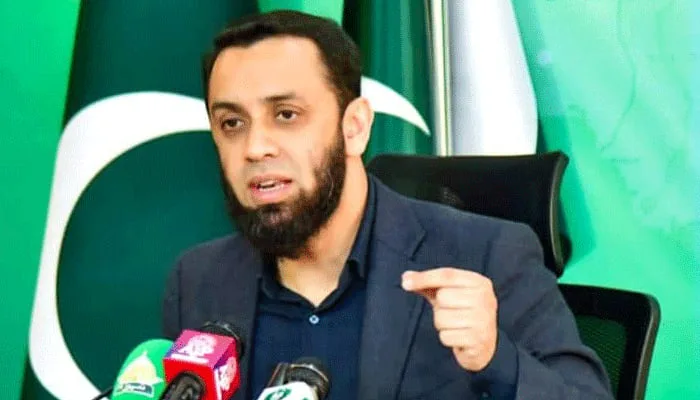
PTI chief Barrister Gohar Khan confirmed that the rally was postponed following directives from the party’s founder, Imran Khan. The message was conveyed through Barrister Salman Safdar, who met Imran Khan at Adiala Jail earlier in the day. According to Gohar Khan, the decision was made after consultations within the party’s political committee, ensuring that it reflected collective agreement rather than unilateral action.
The PTI rally postponement Rawalpindi also demonstrates a shift in political tone, where even opposition parties are willing to cooperate with the government on matters of national importance. Barrister Gohar emphasized that all decisions were being taken in the best interest of Pakistan, reinforcing the idea that political differences can be set aside when the country faces critical challenges.
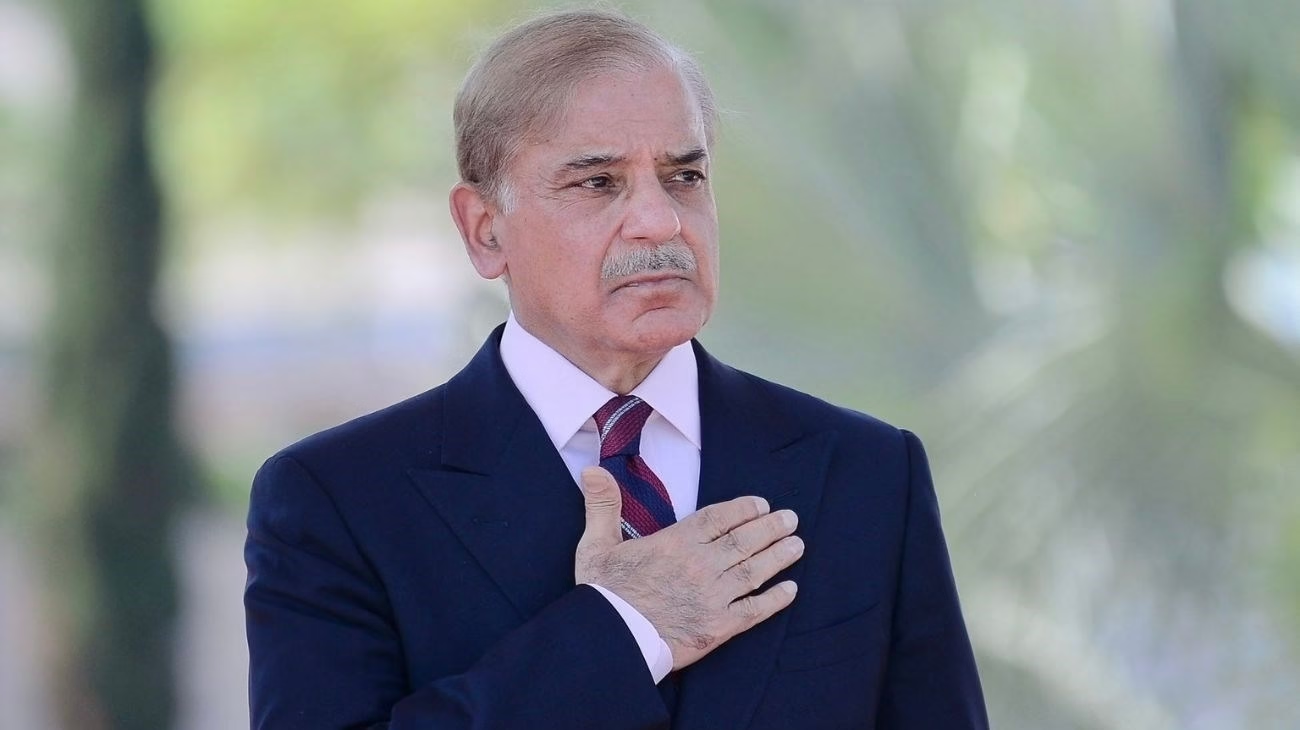
This development is closely linked to Pakistan’s growing role in international diplomacy. The country has recently facilitated a ceasefire agreement between the United States and Iran, positioning itself as a key intermediary. Prime Minister Shehbaz Sharif announced that both sides have agreed to a two-week ceasefire, creating an opportunity for dialogue and negotiation.
Pakistan’s diplomatic efforts have also led to invitations being extended to both US and Iranian delegations to visit Islamabad for further talks. Iranian President Masoud Pezeshkian has reportedly confirmed participation, signaling progress toward a broader peace agreement. The PTI rally postponement Rawalpindi aligns with these efforts, ensuring that domestic political activities do not overshadow or disrupt critical international engagements.
Another important aspect of this situation is the message it sends to the global community. By postponing a major political rally, PTI has contributed to an atmosphere of stability and cooperation. This not only strengthens Pakistan’s diplomatic credibility but also enhances its image as a responsible state capable of facilitating peace in a volatile region.
The PTI rally postponement Rawalpindi may also influence future political dynamics within the country. It sets a precedent for collaboration between government and opposition during times of national importance. While political rivalry remains a core feature of democracy, this incident shows that consensus is possible when the stakes are high.
The PTI rally postponement Rawalpindi represents more than just a delayed political event. It reflects a broader commitment to national unity, diplomatic responsibility, and strategic decision-making. As Pakistan prepares to host critical peace talks, such steps contribute to creating a conducive environment for dialogue and negotiation. The coming days will reveal whether these efforts lead to a lasting resolution, but for now, this decision stands as a positive example of prioritizing the nation above politics.