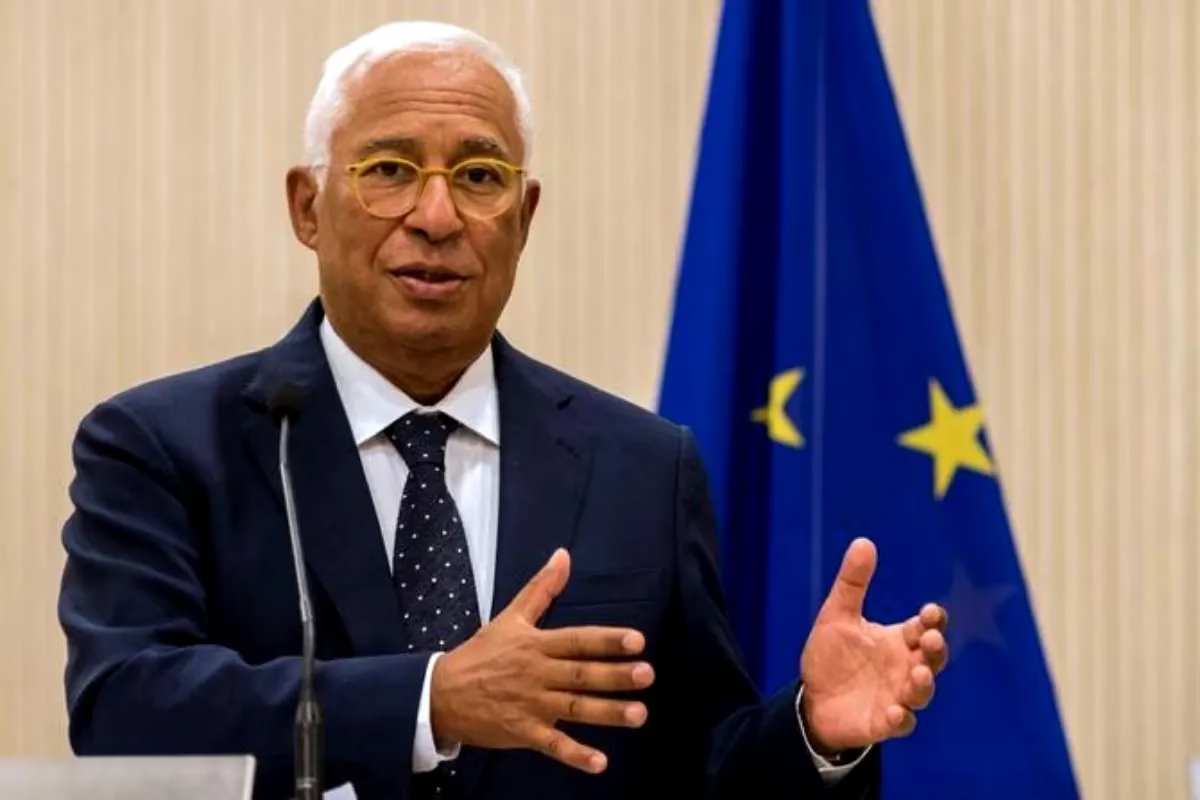
The issue of civilian infrastructure war law has come into sharp focus following recent statements by global leaders regarding ongoing conflicts. Antonio Costa emphasized that targeting civilian infrastructure during war is illegal and unacceptable, reinforcing long-standing principles of international law.
His remarks came amid rising tensions after Donald Trump warned of potential actions against infrastructure in Iran. The situation has reignited discussions about the importance of respecting civilian infrastructure war law in modern conflicts.
What Is Civilian Infrastructure War Law?
At its core, civilian infrastructure war law refers to international legal principles that protect non-military facilities during armed conflict. These include energy plants, hospitals, schools, and transportation systems that are essential for civilian life.
Such laws are part of broader humanitarian frameworks designed to minimize harm to civilians. They establish clear boundaries, ensuring that military actions do not deliberately target infrastructure critical for survival.
Costa’s statement reinforces the idea that these rules apply universally, regardless of the conflict or region.
Rising Concerns in Global Conflicts
The relevance of civilian infrastructure war law has increased as modern conflicts increasingly involve strategic targets beyond traditional battlefields. In recent years, attacks on energy facilities and public services have raised concerns about the erosion of these legal protections.
Costa pointed out that such actions are not limited to one region, referencing ongoing conflicts like the war in Ukraine. His message was clear: the protection of civilians must remain a priority in every situation.
This consistent application of civilian infrastructure war law is essential to maintaining global standards of conduct during war.
Impact on Civilian Populations
One of the most important aspects of civilian infrastructure war law is its focus on protecting people. When infrastructure is damaged, civilians are often the ones who suffer the most.
Disruptions to electricity, water supply, and healthcare services can have devastating consequences. Costa highlighted that ordinary citizens, not governments or military forces, bear the brunt of such actions.
This is why international law places strict limits on targeting infrastructure, aiming to reduce unnecessary suffering and maintain basic living conditions even during conflict.
The Strait of Hormuz Tensions
The current debate around civilian infrastructure war law is closely linked to tensions surrounding the Strait of Hormuz. This vital waterway is crucial for global trade and energy supply.
Any disruption in this region can have widespread economic and geopolitical consequences. Costa called for the restoration of freedom of navigation, emphasizing the importance of stability in such strategic areas.
By linking these concerns to civilian infrastructure war law, he highlighted how legal principles intersect with global economic interests.
Call for Diplomacy Over Conflict
A key message in Costa’s remarks is the need to prioritize diplomacy. He stressed that military action alone cannot resolve complex conflicts and that long-term solutions require dialogue and cooperation.
The discussion around civilian infrastructure war law supports this view, as adherence to legal and humanitarian standards often goes hand in hand with efforts to achieve peace.
Costa’s call for diplomatic solutions reflects a broader international consensus that sustainable peace cannot be achieved through force alone.
Accountability and Global Responsibility
Another important dimension of civilian infrastructure war law is accountability. When violations occur, there must be mechanisms to address them and ensure that responsible parties are held accountable.
This is essential for maintaining the credibility of international law and preventing future violations. Costa’s statement serves as a reminder that these rules are not optional but are binding obligations for all parties involved in conflict.
Global cooperation is necessary to enforce these laws and uphold the principles they represent.
A Universal Standard
One of the strongest points made in the discussion of civilian infrastructure war law is its universal application. Costa emphasized that these rules apply equally in all conflicts, whether in Europe, the Middle East, or elsewhere.
This consistency is crucial for maintaining fairness and preventing double standards. It ensures that all nations are held to the same level of responsibility, regardless of their political or military power.
By reinforcing this principle, global leaders aim to strengthen the foundation of international humanitarian law.
The growing focus on civilian infrastructure war law highlights the importance of protecting civilians in times of conflict. Antonio Costa’s remarks serve as a timely reminder that targeting essential infrastructure is both illegal and morally unacceptable.
As global tensions continue, adherence to these legal principles will be critical in preventing further humanitarian crises. The emphasis on diplomacy, accountability, and universal standards offers a path toward reducing harm and promoting stability.
The discussion around civilian infrastructure war law underscores the need for a more responsible and humane approach to conflict, where the protection of civilians remains at the forefront of international efforts.