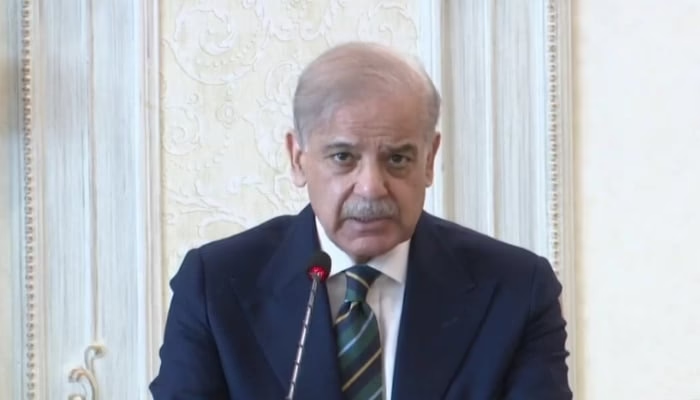
The ongoing Pakistan Middle East peace efforts have taken center stage as the country actively works to de-escalate rising tensions in the region. Prime Minister Shehbaz Sharif recently emphasized that Pakistan is doing everything possible to promote dialogue and reduce conflict amid the ongoing war involving the United States, Israel, and Iran.
Over the past month, the Middle East has been engulfed in conflict following military strikes that triggered a series of retaliatory actions. As the situation escalated, Pakistan stepped in diplomatically, aiming to bridge gaps between key global and regional players. The Pakistan Middle East peace efforts reflect the country’s commitment to regional stability and international cooperation.
Diplomatic Role in a Time of Crisis
One of the most notable aspects of the Pakistan Middle East peace efforts is its role as a mediator. Pakistan has been actively communicating with both Washington and Tehran, relaying messages and encouraging dialogue between the two sides.
In addition to bilateral communication, Pakistan has hosted important regional leaders from countries such as Saudi Arabia, Turkey, and Egypt. These meetings have focused on finding common ground and developing strategies to bring the conflict to an end.
Pakistan’s diplomatic outreach also includes collaboration with China, which jointly called for an immediate ceasefire and the start of peace talks. This coordinated approach highlights the importance of collective action in addressing global crises.
Impact of the Conflict on Pakistan
The Pakistan Middle East peace efforts are not just about international responsibility they are also driven by domestic concerns. The ongoing war has significantly affected Pakistan’s economy, particularly due to disruptions in global trade routes.
One of the most critical developments was the temporary blockade of the Strait of Hormuz, a key passage for oil and goods. This created challenges for Pakistan’s imports and exports, leading to increased economic pressure.
At one point, two Pakistani vessels were stranded in the region. However, through coordinated efforts involving Ishaq Dar and Asim Munir, the ships were safely navigated out of danger. This incident underscores the real-world impact of the conflict on Pakistan’s trade and logistics.
Government Measures to Manage Challenges
As part of the broader Pakistan Middle East peace efforts, the government has taken several steps to address internal challenges arising from the crisis. These include reducing public spending and focusing on essential sectors.
The federal government recently cut the Public Sector Development Programme (PSDP) by Rs100 billion to manage economic pressures. This decision reflects the urgency of reallocating resources to deal with the situation effectively.
In addition, provincial governments have assured full cooperation in tackling wartime challenges. There is a strong emphasis on protecting key sectors such as agriculture and goods transport, which are vital for the country’s stability.
Controlling inflation has also been identified as a top priority. With global supply chains under stress, maintaining price stability is crucial for protecting the purchasing power of citizens.
Focus on National Unity
Another important dimension of the Pakistan Middle East peace efforts is the emphasis on unity between federal and provincial governments. The prime minister has stressed the need for collective action and resource sharing to navigate the difficult situation.
Parliamentarians have also played a role by supporting measures aimed at conserving fuel and managing resources efficiently. This coordinated approach highlights the importance of national solidarity during times of crisis.
A Balanced Foreign Policy Approach
The Pakistan Middle East peace efforts reflect a balanced and pragmatic foreign policy. By maintaining relations with multiple countries and acting as a neutral mediator, Pakistan is positioning itself as a responsible global player.
This approach not only enhances Pakistan’s international standing but also contributes to long-term regional stability. Encouraging dialogue instead of confrontation is a strategy that aligns with global calls for peace.
Looking Ahead
As the conflict continues, the Pakistan Middle East peace efforts are expected to remain a key focus of the country’s foreign policy. While challenges persist, ongoing diplomatic engagement offers hope for a peaceful resolution.
Pakistan’s role in facilitating dialogue and promoting cooperation demonstrates its commitment to addressing complex global issues. The success of these efforts will depend on continued collaboration with international partners and a shared willingness to pursue peace.
The Pakistan Middle East peace efforts highlight the country’s proactive approach in a time of global uncertainty. By engaging in diplomacy, managing domestic challenges, and promoting unity, Pakistan is striving to play a constructive role in resolving the crisis.
While the path to peace may be difficult, these efforts underline the importance of dialogue, cooperation, and strategic decision-making. As the situation evolves, Pakistan’s commitment to peace will remain a crucial factor in shaping the region’s future.