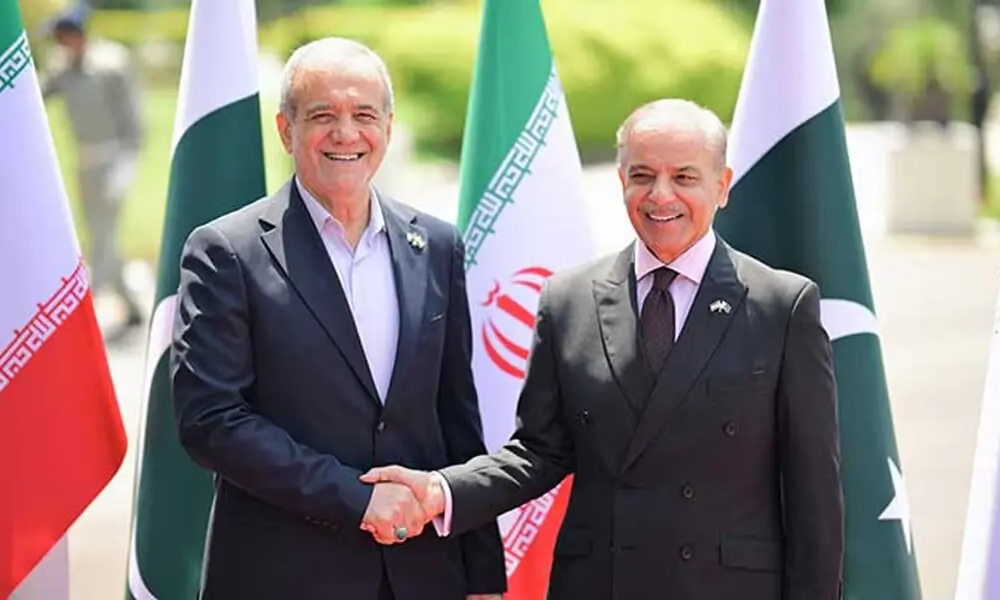
Pakistan diplomacy for Middle East peace has once again come into focus as the country intensifies its efforts to reduce tensions in the region. In a recent development, Shehbaz Sharif held a detailed telephonic conversation with Masoud Pezeshkian, where both leaders discussed the ongoing conflict and the urgent need for dialogue. This interaction highlights how Pakistan diplomacy for Middle East peace is being actively pursued through high-level engagement.
During the conversation, the Iranian president appreciated Pakistan’s sincere diplomatic initiatives and emphasized the importance of trust-building. According to official sources, both leaders agreed that creating mutual trust is essential for meaningful negotiations. This reflects a broader strategy where Pakistan diplomacy for Middle East peace is not limited to statements but includes active mediation efforts.
The discussion also touched on the current hostilities involving Israel and Iran. President Pezeshkian shared his country’s perspective, while Prime Minister Shehbaz reiterated Pakistan’s concern over escalating violence. By taking a clear stance, Pakistan diplomacy for Middle East peace is positioning the country as a voice advocating stability and restraint in a highly volatile environment.
An important aspect of Pakistan diplomacy for Middle East peace is its outreach to multiple stakeholders. The prime minister informed the Iranian president about ongoing diplomatic efforts involving key global and regional players. These include engagement with the United States, Gulf countries, and other Islamic nations to create a supportive environment for dialogue. This multi-layered approach shows that Pakistan is attempting to bridge gaps between different sides.
Adding to these efforts, Islamabad is set to host foreign ministers from several influential countries. Faisal bin Farhan Al Saud, Hakan Fidan, and Badr Abdelatty are scheduled to visit for discussions focused on de-escalation. Their presence underlines the growing importance of Pakistan diplomacy for Middle East peace as a platform for regional dialogue.
These meetings are expected to cover a wide range of issues, including conflict resolution and humanitarian concerns. By bringing together key players, Pakistan diplomacy for Middle East peace aims to foster cooperation and encourage constructive discussions. Such initiatives can play a crucial role in reducing misunderstandings and preventing further escalation.
Prime Minister Shehbaz also expressed solidarity with the people of Iran during these challenging times. He condemned attacks on civilian infrastructure and extended condolences for the loss of lives. This humanitarian perspective adds another dimension to Pakistan diplomacy for Middle East peace, showing that the country is not only focused on politics but also on the human cost of conflict.
Another key figure involved in these diplomatic efforts is Ishaq Dar, who, along with other officials, is actively engaging international partners. Coordination between political leadership and diplomatic channels strengthens Pakistan diplomacy for Middle East peace, making it more effective and credible on the global stage.
The role of Pakistan’s leadership extends beyond formal meetings. The prime minister also highlighted these efforts through public communication, emphasizing transparency and commitment. By sharing updates on diplomatic outreach, Pakistan diplomacy for Middle East peace gains visibility and reinforces confidence among international partners.
At its core, Pakistan diplomacy for Middle East peace is about creating opportunities for dialogue in a time of crisis. The ongoing tensions require careful handling, and Pakistan’s approach focuses on reducing hostility through engagement rather than confrontation. This strategy aligns with the broader goal of promoting long-term stability in the region.
However, the challenges remain significant. The Middle East conflict involves multiple actors with complex interests, making resolution difficult. Despite this, Pakistan diplomacy for Middle East peace demonstrates that even in such situations, consistent efforts toward dialogue can make a difference.
Pakistan diplomacy for Middle East peace is emerging as a proactive and balanced initiative aimed at easing regional tensions. Through high-level talks, international engagement, and a focus on humanitarian concerns, Pakistan is searching to play a constructive role. While the path to peace is uncertain, these efforts reflect a commitment to dialogue, cooperation, and stability in one of the world’s most sensitive regions.