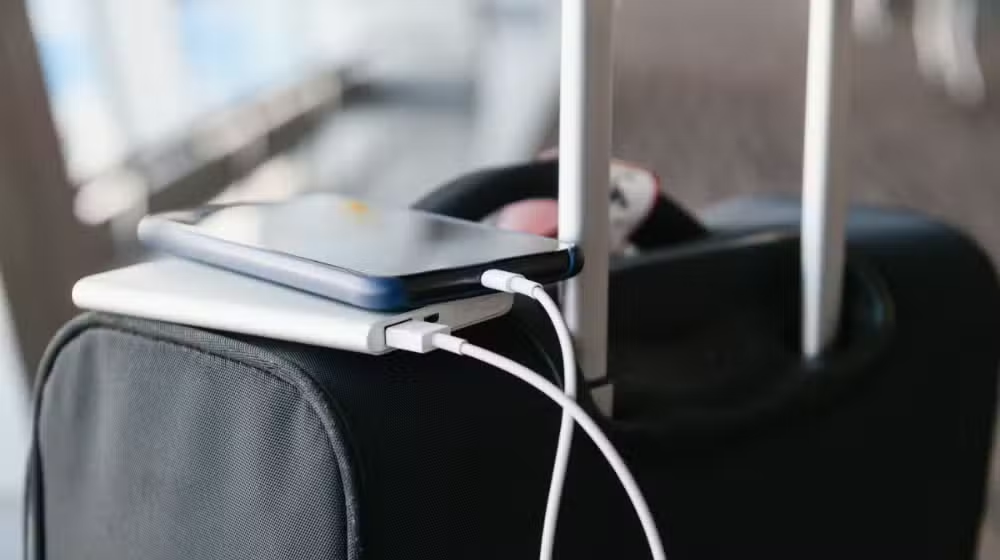
The newly announced ICAO power bank rules are set to change how passengers carry and use portable chargers during flights. The International Civil Aviation Organization (ICAO) has introduced stricter safety guidelines, limiting travelers to carrying only two power banks and banning their use for charging devices while onboard. These measures aim to reduce the risk of in-flight incidents linked to lithium battery devices.
The ICAO power bank rules come as part of a broader effort to improve aviation safety standards worldwide. ICAO, a United Nations agency based in Montreal, is responsible for setting global aviation guidelines followed by 193 member countries. While implementation depends on individual nations and airlines, such recommendations often become standard practice across the aviation industry.
One of the main reasons behind the ICAO power bank rules is the growing concern over lithium battery safety. Power banks, though widely used for charging mobile devices, can pose serious risks if they overheat, are damaged, or malfunction. In rare cases, these batteries can catch fire, which is particularly dangerous in an aircraft environment where quick containment is critical.
Under the updated ICAO power bank rules, passengers are now restricted to carrying a maximum of two portable battery packs. Additionally, the use of these devices for charging during flights has been prohibited. This means travelers will need to rely on onboard charging systems or ensure their devices are sufficiently powered before boarding. These changes are expected to encourage safer handling of battery-powered devices.
The introduction of the ICAO power bank rules is not entirely unexpected. Several airlines and countries had already taken similar steps prior to this global directive. For instance, the Lufthansa Group and aviation authorities in South Korea implemented stricter regulations following incidents involving battery-related fires. These earlier actions highlighted the need for a unified approach to managing such risks.
A notable incident that contributed to increased awareness occurred in 2025, when a fire broke out on an aircraft operated by Air Busan. The event raised serious concerns about the safety of lithium battery devices during flights and reinforced the importance of preventive measures. The ICAO power bank rules can be seen as a direct response to such incidents, aiming to minimize the likelihood of similarوادث in the future.
Another important aspect of the ICAO power bank rules is their potential for global adoption. Although ICAO itself does not enforce regulations, its guidelines are highly influential. Most member states and aviation authorities align their policies with ICAO standards to maintain consistency and ensure passenger safety. As a result, these new rules are expected to be implemented widely across airlines and countries in the coming months.
For passengers, the ICAO power bank rules will require some adjustments. Travelers who typically carry multiple power banks may need to reconsider their packing habits. It will also be important to check airline-specific policies before flying, as some carriers may introduce additional restrictions or enforcement measures. Being aware of these rules can help avoid inconvenience at security checkpoints or during boarding.
From an industry perspective, the ICAO power bank rules represent a proactive approach to risk management. Aviation safety is built on anticipating potential hazards and addressing them before they lead to serious incidents. By focusing on lithium battery devices, regulators are addressing a modern challenge that has become more relevant with the widespread use of portable electronics.
While some passengers may find the restrictions inconvenient, the primary goal of the ICAO power bank rules is to enhance overall safety. In-flight emergencies involving fires are rare but can have serious consequences. Preventing such risks through simple measures, like limiting the number of power banks and restricting their use, is a practical step toward safer air travel.
The ICAO power bank rules mark an important development in global aviation safety. By introducing clear guidelines on the use and carriage of portable battery packs, ICAO aims to reduce risks associated with lithium batteries. As these rules are adopted worldwide, passengers and airlines alike will play a role in ensuring safer skies. Adjusting to these changes may take time, but the long-term benefits of improved safety make them a necessary step forward.