Habib Jalib poetry has remained a beacon of resistance, hope, and justice in Pakistan’s literary and political landscape. Born on March 24, 1928, in Hoshiarpur, East Punjab, Habib Ahmed, popularly known as Habib Jalib, used his pen to challenge oppression and raise his voice for the common people. After the creation of Pakistan, he moved first to Karachi and then settled in Lahore, where he continued to write poetry that inspired generations.
Initially, Habib Jalib’s literary journey began with romantic ghazals in the traditional Moradabadi style. However, as he witnessed societal injustice and exploitation, his poetry took a transformative turn. His words became a powerful tool against tyranny and corruption, giving voice to the struggles of ordinary citizens. This boldness in expression is the hallmark of Habib Jalib poetry, which resonates even today with readers and activists alike.
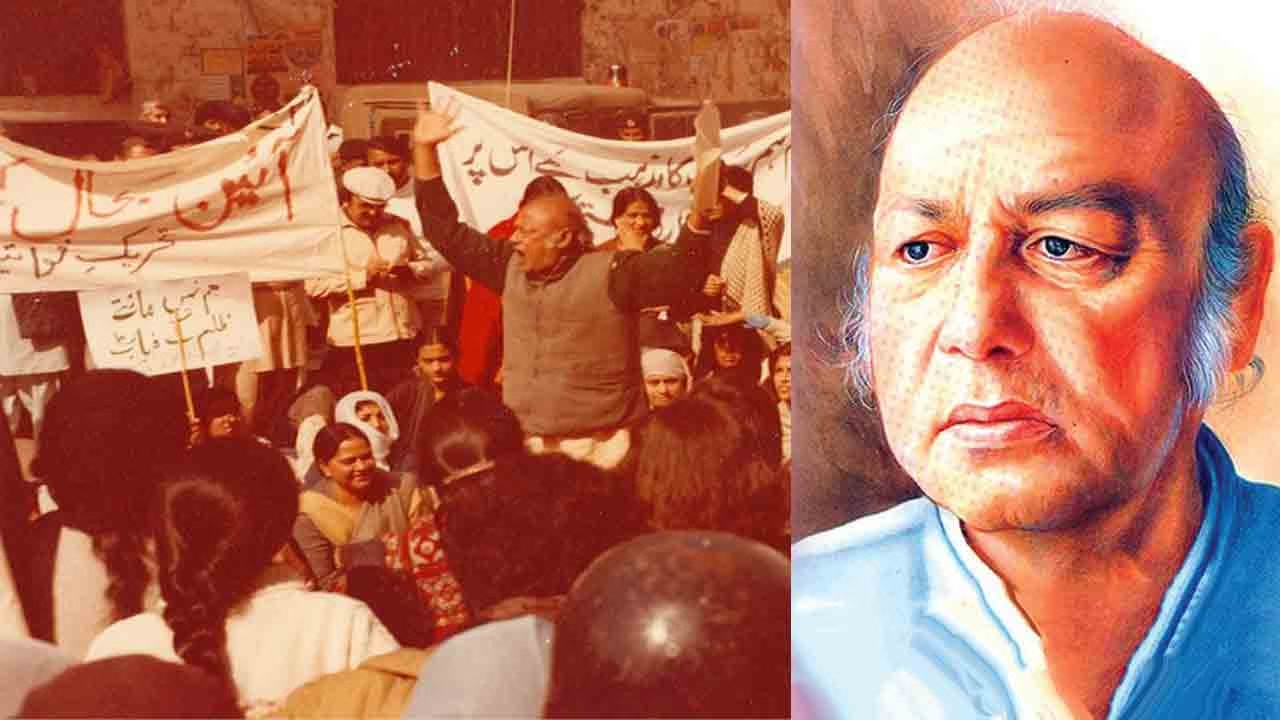
Habib Jalib was not only a poet but also an active participant in political movements. He played a notable role in Mrs. Fatima Jinnah’s presidential campaign against President Ayub Khan. His poetry often reflected his commitment to democracy and equality, earning him recognition as a true people’s poet, alongside legends like Faiz Ahmed Faiz. The themes of freedom, justice, and resistance are central to Habib Jalib poetry, making it timeless and relevant across generations.
One of the remarkable aspects of Jalib’s poetry is its accessibility. Unlike highly abstract literary works, his verses were simple, direct, and emotionally charged. Collections like Barg Awara, Sar Maqtal, Ahed Sadam, Harf Haq, and Zikr Bhete Khun Ka illustrate his unwavering dedication to truth and justice. Every line of Habib Jalib poetry reflects the struggles of the marginalized and the oppressed, inspiring courage and hope in his readers.
In addition to literary work, Habib Jalib also contributed to Pakistani cinema through his songs. He wrote for films such as Yeh Aman, Priai Aag, Nag Mani, Kamus Raho, Sham Dhale, Maa Bahu Beta, Bayram, and Kon Kisika Ka. However, his songs for the film Zarqa received widespread acclaim and remain an essential part of his creative legacy. These songs, much like his poetry, carried strong social messages that resonated with audiences and left a lasting impact.
The appeal of Habib Jalib poetry lies in its courage and sincerity. He fearlessly addressed themes that many avoided, including political repression, societal injustice, and the exploitation of the poor. His work became a voice for those who had none and served as a rallying cry during difficult political times. This connection between literature and activism is what makes Jalib’s poetry exceptional and enduring.
Despite his passing, Habib Jalib continues to live on in the hearts of people through his poetry. His verses are recited at gatherings, protests, and literary events, reminding us of the power of words to challenge injustice. The timelessness of Habib Jalib poetry is evident in how his work continues to inspire not only writers and poets but also ordinary citizens who fight for their rights and dignity.
Habib Jalib’s influence extends beyond literature and politics. His commitment to truth and justice has shaped the conscience of a nation, encouraging critical thinking and empathy. Readers find in his poetry a mirror reflecting societal issues and a guide toward moral courage. Whether through his ghazals, revolutionary poems, or cinematic songs, Jalib’s message remains clear: speak truth to power and stand by justice.
Moreover, the emotional depth and clarity of his words make Habib Jalib poetry uniquely powerful. It is not just a literary expression; it is a social and political statement. His ability to intertwine personal experience with collective struggle created poetry that was deeply human and profoundly relatable. The enduring relevance of his work proves that poetry can be both art and activism.
Habib Jalib poetry represents the spirit of resistance, the pursuit of justice, and the unwavering voice of the people. From his early romantic ghazals to revolutionary verses that shook the foundations of society, Habib Jalib’s literary journey embodies courage, empathy, and integrity. His poetry continues to inspire generations, reminding us of the transformative power of words in shaping society and advocating for human rights.