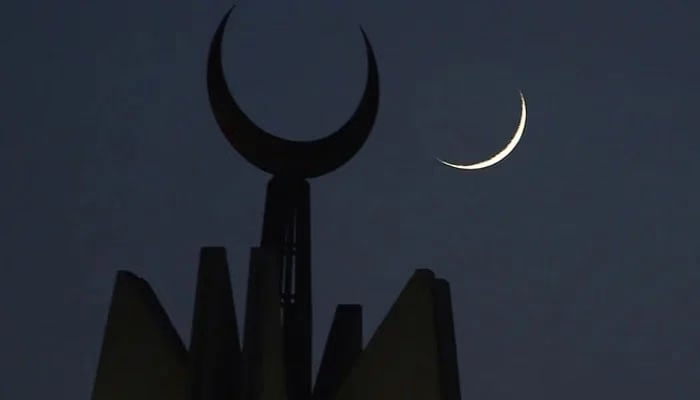
The Shawwal moon announcement petition IHC has gained attention as Eid ul Fitr preparations continue across Pakistan. A citizen has approached the Islamabad High Court, requesting directives for an earlier announcement of the Shawwal moon sighting. The petition reflects public concerns about delays in official moon announcements and their impact on daily life, especially during the final days of Ramadan.
Filed by Abdullah Shafiq, the case has been scheduled for hearing before Chief Justice Sardar Muhammad Sarfraz Dogar. The Shawwal moon announcement petition IHC highlights issues related to religious practices, market management, and public convenience during one of the most significant Islamic festivals.
Why the Petition Was Filed
The Shawwal moon announcement petition IHC was filed with the argument that delayed moon sighting announcements create difficulties for the general public. According to the petitioner, late confirmation of Eid results in last-minute rushes in markets, overcrowding, and logistical challenges for both citizens and authorities.
He also pointed out that people offer congregational Taraweeh prayers in the final days of Ramadan without clarity on whether the next day will mark Eid. This uncertainty can disrupt planning for both worshippers and businesses.
The petitioner has requested the court to direct the Central Ruet-e-Hilal Committee to make timely announcements. Additionally, he suggested measures to manage crowds and maintain law and order, including regulating market timings.
Role of the Islamabad High Court
The Shawwal moon announcement petition IHC places the Islamabad High Court at the center of this issue. As one of Pakistan’s key judicial institutions, the court has the authority to review public interest petitions and issue directives if necessary.
Chief Justice Sardar Muhammad Sarfraz Dogar is expected to hear the case and consider whether any legal or administrative intervention is required. The court’s decision could influence how moon sighting announcements are handled in the future.
While religious matters are typically managed by designated committees, the petition raises questions about whether administrative improvements can be made to benefit the public.
Moon Sighting Process in Pakistan
The Shawwal moon announcement petition IHC also brings attention to how moon sighting is officially conducted in Pakistan. The responsibility lies with the Central Ruet-e-Hilal Committee, which gathers evidence from across the country before making an official announcement.
Zonal committees in different regions assist in collecting testimonies regarding moon sightings. Once verified, the central committee announces the start of Shawwal, marking Eid ul Fitr.
This process ensures that the decision is based on both religious guidelines and verified observations. However, it can sometimes result in late-night announcements, leading to the concerns raised in the petition.
Suparco’s Astronomical Prediction
Amid the Shawwal moon announcement petition IHC, scientific predictions have also provided insight into the expected date of Eid. The Pakistan Space and Upper Atmosphere Research Commission (Suparco) has stated that the new moon of Shawwal 1447 AH is expected to be born on March 19, 2026, at 06:23 PST.
According to Suparco, the age of the moon at sunset on March 19 would be approximately 12 hours and 41 minutes. Based on these parameters, the chances of sighting the crescent that evening are considered low.
As a result, experts anticipate that Eid ul Fitr will likely fall on March 21, following a 30-day Ramadan. However, despite these predictions, the final decision will still be made by the official moon-sighting committee.
Public Concerns and Market Impact
The Shawwal moon announcement petition IHC reflects broader concerns about the economic and social impact of delayed announcements. When the confirmation of Eid comes late, markets often experience sudden surges in activity, leading to overcrowding and potential safety risks.
Shoppers rush to complete last-minute purchases, while businesses struggle to manage the increased demand. The petitioner has suggested regulating market operations to avoid such situations and ensure smoother preparations.
These concerns highlight the need for better coordination between authorities, especially during major religious events that involve large-scale public participation.
Balancing Tradition and Modern Needs
The Shawwal moon announcement petition IHC raises an important question about balancing traditional moon sighting practices with modern-day requirements. While religious traditions emphasize physical moon sighting, advancements in astronomy provide accurate predictions well in advance.
Some experts believe that combining scientific data with traditional methods could improve the process. Others argue that maintaining established practices is essential for preserving religious authenticity.
The ongoing case may encourage discussions about how to improve efficiency without compromising religious values.
What Happens Next?
As the Shawwal moon announcement petition IHC moves forward, all eyes are on the Islamabad High Court’s upcoming hearing. The court will examine whether any changes are necessary to improve the timing and management of moon sighting announcements.
Regardless of the outcome, the final decision regarding Eid ul Fitr will still rest with the Central Ruet-e-Hilal Committee. Authorities are expected to continue their established process of collecting and verifying moon sighting reports.
Meanwhile, citizens are preparing for Eid based on both official announcements and astronomical predictions.
The Shawwal moon announcement petition IHC highlights the challenges associated with managing religious events in a modern, fast-paced society. While the traditional moon sighting process remains central to determining Eid, public concerns about timing and convenience are becoming increasingly important.
As the Islamabad High Court reviews the petition, the case may lead to discussions on improving coordination and communication without altering the core religious framework. Until then, the nation awaits the official moon sighting announcement that will mark the end of Ramadan and the beginning of Eid celebrations.