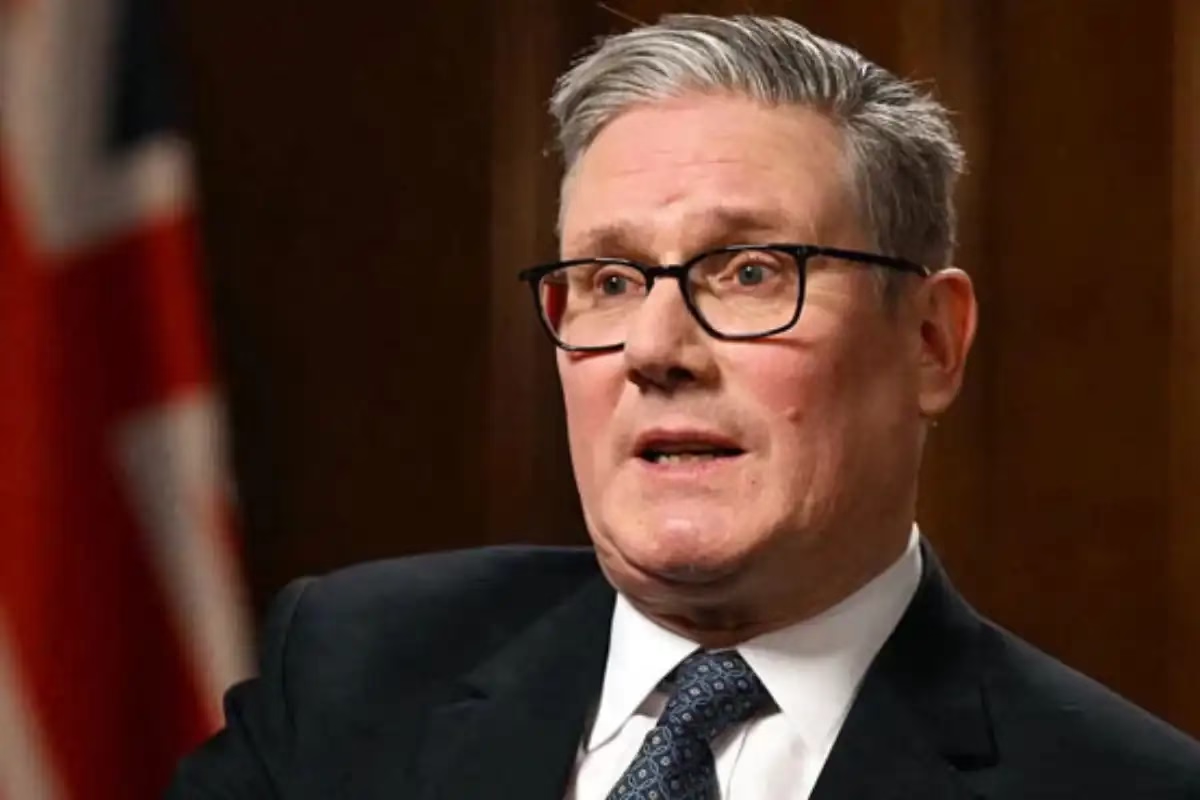
The ongoing Strait of Hormuz crisis has raised serious concerns for global energy markets and international security. UK Prime Minister Keir Starmer recently stated that Britain would not enter a broader conflict with Iran but would instead work with international partners to create a collective plan to reopen the critical maritime route. His remarks highlight the growing urgency to restore normal shipping through the strategically vital waterway.
Speaking during a press conference, Starmer acknowledged that resolving the Strait of Hormuz crisis would not be easy. However, he emphasized that international cooperation remains the best path forward to ensure freedom of navigation and stabilize global oil supplies.
Why the Strait of Hormuz Matters
The Strait of Hormuz is one of the world’s most important maritime chokepoints. Located between Iran and Oman, the narrow passage connects the Persian Gulf to the Gulf of Oman and the wider Indian Ocean. Around one-fifth of the world’s oil and liquefied natural gas shipments normally pass through this route.
Because of its strategic importance, any disruption in this area quickly affects global markets. The current Strait of Hormuz crisis has already caused oil prices to surge above $100 per barrel, increasing economic pressure on countries that rely heavily on imported energy.
Starmer stressed that reopening this shipping corridor is essential not only for energy stability but also for global trade and economic security.
UK’s Position on the Conflict
Prime Minister Keir Starmer made it clear that Britain will defend its interests and allies but will avoid being drawn into a wider regional war. His stance reflects a cautious diplomatic approach aimed at de-escalation rather than military escalation.
Addressing the Strait of Hormuz crisis, Starmer said the UK is currently consulting with European partners, Gulf states, and the United States to develop a coordinated strategy. The goal is to restore safe navigation through international cooperation rather than unilateral military action.
Importantly, he clarified that the initiative would not be led by North Atlantic Treaty Organization (NATO), indicating that a broader coalition of countries may be involved.
Tensions with the United States
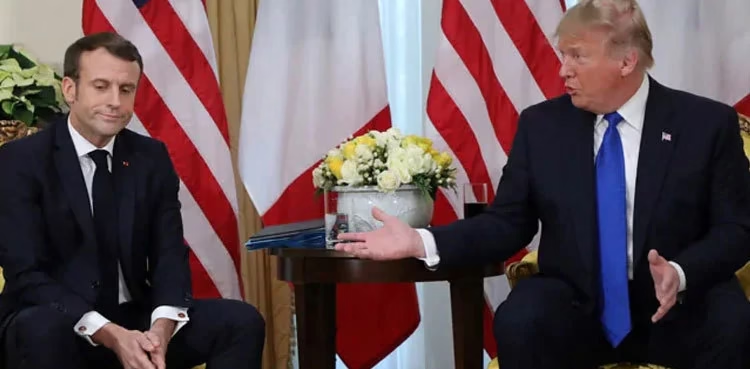
The situation gained additional attention after criticism from Donald Trump, who recently urged several major powers to send naval vessels to help reopen the waterway. Trump suggested that countries including the United Kingdom, China, France, Japan, and South Korea should participate in a joint maritime effort.
Despite the criticism, Starmer downplayed the disagreement and confirmed that he had spoken with Trump to discuss the Strait of Hormuz crisis. According to the British prime minister, the conversation took place in a constructive manner typical of discussions between close allies.
He also reassured the public that relations between the two countries remain strong, emphasizing that cooperation continues on key security and economic issues.
Economic Impact on Households
The global effects of the Strait of Hormuz crisis are already being felt in many countries. Rising oil prices have increased the cost of fuel, heating, and transportation, creating additional financial pressure on households.
In response, the British government announced a £53 million support package designed to assist vulnerable families. The funding will primarily help households that depend on heating oil, which has become more expensive due to disruptions in global energy supply.
This measure reflects growing concern among governments that prolonged instability in the region could worsen the cost-of-living challenges already affecting many families.
Military Assets and Security Measures
Although Britain has taken a diplomatic approach to the Strait of Hormuz crisis, it still maintains certain defensive capabilities in the region. The UK recently withdrew its last minehunter vessel from nearby waters, but autonomous mine-hunting systems remain operational in surrounding areas.
These systems can help detect and neutralize naval mines that might threaten commercial shipping routes. British officials also indicated that they are evaluating potential contributions to any international mission aimed at securing the waterway.
Starmer noted that success will depend on broad international participation, ensuring that multiple countries share responsibility for protecting this vital trade route.
The Path Forward
Resolving the Strait of Hormuz crisis will require careful diplomacy, coordinated security measures, and cooperation among global powers. With such a large portion of the world’s oil supply passing through the strait, restoring safe passage is essential for stabilizing energy markets and preventing further economic disruption.
The United Kingdom’s strategy focuses on building a collective international response rather than escalating military tensions. By working with allies across Europe, the Gulf region, and beyond, Britain hopes to reopen the waterway and reduce pressure on global energy supplies.
While challenges remain, international collaboration may offer the most effective path toward resolving the crisis and ensuring long-term stability in one of the world’s most important shipping routes.