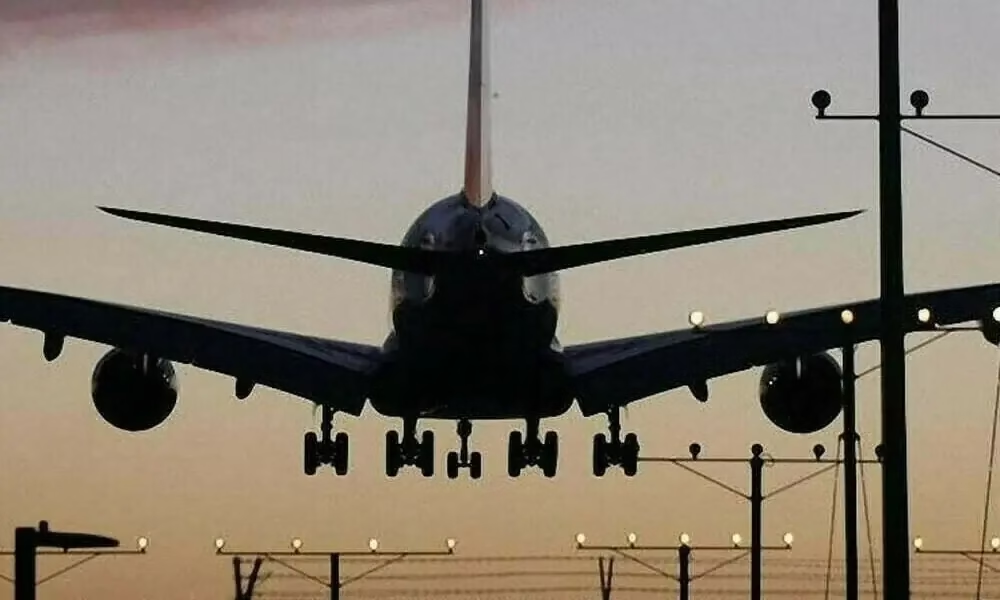
Global air travel has faced significant disruptions as the ongoing conflict in Iran has forced airlines to cancel or suspend flights to and from key Middle Eastern hubs. The widespread cancellations have left tens of thousands of passengers stranded, highlighting the vulnerability of international travel in times of geopolitical tension. These global flight disruptions are affecting both commercial and regional carriers, forcing travelers to reconsider their plans and stay updated on airline advisories.
Widespread Cancellations Across Airlines
Airlines around the world have announced cancellations and adjustments to their flight schedules. For instance, Greece’s Aegean Airlines has suspended flights to Tel Aviv until March 20 and to cities including Beirut, Erbil, Baghdad, Dubai, and Abu Dhabi for varying durations. Similarly, Latvia’s airBaltic has cancelled flights to Tel Aviv until March 28 and Dubai flights until March 16.
Canadian carrier Air Canada has halted flights to Tel Aviv until May 2 and Dubai flights until March 28. In Europe, Air Europa has cancelled all flights to Tel Aviv until March 20, while Air France and KLM have temporarily suspended flights to Tel Aviv, Beirut, Dubai, and Riyadh. These cancellations reflect the broader trend of airlines avoiding conflict zones to ensure passenger safety and operational stability.
Middle Eastern Airlines Adjust Operations
Airlines based in the UAE and surrounding regions are also affected. Emirates has been operating on a reduced schedule, while Etihad Airways has resumed limited commercial flights between Abu Dhabi and select destinations. Qatar Airways is maintaining a restricted flight schedule to and from Doha but plans to gradually resume services following temporary authorisation from the Qatar Civil Aviation Authority. Saudia Airlines has also suspended several flights to Amman, Kuwait, Abu Dhabi, Doha, and Bahrain, while running limited services to Dubai.
Turkish Airlines has removed Iran flights from its schedule and suspended flights to Iraq, Syria, Lebanon, and Jordan through mid-March. Wizz Air, the low-cost European carrier, has postponed flights to Israel until March 29 and suspended operations to Dubai, Abu Dhabi, Amman, and Jeddah from European cities until September.
Asian Airlines Impacted
Asian airlines have been equally affected. Japan Airlines has suspended Tokyo-Doha flights until March 21 and the return flights to Tokyo until March 22. Malaysia Airlines temporarily suspended flights to and from Doha but resumed normal operations to Jeddah and Madinah. Cathay Pacific has cancelled flights to Dubai and Riyadh until March 31, while Finnair is avoiding airspace over Iran, Iraq, Syria, and Israel and has canceled several Middle East flights until the end of March.
Operational Adjustments and Passenger Guidance
Due to these global flight disruptions, airlines are advising passengers to check updated schedules frequently and plan alternative routes where possible. Many carriers are offering options such as refunds, rebooking, and special flights to repatriate stranded passengers. For instance, Finnair has scheduled flights to Muscat to bring travelers home, while IAG’s British Airways is running special flights from Muscat to accommodate affected customers.
These disruptions are not only affecting commercial operations but are also impacting cargo flights, travel itineraries, and airport logistics. Passengers are advised to remain flexible and monitor announcements from both airlines and aviation authorities for safe travel arrangements.
Implications for the Aviation Industry
The Middle East remains a critical hub for international aviation, connecting Europe, Asia, and Africa. The temporary closure of key airports such as Dubai, Doha, and Abu Dhabi highlights the vulnerability of global flight networks to geopolitical events. Airlines are now evaluating risk management strategies, alternative routing, and operational adjustments to ensure passenger safety while maintaining essential services.
Analysts suggest that while these disruptions are temporary, prolonged instability could have broader economic implications, affecting tourism, business travel, and cargo transport. Airlines may also reassess route planning and fleet deployment in response to ongoing geopolitical risks, which could reshape the aviation landscape in the region.
The current global flight disruptions caused by the Middle East conflict underscore the importance of contingency planning in international air travel. Passengers are encouraged to stay informed and flexible, while airlines continue to navigate complex operational challenges to ensure safety. The situation remains fluid, with updates expected as airlines adapt to changing conditions and work to minimize the impact on travelers.
In this volatile environment, staying aware of flight schedules, airline advisories, and safety guidelines is essential for all passengers traveling through or over the Middle East. Global flight disruptions, though temporary, serve as a reminder of the interconnected nature of modern aviation and the need for resilient operational planning.