Pete Hegseth warned on Thursday that Iran would be making a serious miscalculation if it believed the United States lacked the capacity to sustain the ongoing war. He stressed that Washington possesses both the resources and determination to continue the military campaign for as long as necessary.
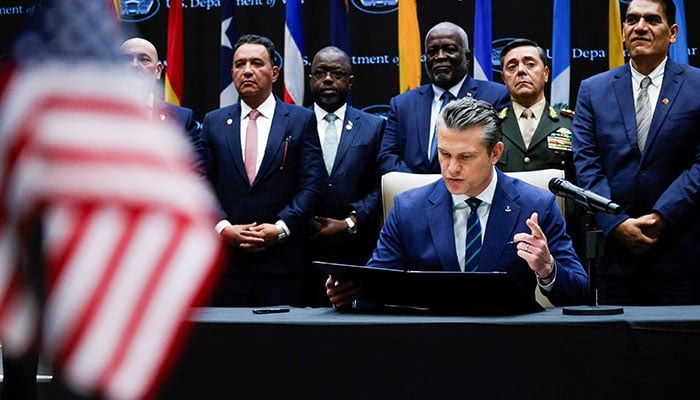
Speaking in Tampa, Hegseth said the US had clearly defined goals for the military campaign against Iran. The operation, named Operation Epic Fury, aims to dismantle Iran’s offensive missile systems, disrupt missile production facilities, and weaken the country’s naval capabilities while ensuring that Tehran does not develop a nuclear weapon.
“There’s no expansion in our objectives. We know exactly what we’re trying to achieve,” Hegseth said while outlining the strategy of the ongoing campaign.
Trump’s Role in the Conflict
During the briefing, Hegseth also suggested that Donald Trump was playing a significant role in shaping the political future of Iran as the conflict unfolds.
According to Hegseth, Trump was “having a heck of a say in who runs Iran given the ongoing operation.”
In a separate telephone interview with Reuters, Trump indicated that the United States might help determine the next leadership of Iran if the current regime collapses.
The US and Israel launched their joint military campaign on Saturday, targeting key military infrastructure across Iran. The strikes have hit multiple locations and prompted retaliatory attacks by Tehran across the region.
Regional Escalation
Iran has responded by launching attacks against several countries allied with Washington, including Israel, United Arab Emirates and Qatar.
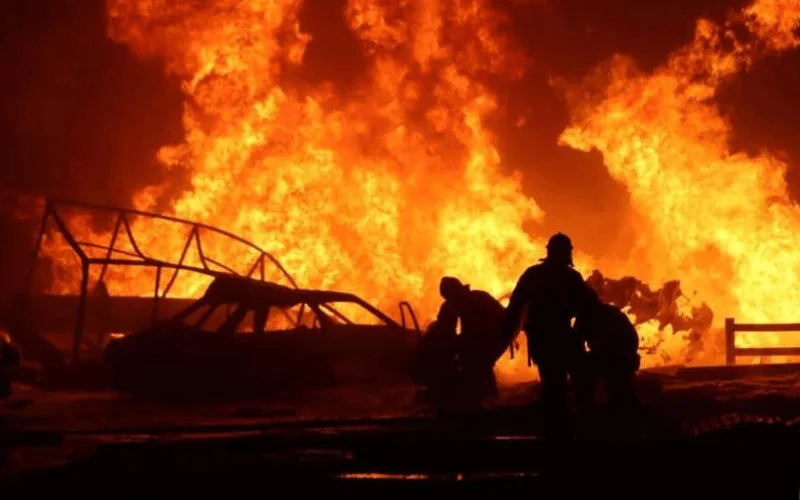
In Bahrain, emergency crews were forced to extinguish a major fire at an oil refinery after a missile strike caused significant damage.
Meanwhile, Azerbaijan became the latest nation drawn into the widening conflict. The country accused Iran of launching drones into its territory and temporarily closed its southern airspace for 12 hours as a precautionary measure.
Hegseth argued that Iran’s attacks on regional countries could ultimately strengthen their alliances with Washington.
“By striking countries in the region, Iran is actually firming up the unity of the resistance in order to focus exactly where we need to,” he said.
Next Phase of Military Operations
According to the Pentagon, US forces have already struck more than 2,000 targets inside Iran since the campaign began.
Brad Cooper, the head of United States Central Command, said the strikes have significantly weakened Iran’s naval capabilities.
Cooper stated that US forces have destroyed 30 Iranian warships so far, including a drone carrier vessel that was targeted earlier on Thursday.
He explained that the military strategy is designed to prevent Iran from rebuilding its missile and naval infrastructure.
“As we transition to the next phase of this operation, we will systematically dismantle Iran’s missile production capability for the future,” Cooper said, adding that the process would take time.
Casualties and Rising Risks
The conflict has already resulted in casualties among US troops. The US military confirmed the identities of six United States Army Reserve soldiers who were killed when a drone struck a US military facility in Port Shuaiba in Kuwait.
Trump and other senior officials have warned that the conflict could lead to additional American military casualties as operations continue.
Hegseth reiterated that the United States was prepared for a prolonged campaign and rejected the idea that Washington might lose momentum.
“Iran is hoping that we cannot sustain this, which is a really bad miscalculation,” Hegseth said. “We set the timeline.”
As tensions escalate across the Middle East, the conflict continues to draw in more regional actors, raising concerns about a broader regional war.