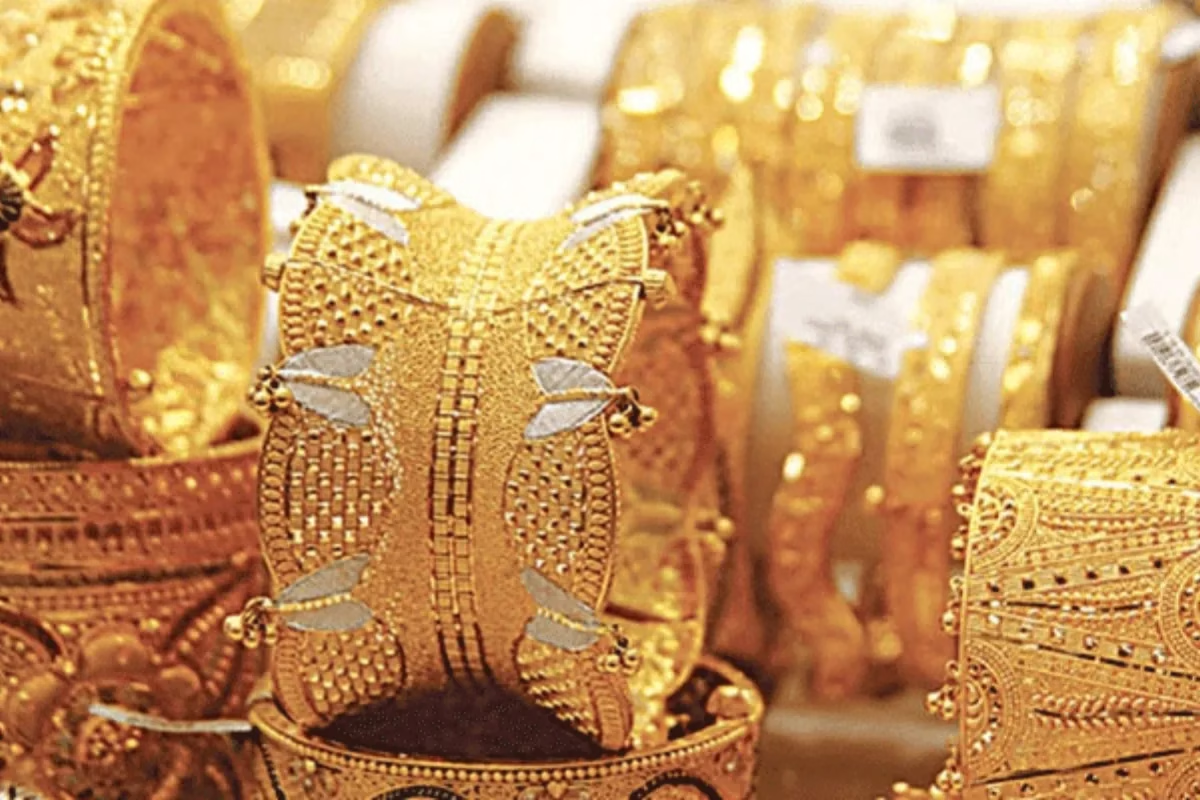
The gold price in Pakistan witnessed a dramatic decline on Wednesday, sending ripples through local bullion markets and catching investors’ attention. Per tola gold fell by a massive PKR 10,000, bringing the new rate to PKR 539,962. This sharp correction reflects shifting trends in both domestic and international markets, where precious metals are reacting to global economic signals.
The drop was not limited to per tola rates. The price of 10 grams of gold also declined significantly, falling by PKR 8,573 to settle at PKR 462,930. Such a steep single-day fall is considered substantial, especially in a market where gold is traditionally viewed as a stable and safe investment.
International Market Impact
The gold price in Pakistan is closely linked to international bullion rates. Globally, gold experienced a decline of $100 per ounce, bringing the international rate down to $5,172 per ounce. When global prices shift sharply, the local market usually follows suit, adjusted according to currency exchange rates and import costs.
Several factors may have contributed to the international decline, including changes in the US dollar’s strength, interest rate expectations, and investor sentiment toward riskier assets like stocks. When confidence in equity markets improves, investors often move away from safe-haven assets such as gold, causing prices to dip.
Why This Drop Matters
Gold holds significant cultural and financial importance in Pakistan. It is widely used in weddings, gifts, and as a long-term savings instrument. For many families, purchasing gold is a way to protect wealth against inflation and currency depreciation.
A sudden fall in the gold price in Pakistan can create mixed reactions. Buyers may see this as an opportunity to purchase gold at lower rates, especially ahead of the wedding season. On the other hand, those who recently invested at higher prices might face short-term losses.
Jewelry traders and bullion dealers also feel the impact immediately. Lower prices can boost short-term sales volume, but volatility creates uncertainty in pricing strategies and inventory management.
Silver Moves in the Opposite Direction
While gold prices declined, silver moved slightly upward in the local market. The per tola silver price increased by PKR 100, reaching PKR 9,004. Though the rise is modest compared to gold’s decline, it highlights how precious metals can sometimes move independently depending on industrial demand and investor behavior.
Silver is often influenced not only by investment demand but also by industrial usage in electronics, solar panels, and manufacturing. This dual demand can cause silver prices to behave differently from gold.
Investor Perspective
For investors, the recent drop in the gold price in Pakistan raises an important question: Is this a temporary correction or the beginning of a broader downward trend?
Market analysts typically advise against making impulsive decisions based on a single day’s movement. Gold prices are influenced by global economic indicators such as inflation data, central bank policies, geopolitical tensions, and currency fluctuations. A $100 drop in the international market is significant, but long-term trends depend on broader macroeconomic developments.
Historically, gold has shown resilience during times of uncertainty. If global risks resurface, prices could rebound quickly. Therefore, long-term investors often view such corrections as buying opportunities rather than reasons to panic.
Impact on the Local Economy
The fluctuation in the gold price in Pakistan also affects the country’s broader economic landscape. Pakistan imports gold, so exchange rate movements between the Pakistani rupee and the US dollar play a critical role in determining local prices.
If the rupee weakens against the dollar, it can offset international declines and keep local prices relatively high. Conversely, a stable or strengthening rupee can amplify the impact of falling global rates, leading to sharper local declines like the one seen this week.
What Buyers Should Consider
For individuals planning to buy gold jewelry or invest in bullion, it is wise to monitor market trends over several days before making a decision. Comparing rates from reputable dealers and understanding making charges in jewelry purchases can also help avoid unnecessary costs.
Diversification remains a key principle in financial planning. While gold can be a valuable part of an investment portfolio, relying solely on one asset class can increase risk exposure.
The recent drop in the gold price in Pakistan by PKR 10,000 per tola marks one of the most significant daily declines in recent months. With international prices also falling sharply, the local market has responded accordingly. At the same time, silver has shown slight gains, reflecting the complex dynamics of precious metal markets.
Whether this decline proves temporary or signals a longer-term adjustment remains to be seen. For now, buyers, investors, and traders alike will be closely watching global economic signals to determine the next direction of gold prices.