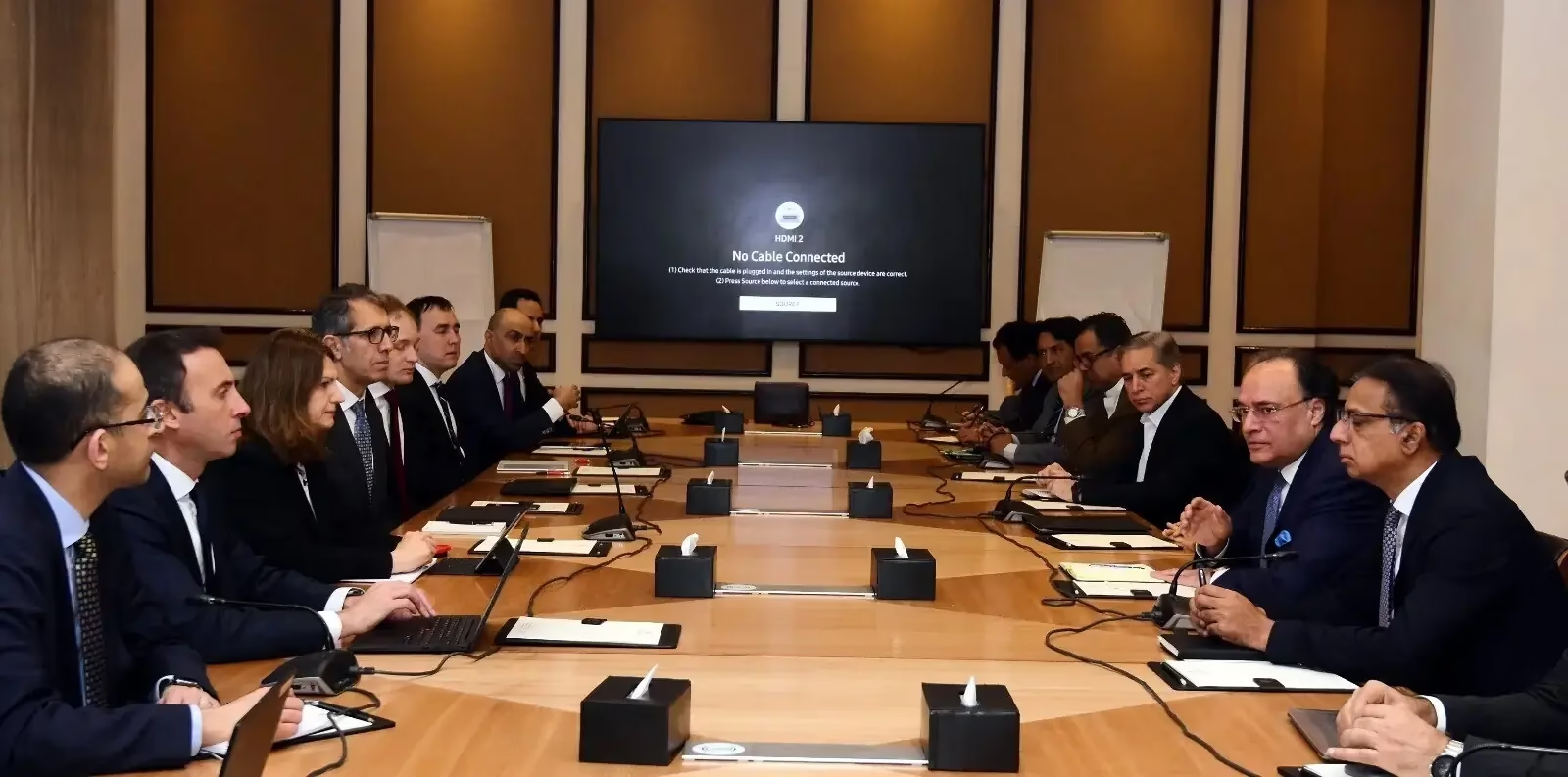
The Pakistan IMF third review talks officially began as Federal Minister for Finance and Revenue Senator Muhammad Aurangzeb met the International Monetary Fund (IMF) mission in Islamabad. The meeting marked the start of the third review under Pakistan’s Extended Fund Facility (EFF) and the second review under the Resilience and Sustainability Facility (RSF), setting the tone for crucial economic discussions in the coming weeks.
The IMF delegation, led by Iva Petrova, held what was described as a kick-off session with Pakistan’s top economic team. According to the Finance Division, the purpose of the meeting was to assess progress under the ongoing IMF-supported programmes and evaluate the country’s reform agenda.
Focus on Macroeconomic Stability
During the Pakistan IMF third review talks, the finance minister highlighted that the country had continued consolidating macroeconomic stability achieved after the last review. He emphasized that fiscal discipline and financial stability were not accidental gains but the result of sustained and often difficult reforms.
Pakistan has faced significant economic challenges over the past few years, including high inflation, external financing gaps, and pressure on foreign exchange reserves. Under the IMF programme, the government committed to reforms aimed at stabilizing the economy and restoring investor confidence. According to Aurangzeb, these measures are now beginning to show gradual improvement in key economic indicators.
Structural Reforms in Tax and Energy
A major portion of the Pakistan IMF third review talks focused on structural reforms, particularly in taxation and the energy sector. The finance minister informed the IMF team that comprehensive changes were underway in tax administration. These reforms include improvements in human resources, operational processes, and the use of technology to enhance transparency and efficiency.
He also noted that the Tax Policy Office has been fully operationalized to ensure future taxation policies are grounded in sound economic principles. The objective is to promote sustainable growth rather than relying on short-term revenue measures.
Energy sector reforms were also discussed, as this sector has historically contributed to fiscal imbalances due to circular debt and inefficiencies. Addressing these structural weaknesses remains central to the government’s broader reform strategy.
Privatisation and State-Owned Enterprises
Another important agenda item during the Pakistan IMF third review talks was the government’s privatisation and state-owned enterprise (SOE) reform programme. Aurangzeb reiterated the government’s commitment to moving forward with key transactions and restructuring initiatives within the year.
He pointed out that recent developments suggest growing investor confidence and renewed interest from domestic investors. This, he said, reflects trust in the direction of economic policy. The government assured the IMF that the privatisation process would continue in a transparent and orderly manner to ensure accountability and maximize value.
Right-Sizing the Federal Government
Public sector reform is another pillar of the current economic plan. The minister outlined steps taken to “right-size” the federal government, including the merger of certain ministries and the closure of selected entities. These measures aim to improve governance, reduce unnecessary expenditures, and enhance overall efficiency.
Such structural adjustments are often politically challenging but are considered necessary to create fiscal space and improve public service delivery.
Export-Led Growth Strategy
Aurangzeb also shared details of Pakistan’s export-led growth strategy during the Pakistan IMF third review talks. The government is pursuing trade facilitation measures and tariff rationalisation to improve competitiveness in international markets.
The long-term goal is to gradually reduce reliance on imports while strengthening export performance. By improving productivity and simplifying trade procedures, policymakers hope to create a more resilient economic model that can better withstand external shocks.
Addressing Climate and External Risks
The meeting also touched upon flood-related challenges faced during the fiscal year. The minister stated that fiscal buffers enabled timely rescue and relief efforts. He argued that improved macroeconomic stability has enhanced Pakistan’s resilience against climate-related and external shocks.
However, he cautioned that global headwinds remain a concern. Geopolitical tensions and volatility in international energy markets could pose risks to economic recovery. To address this, a high-level committee has been formed to closely monitor global developments and coordinate policy responses.
Social Protection Remains a Priority
While stabilisation measures are necessary, Aurangzeb emphasized that the government remains mindful of their social impact. During the Pakistan IMF third review talks, he assured the IMF mission that social spending would continue to protect vulnerable segments of society.
Balancing fiscal discipline with social protection is a delicate task, particularly in a developing economy. The government’s approach aims to maintain macroeconomic balance without compromising support for low-income households.
At the conclusion of the session, Petrova thanked the minister for the detailed briefing and shared insights from earlier discussions held in Karachi. Both sides agreed to continue virtual discussions in the coming days as the review process moves forward.
The Pakistan IMF third review talks are a critical step in determining the country’s continued access to financial support under the IMF programme. The outcome of these discussions will play a significant role in shaping Pakistan’s economic trajectory in the months ahead.
As reforms continue and global uncertainties persist, maintaining stability while fostering growth will remain the central challenge for policymakers.