The Sindh Holi holidays announcement has been warmly welcomed by the Hindu community across the province. The Sindh government declared March 3 and 4 as official public holidays for Hindus on the occasion of Holi, reaffirming its commitment to religious freedom and minority rights. The decision reflects an effort to promote inclusion and respect for diverse cultural and religious traditions in the province.
A spokesperson for the provincial government, Sukhdev Hemnani, extended heartfelt greetings to the Hindu community and emphasized the administration’s dedication to interfaith harmony. The declaration of Sindh Holi holidays ensures that members of the Hindu community can celebrate their religious festival without professional or academic obligations.
Promoting Religious Freedom and Inclusion
The move highlights the broader vision of the Pakistan Peoples Party-led government in Sindh, which has repeatedly stated its commitment to equal citizenship and minority protections. By officially recognizing Holi with public holidays, the government has taken a symbolic yet meaningful step toward strengthening communal harmony.
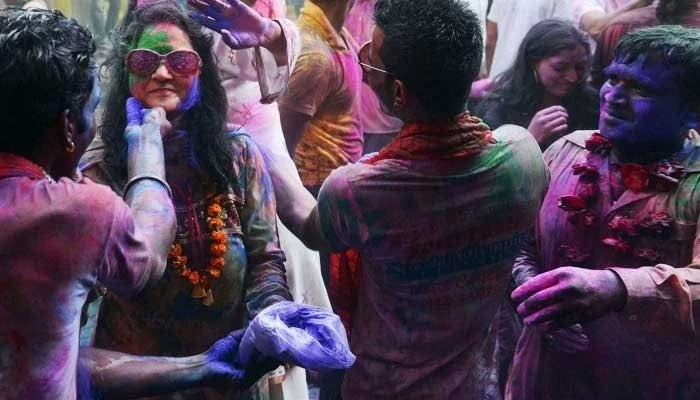
Holi, known as the festival of colors, is one of the most significant celebrations for Hindus. It marks the arrival of spring and represents joy, renewal, and the triumph of good over evil. Through the Sindh Holi holidays, authorities have created space for families and communities to observe their traditions with dignity and enthusiasm.
Officials stressed that respect for religious diversity remains central to provincial governance. Such initiatives help foster unity in a society that comprises people of various faiths and cultural backgrounds.
Security Measures for Celebrations
Alongside the announcement of Sindh Holi holidays, the provincial government has directed law enforcement agencies to ensure comprehensive security arrangements. The Inspector General of Police (IGP) has been instructed to provide foolproof security at Hindu worship places and communal gathering spots.
Large religious gatherings can sometimes raise security concerns, especially during major festivals. By taking proactive measures, the government aims to create a safe environment for celebrants. Authorities have been told to remain vigilant and coordinate closely with community leaders.
These steps demonstrate that the declaration of holidays is not merely ceremonial but accompanied by practical measures to protect citizens.
Education Boards Adjust Exam Schedules
In a related development, Sindh Universities and Boards Minister Ismail Rahu recently directed education boards not to hold examinations during Holi and Easter festivals. The decision came after concerns were raised about exam schedules overlapping with religious observances.
Under the new instructions, exams will not be conducted from April 2 to 6, and postponed papers will resume from April 7. The boards have been asked to revise timetables immediately and submit compliance reports.
While the exam adjustments are separate from the Sindh Holi holidays, both decisions reflect a broader commitment to accommodating minority religious practices. Students observing these festivals will now be able to focus on their celebrations without the added pressure of examinations.
Role of Provincial Leadership
The decision to respect minority observances was taken by Chief Minister Murad Ali Shah following an application from the principal of St Patrick High School Karachi. This demonstrates how community engagement can influence policy decisions.
By responding to concerns raised by educational institutions and community representatives, the provincial administration has shown openness to dialogue and responsiveness to citizen needs.
On his recommendation, the Inspector General of Sindh Police has directed foolproof security arrangements at all Hindu places of worship and communal spaces.
— Sindh Information Department (@sindhinfodepart) March 2, 2026
Sindh Government has announced March 3 & 4 as official holidays for the Hindu community, Under the leadership of Bilawal… pic.twitter.com/FrFdM3eteJ
The Sindh Holi holidays announcement therefore stands as part of a wider pattern of inclusive governance.
Importance of Holi in Sindh
Sindh is home to one of the largest Hindu populations in Pakistan. Cities like Karachi, Hyderabad, and several rural districts have vibrant Hindu communities that actively celebrate religious festivals.
The official recognition of Holi through Sindh Holi holidays not only provides practical convenience but also sends a strong message about coexistence. Public holidays for minority festivals symbolize equal respect and acknowledgment within the framework of citizenship.
For many families, Holi is a time for community gatherings, temple visits, and colorful festivities. Having designated holidays allows greater participation and reduces workplace or school-related conflicts.
Strengthening Interfaith Harmony
Initiatives like the Sindh Holi holidays contribute to building trust between communities. In diverse societies, public recognition of religious festivals can play an important role in promoting social cohesion.
Interfaith harmony is not achieved overnight. It requires consistent policies that protect rights and encourage mutual respect. By pairing holiday announcements with security arrangements and exam schedule adjustments, the Sindh government has taken multiple steps to demonstrate its inclusive approach.
Such measures also set a positive example for other regions to consider similar accommodations for minority communities.
The declaration of Sindh Holi holidays for March 3 and 4 reflects the provincial government’s commitment to religious freedom, minority rights, and social inclusion. By ensuring security arrangements and adjusting academic schedules, authorities have shown that the initiative goes beyond symbolism.
As Sindh’s Hindu community prepares to celebrate Holi, the official recognition provides both practical support and moral encouragement. In a diverse society, steps that promote respect and equality help strengthen unity and shared citizenship.