The latest Pakistan blames India for Balochistan attack narrative has intensified diplomatic tensions between Islamabad and New Delhi. During a recent weekly press briefing, Pakistan’s Foreign Office stated that developments following the terrorist incidents in Balochistan have effectively corroborated its longstanding position regarding alleged external involvement in destabilising activities within the country.
Last month, militants linked to the Baloch Liberation Army (BLA) carried out coordinated attacks across several districts of Balochistan. The violence reportedly claimed the lives of 22 security personnel and 36 civilians, marking one of the deadliest waves of attacks in the province in recent times.
Security Operations and Official Claims
According to the Inter-Services Public Relations (ISPR), the attackers were affiliated with what it described as India-sponsored “Fitna al-Hindustan.” The military’s media wing stated that the attacks targeted civilians in areas including Quetta, Mastung, Nushki, Dalbandin, Kharan, Panjgur, Tump, Gwadar, and Pasni.
In response, Pakistani security forces launched extensive clearance operations across the province. Official statements claimed that 92 militants, including three suicide bombers, were killed during these operations. As Pakistan blames India for Balochistan attack, authorities argue that the scale and coordination of the violence point toward external support.
India, however, has consistently rejected such allegations in the past, calling them baseless and politically motivated.
Foreign Office Statement
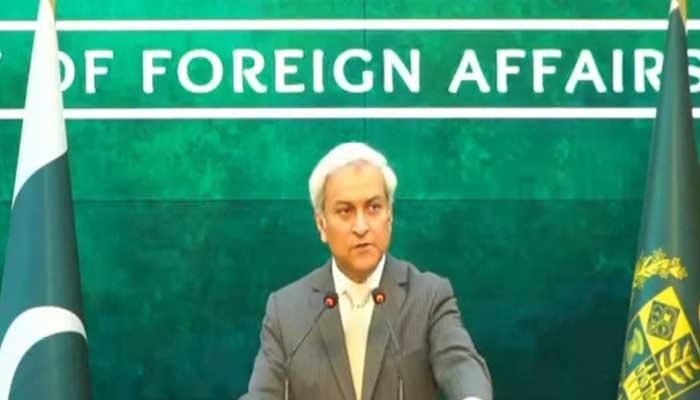
At the weekly media briefing, Foreign Office spokesperson Tahir Andrabi reiterated Pakistan’s commitment to regional peace, dialogue, and diplomacy. He emphasized that while Islamabad seeks stability, it will firmly defend its national interests and sovereignty.
The Pakistan blames India for Balochistan attack position was reinforced by rejecting a recent statement from India’s Ministry of External Affairs. Andrabi described the Indian response as unfounded and dismissed it as an attempt to deflect attention.
Islamabad maintains that its concerns about foreign involvement in Balochistan are rooted in a consistent pattern of incidents and intelligence assessments over the years.
Reference to the Samjhauta Express Case
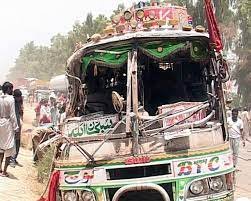
During the briefing, Andrabi also recalled the 19th anniversary of the Samjhauta Express bombing. The tragic incident, which occurred in 2007, resulted in the deaths of more than 70 people, many of whom were Pakistani citizens traveling to India.
The case involved individuals such as Swami Aseemanand and Shrikant Purohit, who were reportedly implicated during investigations. According to Pakistan’s Foreign Office, confessions and admissions had surfaced during legal proceedings in India. However, Islamabad claims that those accused have not been held fully accountable.
By raising the Samjhauta Express case, Pakistan appears to be linking past unresolved incidents with its broader argument about accountability and cross-border militancy. The Pakistan blames India for Balochistan attack narrative thus extends beyond recent events to historical grievances.
Regional Security Concerns
Balochistan has long faced security challenges, including insurgent activity and separatist violence. The province’s strategic importance—particularly due to infrastructure projects and its coastal location—makes stability there a priority for Pakistan.
When Pakistan blames India for Balochistan attack, it frames the issue not only as an internal security challenge but also as a matter of regional geopolitics. Islamabad argues that destabilising actions threaten broader peace in South Asia.
India, on the other hand, has often accused Pakistan of supporting cross-border militancy in other regions, leading to a cycle of mutual allegations that complicates diplomatic engagement.
The Diplomatic Dimension
The exchange of statements between Islamabad and New Delhi highlights ongoing tensions in bilateral relations. Despite occasional attempts at dialogue, both countries continue to raise concerns about security and sovereignty.
The Pakistan blames India for Balochistan attack stance underscores Islamabad’s call for international attention to what it describes as external interference. At the same time, Pakistan’s leadership emphasizes a preference for diplomacy over escalation.
Observers note that such public statements serve multiple purposes: addressing domestic audiences, sending signals internationally, and maintaining strategic positioning in a sensitive regional environment.
As investigations into the Balochistan attacks continue, the broader diplomatic narrative is likely to persist. The Pakistan blames India for Balochistan attack position reflects deeper mistrust between the two nuclear-armed neighbors.
For long-term regional stability, confidence-building measures and transparent communication channels remain essential. However, given the history of mutual accusations, achieving sustained dialogue may prove challenging.
The recent wave of violence in Balochistan has once again placed Pakistan-India relations under strain. By asserting that external involvement has been corroborated, Islamabad has reinforced its longstanding claims regarding regional interference.
Whether these allegations lead to further diplomatic friction or renewed calls for dialogue will depend on how both sides navigate the aftermath. For now, the Pakistan blames India for Balochistan attack narrative remains central to Islamabad’s official position on the incident, reflecting the complex and sensitive nature of South Asian geopolitics.