The issue of the Imran Khan hospital shift has once again sparked political debate in Pakistan, as government and opposition leaders exchange sharp remarks over the jailed former prime minister’s medical treatment. The discussion gained momentum after the Prime Minister’s Adviser on Political Affairs, Rana Sanaullah, stated that Imran Khan could be moved to a hospital if the court orders it.
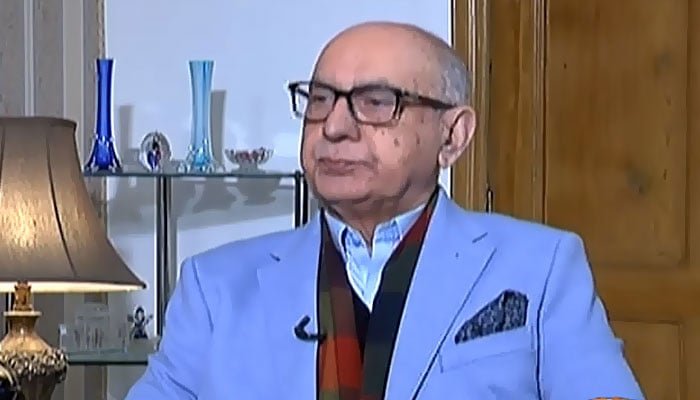
Speaking on the Geo News programme Capital Talk, Rana Sanaullah maintained that a five-member medical panel had examined Imran Khan twice at Central Jail Rawalpindi. He added that if the Pakistan Tehreek-e-Insaf (PTI) is dissatisfied with the medical care being provided, it should approach the Supreme Court of Pakistan.
Medical Treatment and Ongoing Care
The debate over the Imran Khan hospital shift intensified after the former premier received his second eye injection at Pakistan Institute of Medical Sciences (Pims) during a follow-up visit. Doctors had earlier prescribed three injections to treat his diagnosed condition, central retinal vein occlusion (CRVO), a serious eye disorder that can significantly affect vision.
According to reports submitted to the Supreme Court by his lawyer, Salman Safdar, Imran Khan has complained of losing around 85% of vision in his right eye. The first injection was administered in late January, while the third is expected to be given on March 23. The Imran Khan hospital shift demand primarily centers on ensuring that his treatment takes place under conditions acceptable to his family and party leadership.
Government’s Position
Rana Sanaullah emphasized that legal procedures must guide any decision regarding the Imran Khan hospital shift. He stated that the satisfaction of family members or political associates is a separate matter from legal requirements. According to him, the medical panel’s involvement demonstrates that due process is being followed.
He further claimed that after restrictions were imposed on meetings between Imran Khan and PTI leaders due to alleged violations of jail rules, rumors began circulating about his health condition. To address these concerns, a meeting between Imran Khan and his sister was arranged inside the jail, he added.
Sanaullah also questioned whether allowing personal physicians to visit might lead to politically charged statements. “If doctors are allowed to meet him and later issue inappropriate remarks, who will be responsible?” he asked, suggesting that the matter could be politicized.
PTI’s Response
On the other hand, PTI leaders have maintained that the Imran Khan hospital shift is necessary to ensure transparency and proper care. Speaking on the same programme, PTI parliamentary leader Shahid Khattak urged the government to transfer the former prime minister to a hospital setting.
He stressed that Imran Khan should be examined in the presence of his personal physician and at least one of his sisters. According to him, this is a matter of health and accountability. He warned that if anything were to happen to the former premier, serious questions would arise.
The PTI leadership has also raised concerns over what it describes as “secrecy” surrounding the medical procedures. However, Shahid Khattak assured that if personal doctors are granted access, they would refrain from making public or political statements.
A Broader Political Context
The Imran Khan hospital shift debate also carries echoes of past political precedents. During the programme, Rana Sanaullah referred to the case of Nawaz Sharif, who traveled abroad for medical treatment in 2019 after receiving court permission. At the time, all required legal formalities were completed, and Nawaz had assured the court that he would return upon completion of treatment.
By drawing this comparison, Sanaullah suggested that any similar arrangement for Imran Khan would need to follow proper judicial procedures.
Legal and Political Crossroads
At its core, the Imran Khan hospital shift issue lies at the intersection of healthcare and politics. While medical treatment should ideally remain a humanitarian concern, it has become a focal point of political disagreement.
The government maintains that adequate care is being provided under medical supervision. PTI, meanwhile, insists that greater transparency and family involvement are necessary to ensure trust. Both sides agree that Imran Khan’s health is important, but they differ sharply on how the situation should be managed.
As the third scheduled injection approaches, attention will likely intensify around whether a court petition will be filed to formalize the Imran Khan hospital shift request. Much depends on legal proceedings and the evolving medical condition of the former prime minister.
The issue remains a sensitive topic in Pakistan’s political landscape. Beyond party lines, many observers believe that ensuring proper medical care while adhering to legal procedures is essential for maintaining institutional credibility.
The coming weeks may determine whether the matter remains a political flashpoint or moves toward resolution through judicial clarity.