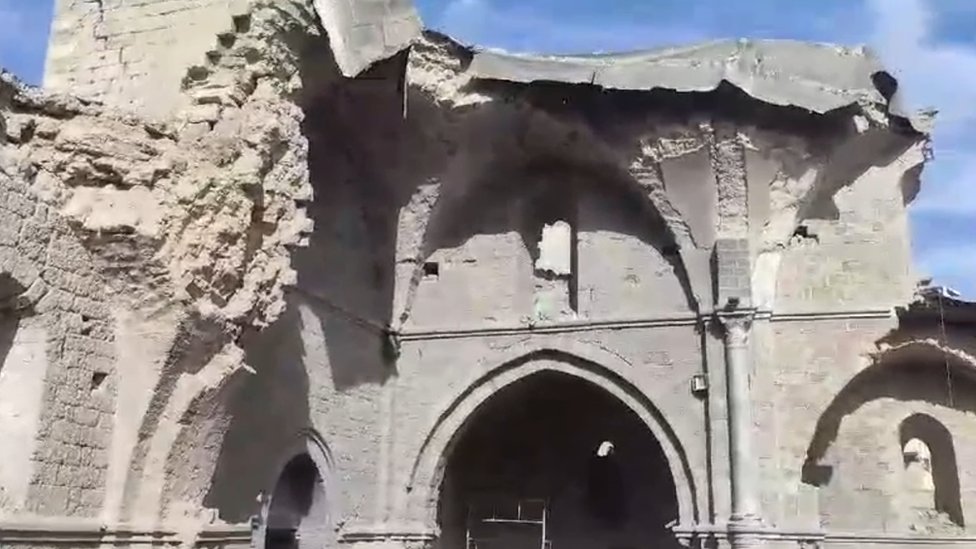
Inside the shattered remains of the Great Omari Mosque in Gaza City’s old quarter, volunteers are working carefully to recover what is left of one of Palestine’s oldest and most significant libraries.
The mosque and its historic library suffered severe damage during the war in Gaza, which began in October 2023 and devastated large areas of the territory, including religious and cultural landmarks.
A shattered cultural treasure
Before the war, the mosque’s library held an estimated 20,000 books. Today, fewer than 3,000 to 4,000 remain, according to Haneen Al-Amsi, head of the Eyes on Heritage Volunteer Foundation.
“The library was estimated to contain about 20,000 books, but currently we are left with fewer than 3,000 or 4,000,” she said, describing the destruction as shocking.
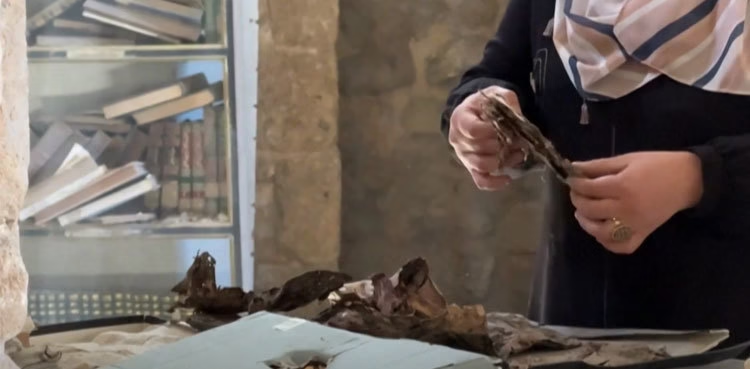
The western section of the library was burned when the mosque was struck, causing irreversible losses. Volunteers now sift through rubble, brushing soot and dust from fragile manuscripts and yellowed pages in an effort to salvage whatever survives.
One of Palestine’s largest libraries
Al-Amsi noted that the Great Omari Mosque library ranked as the third largest in Palestine, after the libraries of Al-Aqsa Mosque and the Ahmed Pasha al-Jazzar Mosque.
Its collection included rare manuscripts and works on Islamic jurisprudence, medicine, law, literature and other disciplines — materials that documented centuries of intellectual and religious life.
Gaza’s history spans thousands of years, shaped by civilizations including the Canaanites, Egyptians, Persians and Greeks, making the territory rich in archaeological and cultural heritage.
Widespread heritage damage
As of January 2026, UNESCO verified damage to 150 cultural sites in Gaza since the start of the war, including 14 religious sites and 115 buildings of historical or artistic significance.
A June 2025 report by the UN Independent International Commission of Inquiry on the Occupied Palestinian Territory stated that Israeli attacks on schools and cultural sites amounted to war crimes. Israel rejected the findings, calling the commission biased and dismissing the report as politically motivated.
Preserving memory amid ruin
Inside the damaged stone rooms of the mosque, volunteers wearing masks and gloves gently clean and sort the surviving volumes. Many books show heavy deterioration after being exposed to debris, moisture and gunpowder residue for more than two years.
For Al-Amsi, the effort goes beyond restoration.
“These books represent the history of the city and bear witness to historical events,” she said.
Amid the ruins, the volunteers’ work stands as an attempt not only to recover books, but to safeguard Gaza’s cultural memory for future generations.