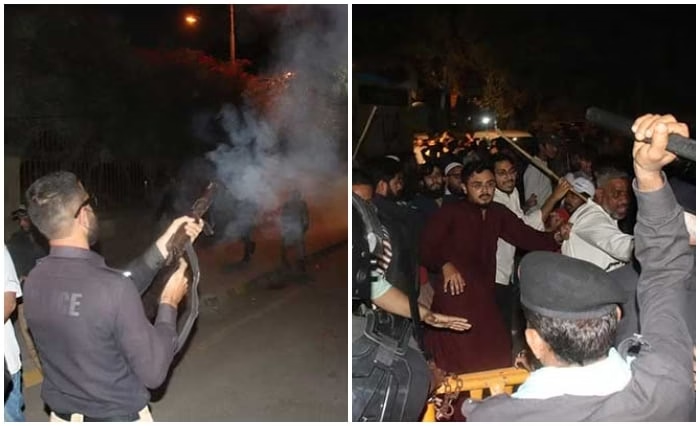
The unfolding Karachi protests 2026 took a dramatic turn on Saturday as Jamaat-e-Islami (JI) announced it would stage sit-ins at 10 locations across the city following clashes with police outside the Sindh Assembly. The confrontation erupted when law enforcement used teargas and batons to disperse party workers attempting to stage a sit-in under the banner of the “Jeenay Do Karachi Ko” (Let Karachi Live) campaign.
The Karachi protests 2026 began as a demonstration aimed at drawing attention to civic issues in Pakistan’s largest metropolis. JI leaders said the protest was meant to demand urgent action on deteriorating roads, chronic drainage failures, and what they described as weaknesses in the local government system. However, tensions escalated when protesters tried to move beyond barricades placed near the Red Zone surrounding the Sindh Assembly.
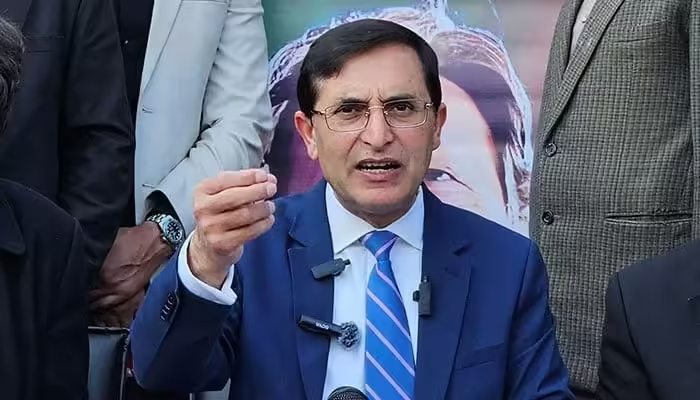
JI Karachi chief Monem Zafar, addressing a press conference, condemned the police action and accused the ruling Pakistan Peoples Party (PPP) of suppressing peaceful dissent. He described the crackdown as “fascist behaviour” and claimed that ordinary citizens had been subjected to injustice. According to him, several party workers were arrested and teargas shells were fired to prevent them from assembling outside the provincial legislature.
Zafar further alleged that expired teargas shells from 2022 and 2023 were used against protesters, calling on provincial authorities to clarify why Karachi had effectively been turned into what he termed a “no-go area.” Despite the confrontation, he instructed party workers to temporarily disperse while announcing a broader strategy of holding sit-ins at 10 different points across the city on Sunday.
The Karachi protests 2026 also drew a response from Sindh Information Minister Sharjeel Memon, who defended the police action. Speaking to media outlets, he said the local administration had been in contact with JI leaders and had advised them to hold a peaceful demonstration without entering the Red Zone. According to Memon, protesters violated Section 144 and allegedly pelted stones at police officers after breaching security barriers.
He stated that law enforcement had no option but to use teargas and make arrests after demonstrators attempted to move toward the Sindh Assembly building. Memon emphasized that authorities would not allow anyone to take the law into their own hands, underscoring the government’s position that maintaining order was its primary responsibility.
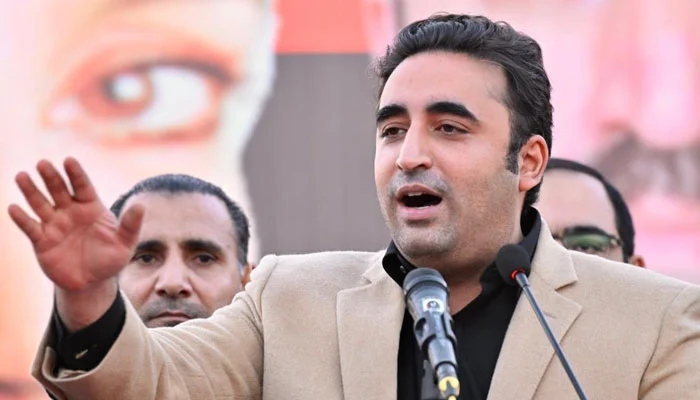
As the Karachi protests 2026 intensified, JI Pakistan Emir Hafiz Naeemur Rehman also weighed in, condemning what he described as the provincial government’s heavy-handed tactics. In statements and social media posts, he accused the PPP-led administration of targeting peaceful citizens and failing to address Karachi’s longstanding governance issues. He asserted that an empowered city government was the right of Karachi’s residents and pledged that the people would secure their rights.
Naeemur Rehman later announced that protests would not be limited to Karachi alone, revealing plans for demonstrations across the country. He demanded the immediate release of all detained party workers and warned that suppressing peaceful political activity would only deepen public frustration.
On the ground, tensions remained high throughout the day. At least one JI worker was reported injured during baton charges and teargas shelling. Police officials, meanwhile, said that three officers sustained injuries after protesters allegedly threw stones. Authorities also confiscated the party’s sound system mounted on a truck and detained at least nine activists.
Despite security measures, several JI workers managed to cross barricades and briefly reach the Sindh Assembly premises. A heavy police presence was maintained along Court Road and surrounding areas to prevent further escalation. Hundreds of activists continued to gather nearby, chanting slogans and demanding improved civic conditions.
The Karachi protests 2026 highlight deeper frustrations simmering in the city. Karachi has long grappled with infrastructure challenges, including flooding during monsoon seasons, pothole-ridden roads, and concerns about the distribution of administrative powers between provincial and local governments. Political parties frequently mobilize public demonstrations to press for reforms, but such protests often lead to confrontations when they intersect with restricted security zones.
Observers note that how authorities and political groups manage the next phase of these demonstrations will be crucial. If Sunday’s planned sit-ins proceed peacefully, tensions may ease. However, any further clashes could intensify political polarization in Sindh’s capital.
As Karachi braces for another day of mobilization, the Karachi protests 2026 remain a focal point in the broader debate about governance, civic rights, and the balance between public order and political expression in Pakistan’s largest city.