The Iran uranium sanctions deal has once again come into global focus as Tehran signaled its willingness to dilute highly enriched uranium if the United States lifts sanctions. This statement came after renewed talks between Iran and Washington, raising cautious optimism about a possible diplomatic breakthrough after years of tension over Iran’s nuclear program.
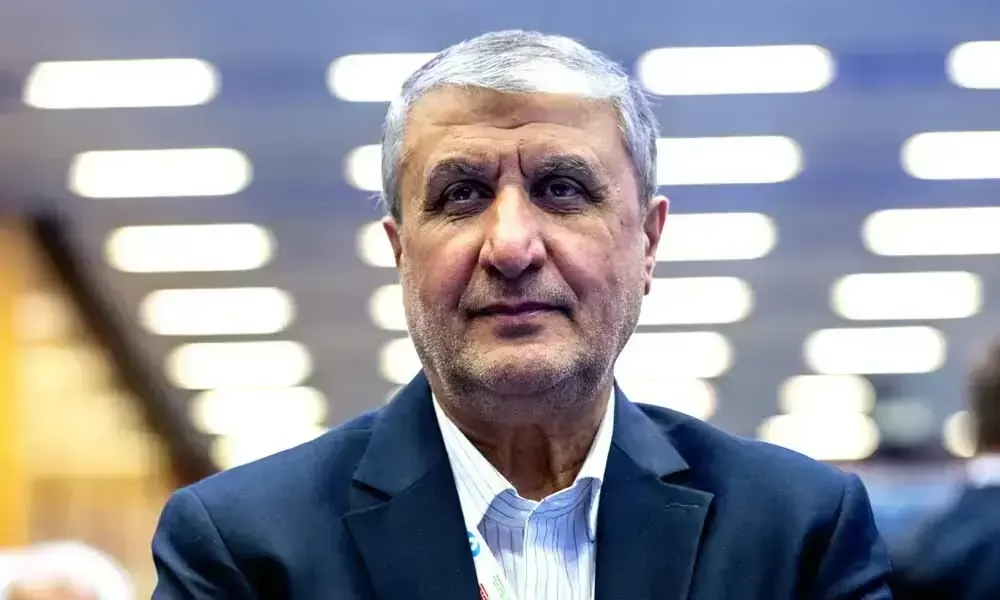
According to Iran’s state-run IRNA news agency, Mohammad Eslami, head of the Atomic Energy Organization of Iran, said that diluting uranium enriched up to 60 percent depends entirely on whether sanctions are lifted in return. While the statement did not clarify whether this condition applies to all sanctions or only those imposed by the US, it highlights Iran’s long-standing position: nuclear concessions are directly tied to economic relief.
The issue of uranium enrichment lies at the heart of the Iran uranium sanctions deal debate. Uranium enriched to 60 percent is far above the limit set under the 2015 Joint Comprehensive Plan of Action (JCPOA), commonly known as the Iran nuclear deal, which capped enrichment at 3.67 percent. Although still below weapons-grade levels, enrichment at 60 percent significantly shortens the technical distance to producing nuclear weapons material, a concern repeatedly raised by Western governments.
From Iran’s perspective, enrichment at higher levels has been framed as a response to sanctions and what it sees as broken promises by the West. After the United States withdrew from the JCPOA in 2018 and reimposed sweeping sanctions, Iran gradually reduced its compliance with the agreement. Officials in Tehran argue that any reversal of these steps must be matched by tangible economic benefits, making sanctions relief a non-negotiable element of any Iran uranium sanctions deal.
For Washington, the situation is more complex. US officials have consistently said they are open to diplomacy but want assurances that Iran’s nuclear activities remain strictly peaceful. The challenge lies in sequencing: Iran wants sanctions lifted first, while the US seeks concrete nuclear steps before easing economic restrictions. This gap has stalled progress in past negotiations and remains a key obstacle in current talks.
Sanctions have had a profound impact on Iran’s economy, restricting oil exports, limiting access to international banking, and contributing to inflation and currency depreciation. For Iranian leaders, lifting sanctions is not just a political demand but an economic necessity. This explains why the Iran uranium sanctions deal is framed by Tehran as an exchange—nuclear restraint in return for full sanctions relief.
International reactions to Iran’s latest statement have been cautious. European powers, which were signatories to the original nuclear deal, have repeatedly urged both sides to show flexibility. They view a revived agreement as essential to regional stability and global non-proliferation efforts. At the same time, countries in the Middle East closely monitor developments, concerned about the broader security implications of Iran’s nuclear capabilities.
Another key issue is verification. Even if Iran agrees to dilute its enriched uranium, the International Atomic Energy Agency (IAEA) would need full access to verify compliance. Past disputes between Iran and the IAEA over monitoring and inspections have undermined trust. Any sustainable Iran uranium sanctions deal would likely require Iran to restore broader cooperation with international inspectors.
Domestically, both Tehran and Washington face political constraints. In Iran, hardliners remain skeptical of US intentions, arguing that sanctions relief promises may not last. In the United States, any deal with Iran faces scrutiny from lawmakers who oppose easing pressure without stronger guarantees. These internal dynamics add further complexity to negotiations.
Despite these challenges, the recent statement by Iran’s atomic energy chief suggests that diplomacy is still possible. The willingness to dilute 60 percent enriched uranium, even conditionally, indicates room for compromise if both sides can agree on the scope and timing of sanctions relief. For supporters of diplomacy, this moment represents an opportunity to de-escalate tensions that have persisted for years.
The Iran uranium sanctions deal remains uncertain but not out of reach. Iran’s readiness to dilute highly enriched uranium in exchange for sanctions relief underscores the transactional nature of the negotiations. Whether this leads to a meaningful agreement will depend on mutual trust, clear commitments, and effective verification mechanisms. As talks continue, the world watches closely, aware that the outcome will have lasting implications for regional security and global nuclear non-proliferation.