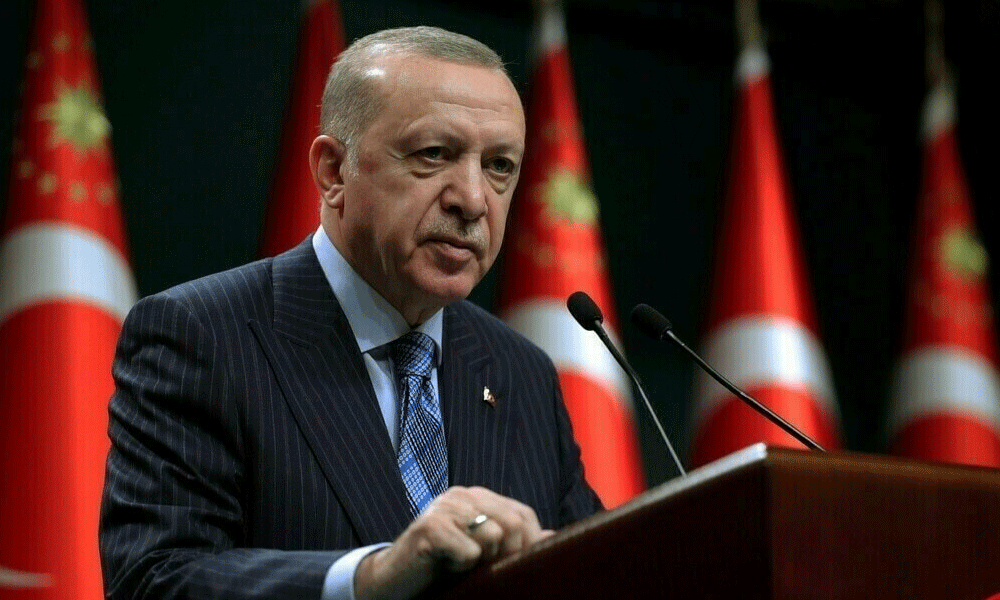
US-Iran tensions are once again dominating headlines as fears grow that escalating disagreements could push the Middle East toward a new conflict. Against this backdrop, Turkish President Recep Tayyip Erdogan has stepped forward, stressing that Turkey is working actively to prevent the situation from spiraling out of control. His recent remarks highlight Ankara’s growing diplomatic role at a time when regional stability hangs in the balance.
It is clear that US-Iran tensions are not limited to bilateral disputes but have far-reaching consequences for the entire region. Speaking to reporters after returning from Egypt, President Erdogan emphasized that dialogue between Washington and Tehran remains crucial, especially as both sides prepare for talks expected to take place in Oman. While lower-level negotiations are planned, Erdogan suggested that engagement at the leadership level could prove more effective in easing mistrust.
Turkey’s Efforts to De-escalate
Turkey has positioned itself as a mediator that maintains communication channels with both sides. Erdogan’s close relationship with former US President Donald Trump, along with Turkey’s longstanding ties in the Middle East, gives Ankara a unique diplomatic advantage. According to Erdogan, Turkey is “doing its best” to prevent an escalation that could destabilize not just Iran and the United States, but neighboring countries as well.
These efforts come at a time when US-Iran tensions are being fueled by disagreements over the scope of negotiations. Washington insists that Iran’s missile program should be part of any comprehensive deal, while Tehran maintains that discussions must remain focused solely on its nuclear activities. This fundamental difference has raised doubts about whether talks will succeed—or even proceed as planned.
The Core Dispute: Nuclear vs Missile Programs
At the heart of the current standoff is a disagreement over what should be on the negotiating table. Iran has repeatedly stated that its nuclear program is intended for peaceful purposes, rejecting accusations that it seeks nuclear weapons. The United States, supported by Israel, remains skeptical and is pushing for broader limitations that include Iran’s missile arsenal and regional activities.
This impasse has intensified US-Iran tensions, with both sides issuing warnings that hint at possible military action. Former President Trump’s comments, suggesting that Iran’s leadership should be very worried,have only added to the uncertainty. Although officials confirmed that talks would shift from Istanbul to Muscat, there has been no sign of compromise on the agenda itself.
Regional and Global Reactions
Concerns about escalation are not limited to Turkey. European leaders, including Germany’s chancellor, have expressed alarm over the possibility of further conflict. During a visit to the Gulf, he called on Iran to reduce what he described as aggressive behavior and urged all parties to pursue dialogue. Gulf Arab states, meanwhile, fear becoming collateral damage if hostilities break out, particularly if Iran follows through on threats to target US bases in the region.
China has also weighed in, backing Iran’s right to peaceful nuclear energy while opposing the use of force and sanctions. Beijing’s position reflects broader international anxiety over how US-Iran tensions could disrupt global energy markets and security arrangements.
Military Build-Up Raises Stakes
Adding to diplomatic strain is the visible military buildup in the Middle East. The United States has deployed thousands of troops, along with aircraft carriers, warships, and advanced aircraft, signaling readiness for potential confrontation. Such moves, while framed as deterrence, increase the risk of miscalculation.
Iran, for its part, warns that expanding negotiations beyond nuclear issues could derail talks entirely. Iranian officials argue that pushing additional demands undermines trust and makes compromise more difficult. This cycle of pressure and counterpressure continues to drive US-Iran tensions higher.
Why Turkey’s Role Matters
Turkey’s mediation efforts are significant because Ankara is one of the few actors able to speak credibly with both sides. By advocating for dialogue and offering neutral ground, Turkey hopes to reduce the likelihood of conflict. Erdogan’s comments suggest that Ankara sees diplomacy not just as a regional responsibility, but as a necessity to prevent a wider war.
The coming days will be critical. If talks in Oman move forward and focus on confidence-building, there may be a chance to ease US-Iran tensions. Failure, however, could reinforce hardline positions and increase the risk of military confrontation.
The current standoff underscores how fragile stability in the Middle East remains. US-Iran tensions are shaped by deep mistrust, competing demands, and regional power dynamics. Turkey’s active diplomacy offers a potential pathway toward de-escalation, but success will depend on whether Washington and Tehran are willing to compromise. As global and regional actors watch closely, the outcome of these efforts could determine whether the region moves toward dialogue—or deeper conflict.