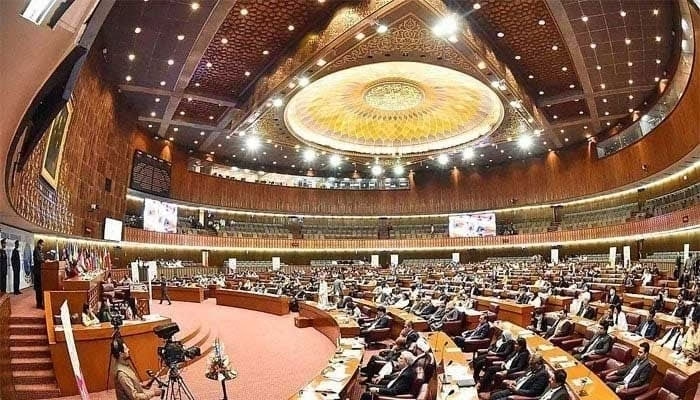
The sudden disappearance of the National Assembly YouTube channel has sparked concern and debate across Pakistan, as parliamentary proceedings have not been broadcast on the platform for several days. The channel, which previously streamed live sessions of the lower house, has gone offline without any prior notice, raising questions about transparency and public access to legislative processes.
The National Assembly YouTube channel played an important role in allowing citizens, journalists, and analysts to follow debates, speeches, and voting in real time. Its absence has coincided with a crucial period in parliament, further intensifying public scrutiny and political reactions.
What Happened to the Official Channel?
Over the past few days, users attempting to access the official link of the National Assembly on YouTube have found it unavailable. No recent sessions have been uploaded, and live streams that were once routine are missing. At the same time, parliamentary proceedings have also not been aired on state television, creating a complete broadcast blackout of the National Assembly’s activities.
Opposition lawmakers were quick to react, claiming that the government is deliberately preventing public access to parliamentary debates. According to them, taking down the National Assembly YouTube channel limits transparency and shields the government from public scrutiny during sensitive legislative discussions.
Official Response: Technical Fault Claim
In response to the growing criticism, National Assembly officials denied any political motive behind the disappearance of the channel. They stated that the National Assembly YouTube channel is down due to a technical fault and that efforts are underway to restore it.
However, officials did not provide a clear timeline for when the issue would be resolved. The lack of detailed explanation has fueled speculation, especially since no alternative online streaming arrangement was announced to keep the public informed during the outage.
Timing Raises Questions
The timing of the channel’s disappearance has added to the controversy. The issue emerged as a joint session of parliament was summoned by President Asif Ali Zardari. During this joint sitting, lawmakers passed three significant bills that had previously been returned by the president without his signature.
These included the National Commission for Human Rights Amendment Bill, 2025; the Daanish Schools Authority Bill, 2025; and the Domestic Violence (Prevention and Protection) Bill, 2025. All three bills were approved during the joint session, making the lack of live coverage even more noticeable.
Critics argue that such important legislative developments should have been fully accessible to the public, particularly through digital platforms like the National Assembly YouTube channel, which has become a key source of parliamentary transparency in recent years.
Opposition Concerns Over Transparency
Opposition members claim that the absence of live broadcasts undermines democratic accountability. They argue that when parliamentary proceedings are not visible, it becomes difficult for citizens to evaluate the performance of their elected representatives.
Several lawmakers have suggested that the blackout benefits the government by reducing public attention on heated debates, opposition speeches, and controversial legislation. For them, the shutdown of the National Assembly YouTube channel is not just a technical issue but a worrying sign for openness in governance.
Importance of Digital Access to Parliament
In recent years, live streaming of parliamentary sessions has become an essential democratic tool. Platforms like YouTube allow wider public participation, especially for citizens who cannot follow proceedings on traditional television.
The National Assembly YouTube channel helped bridge the gap between parliament and the public, offering easy access to speeches, question hours, and legislative debates. Its unavailability highlights how dependent modern democratic engagement has become on digital platforms.
Media experts note that even temporary disruptions can damage public trust if not handled transparently. Clear communication about technical issues and alternative viewing options is crucial to avoid misunderstandings.
Bills Passed Amid Broadcast Blackout
Despite the lack of coverage, the joint sitting proceeded and passed the three bills returned earlier by President Zardari. According to the Presidency, the bills had been sent back last month despite being approved by both houses of parliament.
Their passage during a session not broadcast on the National Assembly YouTube channel has added to public unease, particularly among civil society groups that closely monitor legislation related to human rights and social protection.
The disappearance of the National Assembly YouTube channel has triggered a broader debate about transparency, accountability, and the public’s right to access parliamentary proceedings. While officials insist the issue is purely technical, the timing and lack of clear communication have left many unconvinced.
As digital platforms become central to democratic engagement, ensuring uninterrupted and transparent access to parliamentary proceedings is more important than ever. Restoring the channel promptly—and explaining what went wrong will be essential for rebuilding public confidence and reaffirming the commitment to open governance.