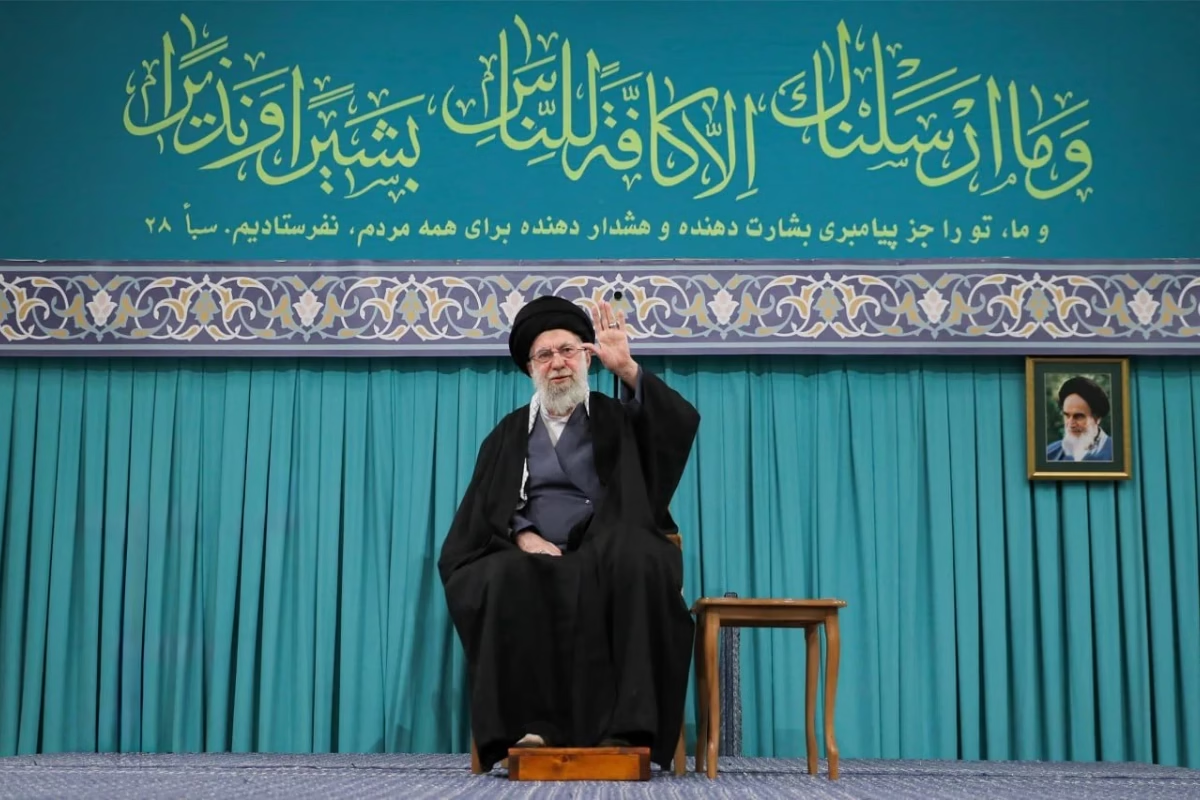
The statement in which Ayatollah Khamenei blames Trump for Iran protests has intensified already strained relations between Tehran and Washington. Iran’s Supreme Leader has openly accused former US President Donald Trump of being directly responsible for the deaths, destruction, and unrest that occurred during recent protests across the country, calling the events a deliberate and hostile act against the Iranian state.
In a strongly worded address, Ayatollah Ali Khamenei said the latest wave of protests was fundamentally different from past demonstrations. According to him, these were not spontaneous expressions of public anger but carefully orchestrated riots backed by foreign powers. When Ayatollah Khamenei blames Trump for Iran protests, it signals Tehran’s belief that the unrest was part of a broader external strategy to destabilise the country.
Allegations of Direct US Involvement
Khamenei claimed that Donald Trump was not merely offering rhetorical support but was personally involved in encouraging and guiding the protests. He accused the former US president of slandering the Iranian people and misrepresenting the nature of their grievances to justify international pressure on Iran.
By stating that Ayatollah Khamenei blames Trump for Iran protests, Iranian leadership is framing the unrest as an attack on national sovereignty rather than an internal political challenge. Khamenei argued that portraying the protests as a fight for freedom was misleading and ignored the alleged role of foreign actors in escalating violence.
Warning Without Declaring War
Despite the harsh accusations, Khamenei made it clear that Iran does not seek war. He emphasized that Tehran has no interest in dragging the region into open conflict. However, his message carried a firm warning: foreign and domestic “criminals,” as he described them, would not be overlooked.
This balance between restraint and warning is significant. While Ayatollah Khamenei blames Trump for Iran protests, he also appears intent on avoiding a military confrontation that could worsen Iran’s economic and diplomatic challenges. Instead, he signaled that Iran would respond through internal security measures and political resolve rather than direct warfare.
Calling US Actions a “Coup”
One of the most striking elements of Khamenei’s remarks was his description of recent US actions as a “coup.” He said that Washington’s conduct amounted to an attempt to overthrow Iran’s system from within by fueling unrest and exploiting economic hardship.
This narrative aligns with long-standing Iranian claims that external powers use sanctions, media influence, and political pressure to weaken the country. When Ayatollah Khamenei blames Trump for Iran protests, he places the events within a historical context of foreign interference that Iran says it has faced for decades.
Iran’s Historical Stance on Dissent
Khamenei concluded his remarks by asserting that Iran has never spared those who rebel against the state and will not do so now. This statement underlines the leadership’s hardline approach toward unrest it deems externally driven or violent.
Iranian authorities have consistently differentiated between what they call lawful protest and actions they label as riots or sabotage. In this context, Ayatollah Khamenei blames Trump for Iran protests to justify a tough response, arguing that national security is under threat rather than public dissent being ignored.
International and Domestic Implications
These accusations are likely to further complicate Iran’s relations with the United States and its allies. Even though Trump is no longer in office, his statements and past policies continue to influence Iran’s political narrative. By repeatedly stressing that Ayatollah Khamenei blames Trump for Iran protests, Iranian officials reinforce the idea that Washington remains hostile regardless of changes in leadership.
Domestically, Khamenei’s remarks are aimed at consolidating support among loyalists and discouraging further unrest. By framing protests as foreign-backed, the leadership seeks to shift focus away from economic grievances and toward national unity against external pressure.
A Message to Both Audiences
Ultimately, Khamenei’s speech was directed at two audiences: the Iranian public and the international community. To citizens, it was a reminder that the state views the unrest as a security threat tied to foreign agendas. To external powers, it was a warning that Iran will resist what it perceives as attempts to undermine its sovereignty.
As tensions persist, the claim that Ayatollah Khamenei blames Trump for Iran protests will likely remain a key part of Iran’s political messaging. Whether this rhetoric leads to further escalation or settles into diplomatic standoffs will depend on how both sides choose to respond in the coming months.