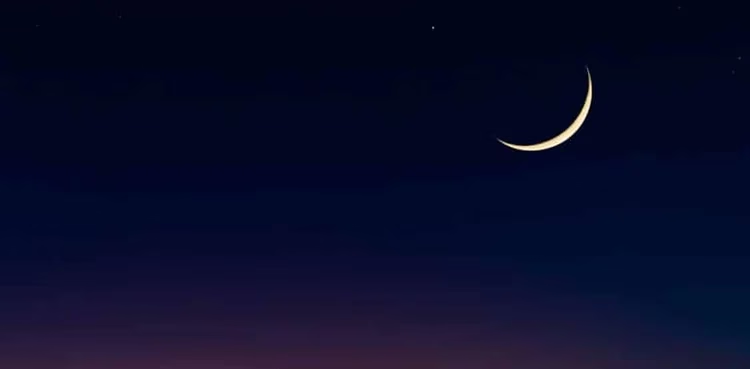
The Space and Upper Atmosphere Research Commission (SUPARCO) has forecast a possibility of sighting the new moon of Shaban 1447 AH on the evening of January 20, 2026.
According to a SUPARCO press release, the new moon will be born at the point of conjunction at 12:52am Pakistan Standard Time on Monday, January 19, 2026. Based on astronomical calculations, there is a chance of moon sighting on Tuesday evening, January 20, which will mark the 30th of Rajab.
SUPARCO stated that on the evening of January 19, the moon’s age will be around 17 hours and 36 minutes. In Pakistan’s coastal areas, the interval between sunset and moonset will be approximately 33 minutes. However, due to unfavourable astronomical conditions, the probability of sighting the moon with the naked eye on January 19 is considered very low.
As a result, the first day of Shaban is likely to fall on Wednesday, January 21, 2026.
The final decision regarding the start of the Islamic month will be announced by the Central Ruet-e-Hilal Committee of Pakistan, which is the sole authorised body to determine the beginning of lunar months based on verified moon sighting reports from across the country.
A meeting of the Central Ruet-e-Hilal Committee for the sighting of the Shaban moon is expected to be held on Monday evening, January 19, 2026. Zonal and district Ruet-e-Hilal committee meetings are also likely to take place to collect moon sighting testimonies.
It is noteworthy that the Ministry of Science and Technology has developed a moon sighting mobile application named Ruet, with federal officials stating that technological advancements have significantly facilitated the moon sighting process.
Shaban is the eighth month of the Islamic lunar calendar. The 15th night of Shaban, known as Shab-e-Barat or Laylat al-Bara’ah, is observed as a night of mercy and forgiveness. On this occasion, many people visit graveyards, offer prayers for the deceased, and engage in worship. Some Muslims also observe fasting on the 15th day of Shaban.
In countries such as Pakistan, India, and Bangladesh, Shab-e-Barat is marked with religious devotion, with gatherings held at mosques and other public places for collective prayers and recitations.