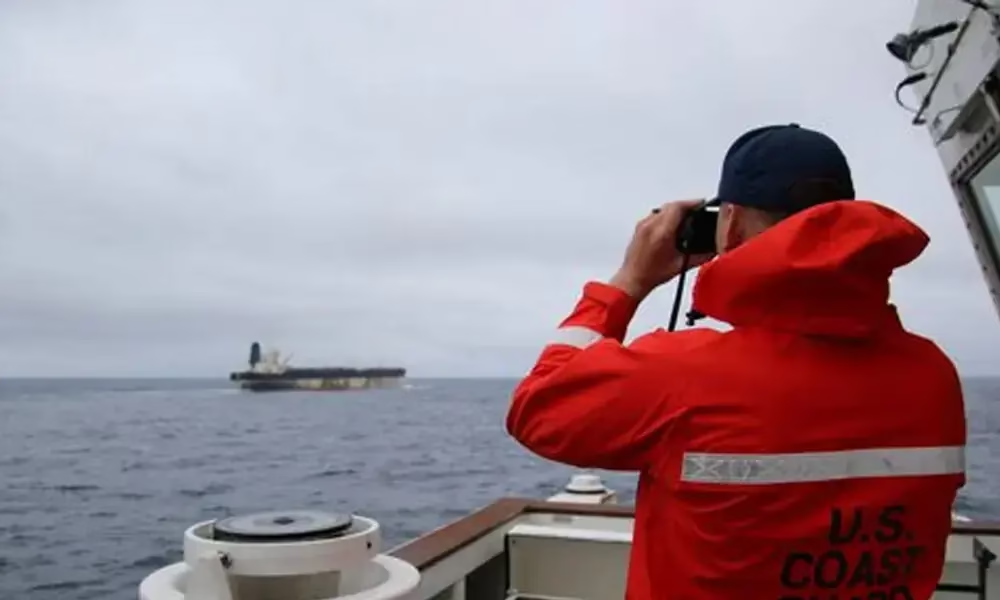
Russia has sharply criticised the US seizure of a Russian-flagged tanker, accusing the United States of stoking military and political tensions and threatening international shipping norms after American forces intercepted the vessel in the North Atlantic. The incident has quickly become a flashpoint in already strained U.S.–Russia relations and raised serious questions about maritime law, sanctions enforcement, and geopolitical rivalry.
What Happened: US Seizes Russian-Flagged Tanker
On January 7, 2026, U.S. military and Coast Guard forces seized a Russian-flagged oil tanker in the North Atlantic after a weeks-long pursuit that began near Venezuela. The vessel formerly known as Bella-1 and recently renamed Marinera was tracked across the Atlantic and boarded by U.S. personnel under a federal warrant for alleged sanctions violations related to transporting oil for countries including Venezuela, Russia and Iran.
Washington has described the ship as part of a “shadow fleet” that was evading sanctions and carrying illicit cargo, justifying the seizure as a legitimate enforcement of U.S. law. Authorities said the tanker ignored earlier attempts to board it and ultimately changed course, flew a Russian flag, and registered under Russian jurisdiction before its interception.
Russia’s Accusations and Legal Objections
In response, Moscow’s Foreign Ministry condemned the US seizure of a Russian-flagged tanker as a violation of international law and an action that undermines global maritime order. Russian officials argue that vessels sailing legally under their flag should be protected under the United Nations Convention on the Law of the Sea, which prohibits the use of force against ships on the high seas without clear legal grounds.
Russia’s Transport Ministry further stated that it had granted the Marinera temporary permission to sail under the Russian flag and criticized the U.S. action as disproportionately aggressive. The ministry demanded the crew’s humane treatment and their prompt return, emphasizing that the seizure could be interpreted as an infringement of sovereign maritime rights.
Russian officials have also labelled the operation “outright piracy,” a characterization reflecting deep frustration with what they see as unilateral U.S. enforcement over international waters. By calling the move a breach of international norms, Moscow hopes to rally global opinion against what it views as excessive American assertiveness.
UK’s Involvement and Legal Justifications
The United Kingdom confirmed that it provided operational support to the United States in the tanker seizure. British Defence officials said their air and naval assets assisted with surveillance and logistics, and stressed that the operation complied with international law and aimed to reinforce sanctions designed to counter illicit oil transportation.
Despite this backing, the involvement of the UK has not quelled concerns among critics who argue that the incident sets a dangerous precedent. If major powers begin seizing commercial vessels based on national sanctions without broader international approval, many fear it could increase risks to maritime trade and escalate geopolitical conflicts.
Broader Geopolitical Context
The US seizure of a Russian-flagged tanker occurred against a backdrop of growing U.S.–Russia tensions. Washington has repeatedly expressed frustration with Moscow over limited progress in diplomatic efforts, particularly regarding the war in Ukraine, and observers say the move reflects broader strategic pressure. Russian officials have tied the tanker interception to a pattern of U.S. unilateralism in enforcing sanctions and pursuing geopolitical goals.
This incident also follows a controversial U.S. military operation in Venezuela, where special forces captured Venezuelan President Nicolas Maduro, further straining relations with Moscow, a longstanding ally of Caracas. These events collectively point to a period of heightened confrontations between Washington and Moscow.
International Shipping and Sanctions Enforcement
Sanctions enforcement at sea has become an evolving and contentious issue. The U.S. argues that targeting vessels suspected of sanction evasion is a necessary part of enforcing legal restrictions on activities such as illicit oil trading. However, critics contend that unilateral actions against flagged vessels in international waters risk destabilizing established maritime norms and could hamper global commerce.
Moscow’s accusation that the US seizure of a Russian-flagged tanker will only result in further military and political tensions highlights the profound diplomatic ramifications of such actions. As legal and political battles unfold, the incident may prompt deeper examination of how sanctions are enforced and what constitutes legitimate authority on the high seas.
The immediate future is likely to see diplomatic exchanges, legal arguments, and international debate over this seizure. Russia is expected to press for the return of its crew and legal challenge to the action, while the U.S. and its allies maintain that sanctions enforcement remains a priority. Observers warn that if not managed carefully, the situation could further inflame an already fragile geopolitical landscape.
In the meantime, global attention will remain on how this confrontation impacts shipping security and international law moving forward.