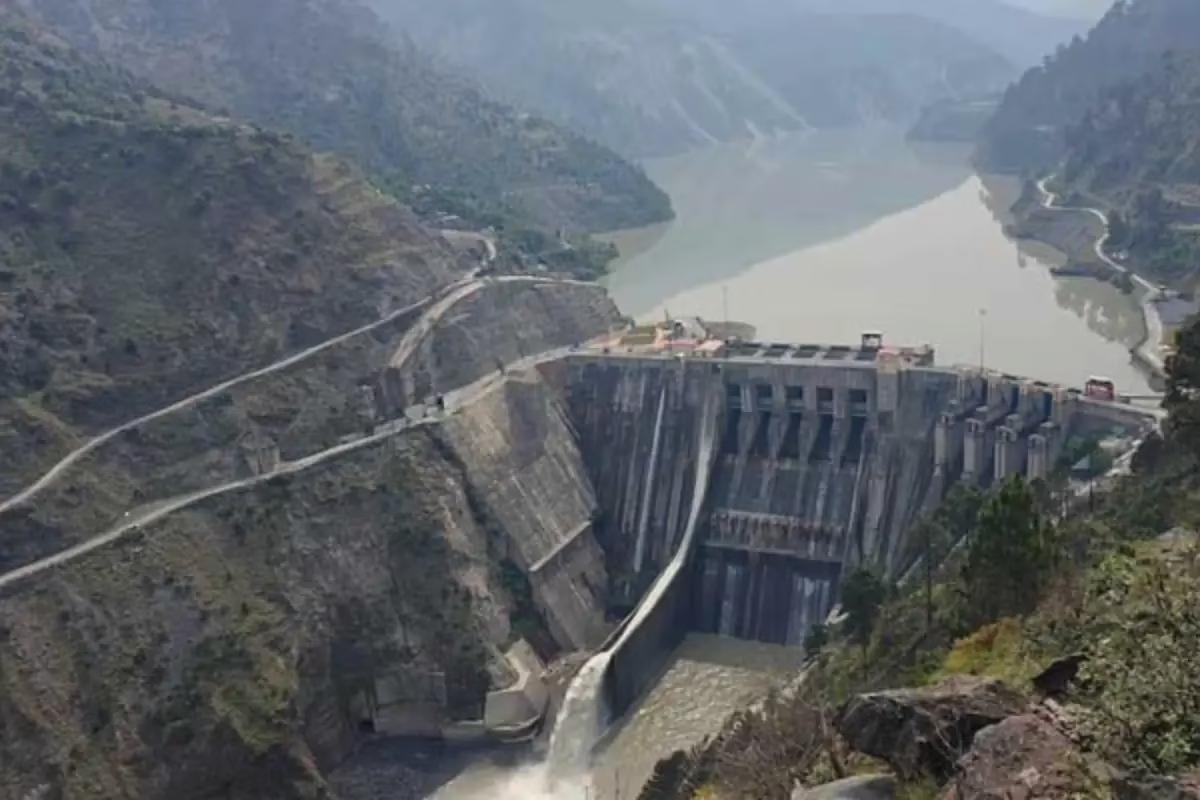
The approval of the Dulhasti Stage-II project on the Chenab River has sparked serious concerns in Pakistan, with officials and analysts calling it a clear violation of the Indus Waters Treaty (IWT). Approved by India in Indian Illegally Occupied Jammu and Kashmir (IIOJ&K), the project has once again brought water security, regional stability, and treaty compliance into sharp focus at a time of already heightened tensions between the two neighbours.
The hydropower scheme, estimated to cost over ₹3,200 crore, is expected to generate around 260 megawatts of electricity. While India maintains that such projects are meant to meet its growing energy needs, Pakistan argues that the Dulhasti Stage-II project directly contravenes the spirit and provisions of the 1960 Indus Waters Treaty, which governs the sharing of river waters between the two countries.
Why the Project Is Controversial
Under the Indus Waters Treaty, Pakistan was allocated unrestricted use of the western rivers — the Indus, Jhelum, and Chenab — while India received control over the eastern rivers. Although India is allowed limited, non-consumptive use of western rivers for hydropower, such projects must meet strict technical criteria to ensure downstream flows are not affected.
Pakistan maintains that the Dulhasti Stage-II project, located on the Chenab River, goes beyond these limits. By drawing water through interconnected upstream projects, including Pakal Dul, the scheme could allow India greater control over water timing and flow, something Islamabad views as unacceptable under the treaty.
Regional Tensions and Treaty Strain
The approval of the project comes against a backdrop of deteriorating bilateral relations. Following recent security incidents, India announced it would keep the Indus Waters Treaty in abeyance — a move Pakistan has rejected as illegal, since the treaty contains no clause allowing unilateral suspension.
Despite this, Pakistan has reaffirmed its commitment to the treaty framework and continues to participate in dispute resolution mechanisms, including Neutral Expert proceedings. Earlier rulings by international arbitration bodies have emphasized that India must allow the natural flow of western rivers for Pakistan’s use, reinforcing Islamabad’s legal position.
In this context, the Dulhasti Stage-II project is being viewed not as an isolated development but as part of a broader pattern of fast-tracking disputed hydropower schemes in the Indus Basin.
Strategic and Security Implications
Beyond legal concerns, security analysts warn that projects on the Chenab River carry serious strategic implications. The river flows directly into Pakistan and supports irrigation, drinking water supplies, and hydropower generation. Any upstream manipulation could affect millions of lives downstream.
Experts argue that the Dulhasti Stage-II project increases Pakistan’s vulnerability by enhancing India’s ability to regulate water flows during critical periods. Even temporary disruptions could have outsized impacts on agriculture, particularly during sowing seasons, when water availability is crucial.
Environmental Concerns
Environmental experts have also raised alarms about the ecological impact of the project. Stage-II will utilize existing infrastructure from the earlier Dulhasti Stage-I project but will divert water from the Marusudar River, a key tributary of the Chenab.
Studies suggest that a 25-kilometre stretch of the Marusudar River downstream could experience significant hydrological changes. Altered flow patterns may disrupt aquatic ecosystems, affect sediment transport, and harm local biodiversity. These environmental risks add another layer of complexity to the Dulhasti Stage-II project, extending concerns beyond politics and diplomacy.
Part of a Larger Hydropower Push
Dulhasti Stage-II is not the only project under scrutiny. India has accelerated work on several other hydropower schemes in the Indus Basin, including Ratle, Sawalkot, Bursar, and Kirthai projects. Pakistan sees this rapid expansion as a coordinated strategy that undermines treaty obligations while shifting the balance of water control upstream.
By leveraging interconnected dams and reservoirs, critics argue, India could gain cumulative control that the treaty explicitly sought to prevent. The Dulhasti Stage-II project thus symbolizes a broader challenge to the long-standing water-sharing arrangement between the two countries.
Pakistan’s Stance and the Way Forward
Pakistan has consistently emphasized that it seeks resolution through international law rather than escalation. Officials stress that the Indus Waters Treaty has survived wars and decades of hostility and should not be undermined for short-term political or strategic gains.
Islamabad is likely to raise the Dulhasti Stage-II project in international forums, highlighting both treaty violations and environmental risks. The situation underscores the urgent need for dialogue, transparency, and adherence to existing agreements to prevent water disputes from becoming a new flashpoint in South Asia.
The approval of the Dulhasti Stage-II project has reopened fundamental questions about water rights, treaty compliance, and regional stability. For Pakistan, the issue is not just about a single dam but about safeguarding a lifeline that supports agriculture, energy, and livelihoods across the country. As tensions persist, the future of the Indus Waters Treaty — often described as one of the world’s most successful water-sharing agreements — faces one of its most serious tests yet.