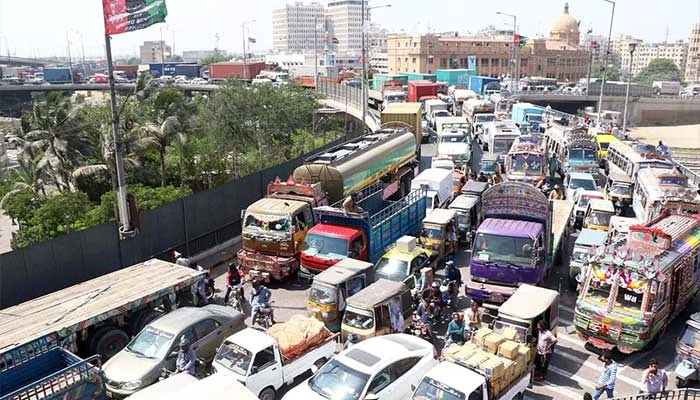
The Karachi heavy traffic ban has been officially enforced by the city administration as part of urgent measures to control traffic congestion and curb the alarming rise in road accidents. Under the new directive, the entry of dumpers and heavy vehicles into Karachi during daytime hours has been restricted for a period of two months, reflecting growing concerns over public safety on the city’s roads.
According to the notification, heavy traffic is prohibited from entering or moving within city limits between 6am and 10pm. Authorities say the decision was taken after repeated incidents involving high-speed dumpers and trucks, many of which resulted in fatalities and sparked public outrage. By limiting heavy vehicle movement during peak hours, officials hope to create safer conditions for commuters and pedestrians.
Why the Karachi Heavy Traffic Ban Was Introduced
Karachi has witnessed a troubling surge in traffic-related accidents in recent months. Many of these incidents involved heavy vehicles such as dumpers, trailers, and trucks operating at high speeds on busy urban roads. Public anger has intensified after several fatal crashes, some of which led to protests and the burning of vehicles involved.
The Karachi heavy traffic ban is intended to reduce the interaction between heavy vehicles and regular city traffic during the busiest parts of the day. Authorities believe this separation will help lower accident rates while also easing congestion on major arteries.
Designated Routes for Heavy Vehicles
While the ban restricts general movement during daytime hours, the administration has outlined specific routes to ensure essential cargo and industrial transport can continue in a controlled manner. Heavy vehicles entering from the Super Highway have been directed toward the New Karachi Industrial Area. Those arriving from the National Highway are permitted to travel to Godam Chowrangi and Yunus Chowrangi.
Additional routes have also been defined. Heavy traffic is allowed to move from Dawood Chowrangi to Jam Sadiq Bridge, while vehicles using the Northern Bypass may proceed toward Paracha Chowk and Siemens Chowrangi. Access from the Northern Bypass to Gulbai and Mauripur, leading toward Karachi Port, has also been permitted. Vehicles traveling via Link Road Kathore can continue toward the Sassi Toll Plaza.
These route-specific permissions aim to balance safety concerns with the practical needs of trade and port operations.
Enforcement and Penalties
Officials have made it clear that the Karachi heavy traffic ban will be strictly enforced. Violators will face action under existing traffic laws, including fines and possible vehicle impoundment. Traffic police have been instructed to monitor key entry points and designated routes to ensure compliance throughout the two-month period.
Authorities say consistent enforcement is critical, as past restrictions have often failed due to weak monitoring and lack of accountability.
Alarming Accident Statistics
The urgency behind the ban becomes clearer when looking at recent data. According to police records cited in local reports, at least 536 people were killed in traffic accidents during the first eight months of 2025. Of these, 60 fatalities involved trucks, highlighting the disproportionate danger posed by heavy vehicles.
The same data shows 25 deaths in bus-related crashes, 11 in minibus accidents, six in coach incidents, and 48 fatalities involving trailers. These figures have intensified calls from civil society and road safety advocates for immediate reforms.
Public Reaction and Safety Concerns
Many residents have welcomed the Karachi heavy traffic ban, viewing it as a long-overdue step toward safer roads. Daily commuters, motorcyclists, and pedestrians have long complained about reckless driving by dumper and truck drivers within city limits.
However, some transporters and logistics operators have expressed concerns about potential delays and increased costs. Authorities argue that safety must take priority and that the designated routes should minimize disruptions to essential supply chains.
The Need for Long-Term Solutions
While the ban is a significant move, experts stress that it should be part of a broader, long-term strategy. Stricter licensing requirements, regular vehicle fitness checks, speed monitoring, and improved road infrastructure are all seen as necessary to prevent future tragedies.
Urban planners also emphasize the need for dedicated freight corridors and better enforcement of traffic regulations beyond temporary measures.
The Karachi heavy traffic ban will remain in effect for two months, during which authorities will assess its impact on accident rates and traffic flow. If successful, similar restrictions or permanent policy changes may follow.
For now, the ban signals a clear acknowledgment by city officials that unchecked heavy traffic poses a serious threat to public safety. Whether this initiative leads to lasting improvements will depend on enforcement, public cooperation, and a commitment to broader road safety reforms.