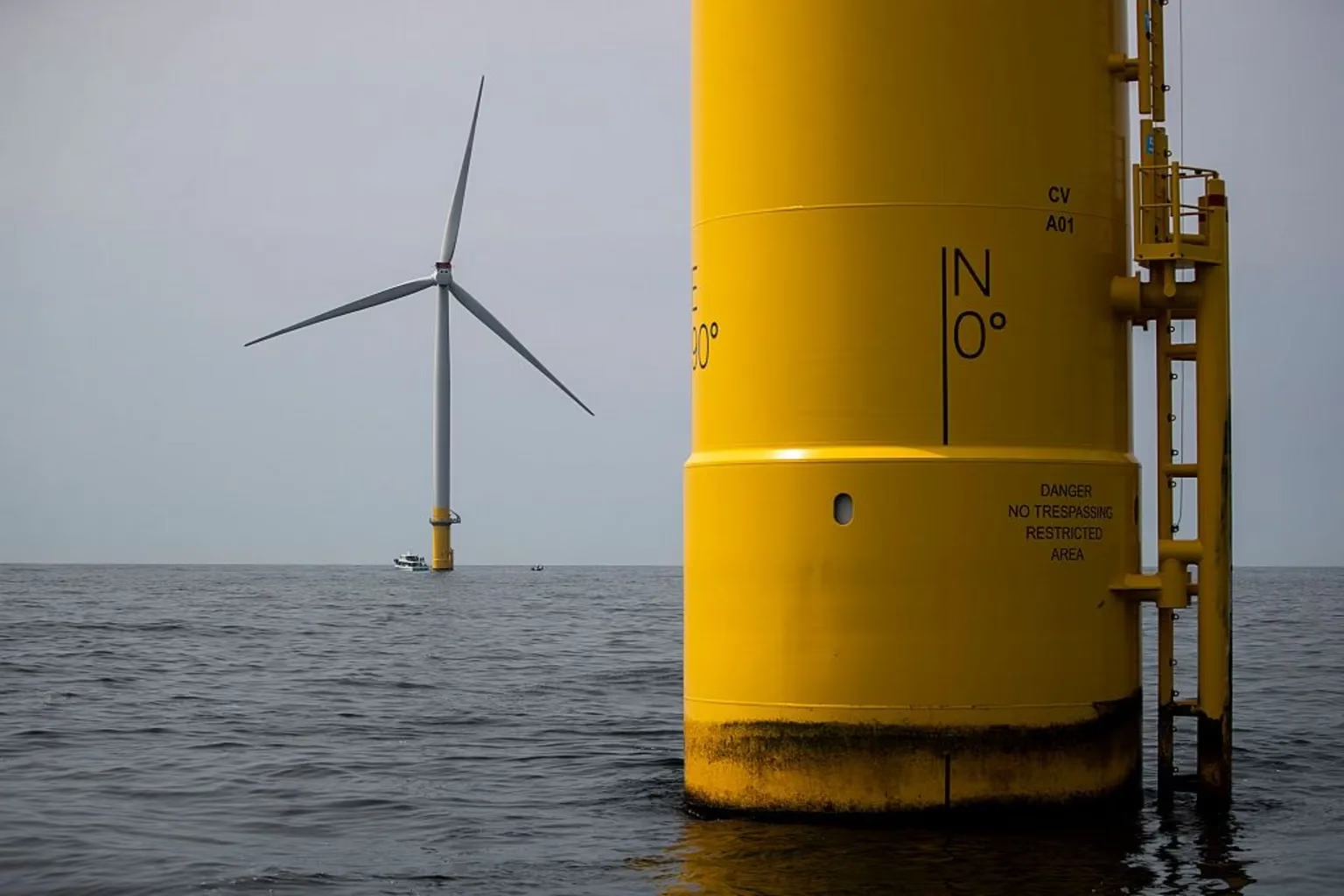
The US offshore wind pause announced by the federal government has sent shockwaves through the renewable energy sector, financial markets, and coastal states along the Atlantic. The decision to temporarily halt multiple offshore wind projects comes amid claims of national security risks, particularly concerns over radar interference and airspace safety near densely populated regions.
According to the Department of the Interior, five large offshore wind projects currently under construction near the US Atlantic coastline have been paused for further review. Officials argue that the rapid advancement of adversary technologies and the proximity of large wind installations to major population centers require a closer national security assessment.
Why the US Offshore Wind Pause Was Announced
At the center of the US offshore wind pause is the concern that wind turbines may interfere with military and civilian radar systems. Authorities warn that the spinning blades of offshore windmills can create radar clutter, which may obscure real airborne threats or generate false targets. Adjusting radar sensitivity to filter out this clutter could, in turn, increase the risk of missing actual threats.
Interior Secretary Doug Burgum emphasized that these technical challenges could make it harder to distinguish between friendly and hostile objects in US airspace. He cited recent drone warfare examples from global conflicts as evidence that airspace awareness has become more critical than ever.
Projects and States Affected
The paused wind projects are located off the coasts of New York, Virginia, Massachusetts, Rhode Island, and Connecticut. These developments represent billions of dollars in investment and are central to state-level clean energy goals.
Energy companies involved in the projects have pushed back strongly. Dominion Energy, responsible for the Virginia offshore wind farm, stated that its project is located far offshore and has already operated pilot turbines for five years without any national security issues. Despite these assurances, the announcement triggered a notable drop in the company’s share price.
Market Reaction and Investor Concerns
The US offshore wind pause has had an immediate financial impact. Dominion Energy shares fell by more than 3%, while Danish renewable energy leader Orsted saw its stock drop by 12%. Turbine manufacturer Vestas also recorded losses, reflecting investor anxiety over regulatory uncertainty in the US renewable energy market.
These reactions highlight a growing concern among investors: policy instability. Renewable energy projects require long-term planning and massive upfront investment. Sudden pauses or reversals can undermine confidence and drive up financing costs.
Political and State-Level Backlash
State leaders, particularly in Democratic-led states, have sharply criticized the move. Connecticut Governor Ned Lamont described the decision as erratic, warning that it could increase electricity prices across the region. He stressed that the affected projects were close to completion and were already creating well-paying clean energy jobs.
Critics argue that the US offshore wind pause undermines economic predictability for businesses and households alike. They also point out that civil courts and federal judges have previously rejected broad attempts to block wind energy development, calling such actions arbitrary and contrary to law.
Legal Challenges and Ongoing Disputes
The pause follows earlier efforts by President Donald Trump to restrict wind energy expansion. Although a federal judge struck down a previous attempt to ban new wind projects, the administration issued a memorandum halting new permits and leases pending a federal review.
Five months later, 17 US states, led by New York, filed a lawsuit against the administration, labeling the restrictions an existential threat to the domestic wind industry. The US offshore wind pause is now expected to become a central issue in ongoing legal and political battles over America’s energy future.
Energy Demand and the Bigger Picture
The timing of the pause has raised additional questions, as US energy demand is projected to grow significantly in the coming years. The expansion of artificial intelligence, data centers, and digital infrastructure is expected to place unprecedented strain on the power grid.
Renewable energy advocates argue that offshore wind is a crucial part of meeting this demand sustainably. Pausing projects, they say, risks slowing progress toward energy security rather than strengthening it.
While the government maintains that the pause is temporary and focused on security review, uncertainty remains. Developers, investors, and state governments are now waiting to see whether mitigation measures—such as advanced radar integration can address the concerns without derailing projects entirely.
The US offshore wind pause represents a pivotal moment for America’s clean energy transition. How policymakers balance national security with economic growth and climate goals will shape not only the future of offshore wind but the credibility of the US as a stable destination for long-term energy investment.