The political atmosphere in Pakistan has intensified after the DG ISPR’s recent press conference, sparking a strong and detailed response from Pakistan Tehreek-e-Insaf (PTI). The debate around the PTI DG ISPR Conflict highlights the widening mistrust between political leadership and state institutions. With economic and security challenges already pressuring the nation, the growing rift has become a central point in Pakistan’s political discussion.
PTI categorically rejected the allegations made against the party and its founder, Imran Khan. In the official statement, PTI said that declaring Imran Khan a threat to the state is far removed from reality. According to the party, turning institutional statements into political attacks damages national unity and weakens democratic space. PTI maintained that disagreements should not be treated as hostility, as such behavior contradicts democratic norms.
The party went on to say that interference in political matters by institutions disrupts the constitutional balance. PTI argued that the use of aggressive and confrontational language against elected leadership worsens the political climate instead of improving it. The party believes that recent official statements clearly show the need to remind the government and institutions of their constitutional boundaries. The PTI DG ISPR Conflict has thus become a reminder of how fragile institutional relationships can be when political tensions rise.
PTI emphasized that Pakistan is already battling terrorism and a severe economic crisis. In such a situation, the national leadership must set priorities wisely. The party stressed that Pakistan’s political reality cannot be reshaped by targeting one individual. PTI again highlighted the founder’s long-standing stance: a strong army leads to a strong Pakistan. The party insisted that Imran Khan has always supported the armed forces, even during difficult times.
PTI also criticized the Sharif family’s silence during past moments of Indian aggression, calling it confusing and disappointing. The party pointed out that Imran Khan defended Pakistan’s position internationally with clarity and confidence. According to PTI, it is ironic that the presence of Imran Khan’s sisters in the media is being objected to, while the double standards of the past are being ignored. The party referenced past documented meetings of former leaders with foreign journalists as part of this comparison.
On the Kashmir issue, PTI stated that the founder of the party raised the matter at global forums with historical strength. Labeling political disagreement as the enemy’s narrative, the statement said, is equivalent to shutting down democratic space and silencing legitimate debate. The PTI DG ISPR Conflict therefore reflects a larger battle over narrative control in Pakistan.
PTI further argued that issues like the economy, IMF commitments, remittances, and electoral transparency are political matters that must be addressed openly. Turning every statement of a political leader into a security issue, the party warned, opens doors for political revenge and suppresses democratic thought. Using derogatory language for Imran Khan, PTI said, is an insult to the political consciousness of millions of Pakistanis.
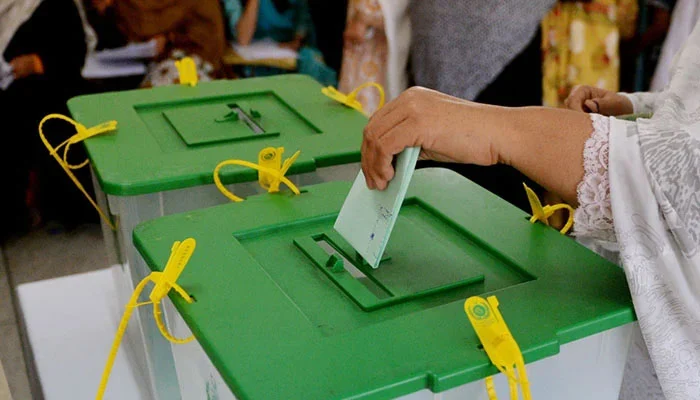
The statement also addressed electoral matters. According to PTI, the Constitution clearly states that the real source of power is the people. PTI argued that the February 8 elections reflected a clear mandate in favor of Imran Khan, which was later undermined through irregularities involving Form 47. The party noted that both domestic and international organizations have acknowledged these discrepancies. PTI claimed that recent constitutional amendments further weaken the vote’s sanctity and undermine judicial independence.
The party said that Imran Khan always pursued constitutional and democratic paths, but powerful groups resisted his mandate. The actions taken against the PTI founder, the party claimed, are meant to divert attention from the government’s shortcomings. The PTI DG ISPR Conflict has thus grown into a reflection of larger political anxieties and governance failures.
PTI rejected the government’s claim of media freedom, arguing that censorship of Imran Khan’s name and image goes against freedom of expression. The party asserted that stability in Pakistan can only be achieved through respect for public mandate, transparent elections, and complete constitutional supremacy. According to the statement, the political crisis will persist until the people’s decision is fully honored.