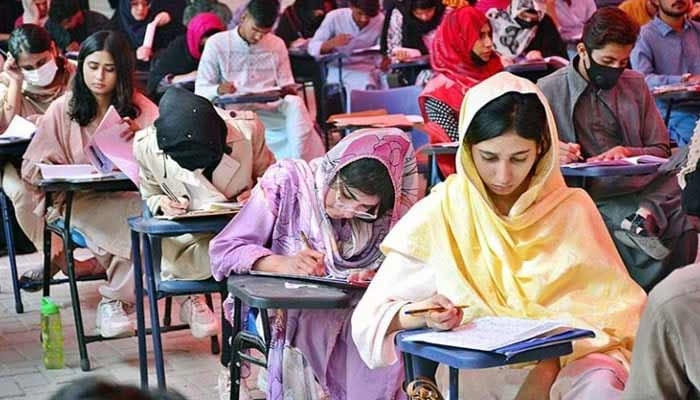
The newly launched Sindh e-marking system marks a significant step toward transforming the province’s traditional examination structure into a transparent, modern, and fully digitised model. With the Sindh government officially introducing this digital assessment method, the province is moving closer to an educational system that minimises human errors, speeds up results, and ensures fairness for all students.
A New Era of Digital Assessment
During the inauguration ceremony, Provincial Minister for Universities and Boards Ismail Rahoo highlighted that the Sindh e-marking system is not just a technological upgrade but a broader effort to enhance transparency and efficiency across all education boards. The system was introduced during the 183rd two-day meeting organised in collaboration with the Inter-Boards Coordination Commission (IBCC) and the Sindh Boards Committee of Chairmen (SBCC).
According to the minister, Sindh’s goal is to build an exam evaluation process that aligns with global standards. By incorporating digital assessment tools, the province aims to eliminate inconsistencies often found in manual checking while improving the reliability of student results.
Why E-Marking Matters
The adoption of the Sindh e-marking system reflects the provincial government’s commitment to reforming the educational landscape. Traditional paper-checking methods often lead to issues such as marking errors, delays, missing pages, inconsistent grading, and human bias. Digital marking reduces these risks by introducing system-based checks, uniform evaluation standards, and faster processing.
E-marking also supports teachers and examiners by allowing them to evaluate papers from secure digital platforms rather than depending on manual bundles. This system not only improves accuracy but also significantly lowers the possibility of paper leaks, unauthorized access, and manipulation of marks.
Successful Implementation and Future Expansion
The minister shared that the Sindh e-marking system has already been implemented successfully in several education boards across the province. The government now plans to expand the digital framework to all remaining boards by next year. This expansion will ensure that students in urban as well as rural regions receive assessments based on the same transparent standards.
Rahoo emphasized that digital transformation is among the government’s top priorities. The objective is not just to modernize exam evaluation but to build an ecosystem where every child has access to fair testing practices and quality education.
Strengthening Transparency and Preventing Misconduct
One of the core motivations behind introducing the Sindh e-marking system is the long-standing issue of exam-related misconduct. Over the years, paper leaks, plagiarism, and result tampering have frequently damaged the credibility of examination boards. The new digital structure aims to close these loopholes by tightening security and making it harder for any individual to manipulate the marking process.
With e-marking, exam papers are scanned, encrypted, and distributed digitally to certified examiners. Every step—from marking to moderation—can be monitored, reducing human interference and ensuring a clean, secure evaluation process.
Broader Educational Reforms in Sindh
Alongside the Sindh e-marking system, the provincial government is pursuing a range of educational improvements. The minister acknowledged administrative issues within universities, including staff appointments and attendance concerns. He announced that action would be taken against faculty members who neglect their duties.
Furthermore, steps are being taken to strengthen the Karachi University research center by granting it autonomy. Stakeholders are being taken into confidence to ensure that administrative and academic reforms progress smoothly.
The education boards will soon receive permanent examination controllers and secretaries to stabilize their operational structure. Such appointments are expected to bring consistency and professionalism to the examination and marking processes.
Creating a Fairer System for Future Generations
The introduction of the Sindh e-marking system represents a major milestone for education in the province. It brings fairness to the forefront by reducing discrepancies in marking and offering every student an equal chance based on merit. It also gives parents, teachers, and students greater confidence in the evaluation system.
Digital marking ensures that performance is judged solely on academic ability, not human error or bias. For a province with millions of students, this transformation will have a long-lasting impact on learning quality, academic achievement, and institutional trust.
The Sindh e-marking system is more than a digital shift—it is a forward-looking reform that modernises the examination landscape and lays the groundwork for transparent and efficient assessment practices. With its expansion planned across all boards and continued focus on digital tools, Sindh is setting an example for other regions in Pakistan.
By embracing technology, the government is taking a significant step toward building an education system where accuracy, fairness, and modern standards define the future of student evaluation.