
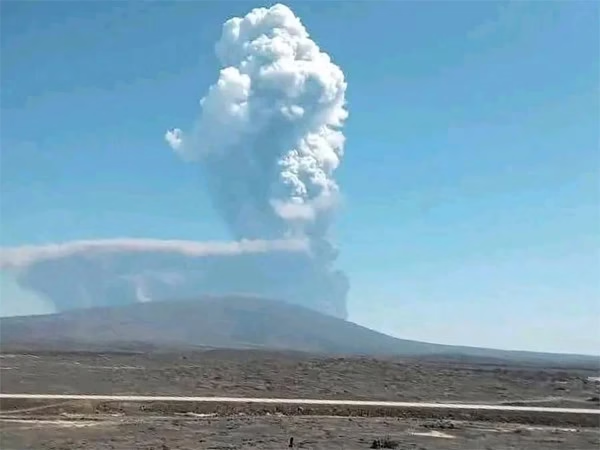
The Haile Gebi volcano eruption in northeastern Ethiopia has shocked scientists and locals alike, as the long-silent volcano became active for the first time in nearly 12,000 years. The unexpected awakening of the Haile Gebi volcano, located about 805 kilometers northeast of Addis Ababa, has sparked fear, concern, and scientific curiosity across the region. While there were no immediate casualties, the Haile Gebi volcano eruption has raised significant questions about safety, environmental impact, and the future of communities living nearby.
A Historic Eruption After Millennia of Silence
According to reports from local officials, the Haile Gebi volcano eruption began on Sunday without any prior record of previous activity. This makes the event historically significant, as it marks the first documented eruption in the region’s known history. Local official Muhammad Saeed confirmed that while no humans or livestock were harmed, the eruption has already affected daily life, agriculture, and the local economy.
Villages surrounding the volcano have been blanketed in ash. For locals who depend heavily on livestock for survival, the situation is alarming. Ash-covered grazing lands mean animals have far less food, threatening long-term sustainability. Many families fear their already-limited resources may shrink even further in the coming days.
Impact on Local Communities
The fallout from the Haile Gebi volcano eruption has created numerous concerns. While immediate danger to life appears low, the long-term consequences could be severe. The thick layers of ash settling on farmlands may reduce soil fertility, damage crops, and contaminate water supplies. This situation poses a risk not only to livestock but to food security in the region.
Muhammad Saeed noted that the livelihoods of nearby communities are at risk, even though the eruption caused no direct injuries. The sudden environmental change, especially in an already vulnerable part of Ethiopia, threatens to disrupt the delicate balance of rural life. Recovering from this volcanic event will likely require government support, international assistance, and long-term rebuilding of affected agricultural systems.
Located in One of Earth’s Most Active Zones
The Haile Gebi volcano lies within the Rift Valley, a region known for its geological activity. The Rift Valley is one of the most active tectonic zones on Earth, where two tectonic plates are constantly pulling apart. This creates deep fissures, volcanic activity, and frequent seismic movements.
The Haile Gebi volcano eruption underscores the unpredictable nature of volcanic systems in tectonic hotspots. With the volcano sitting at an elevation of about 500 meters, the eruption has become a reminder of the geological forces shaping the region. Scientists believe this eruption may provide new insights into the activity of dormant volcanoes and the broader tectonic behavior of East Africa.
Ash Clouds Travel Beyond Borders
According to the Volcanic Ash Advisory Center (VAAC), the ash clouds from the Haile Gebi volcano eruption have spread far beyond Ethiopia. Carried by strong upper-level winds, volcanic ash reached parts of Yemen, Oman, and even India. This wide distribution of ash highlights the powerful force of the eruption.
Volcanic ash can have serious consequences for air quality, aviation safety, and visibility. International flights in nearby regions may need rerouting if ash clouds continue to spread. Additionally, periodic ash fall can affect agriculture in downwind countries and contribute to respiratory issues in affected populations.
Scientific Significance of the Eruption
Experts believe the Haile Gebi volcano eruption could offer valuable research opportunities. Dormant volcanoes that awaken after thousands of years provide rare data on magma movement, changes in tectonic stress, and long-term geological cycles. Volcanologists and researchers are likely to study samples of lava, ash, and gas emissions to understand the composition and behavior of the volcano.
Such eruptions can also help scientists predict future volcanic events in similar regions, ultimately supporting better preparedness for local communities. Understanding the Haile Gebi eruption may contribute to improved hazard mapping and risk management in the Rift Valley.
Challenges and the Path Ahead
For the people living around Haile Gebi, the immediate challenge is managing the aftermath. The ash-covered villages need support, especially with food and livestock care. If ash continues to fall or if the volcano remains active, the situation could worsen.
Authorities will need to monitor the volcano closely. Even though the initial eruption did not cause fatalities, volcanic activity can escalate. Continuous assessment of seismic signals, gas emissions, and ground deformation will be essential to predict future behavior.
The Haile Gebi volcano eruption marks a rare geological event and a sudden challenge for northeastern Ethiopia. After 12,000 years of silence, the volcano’s awakening has left scientists intrigued and communities concerned. While immediate harm was avoided, the long-term impacts on agriculture, livestock, and livelihoods remain uncertain. As ash continues to spread and international experts monitor the situation, the Haile Gebi eruption stands as a powerful reminder of nature’s unpredictability and the importance of preparedness in active tectonic regions.


