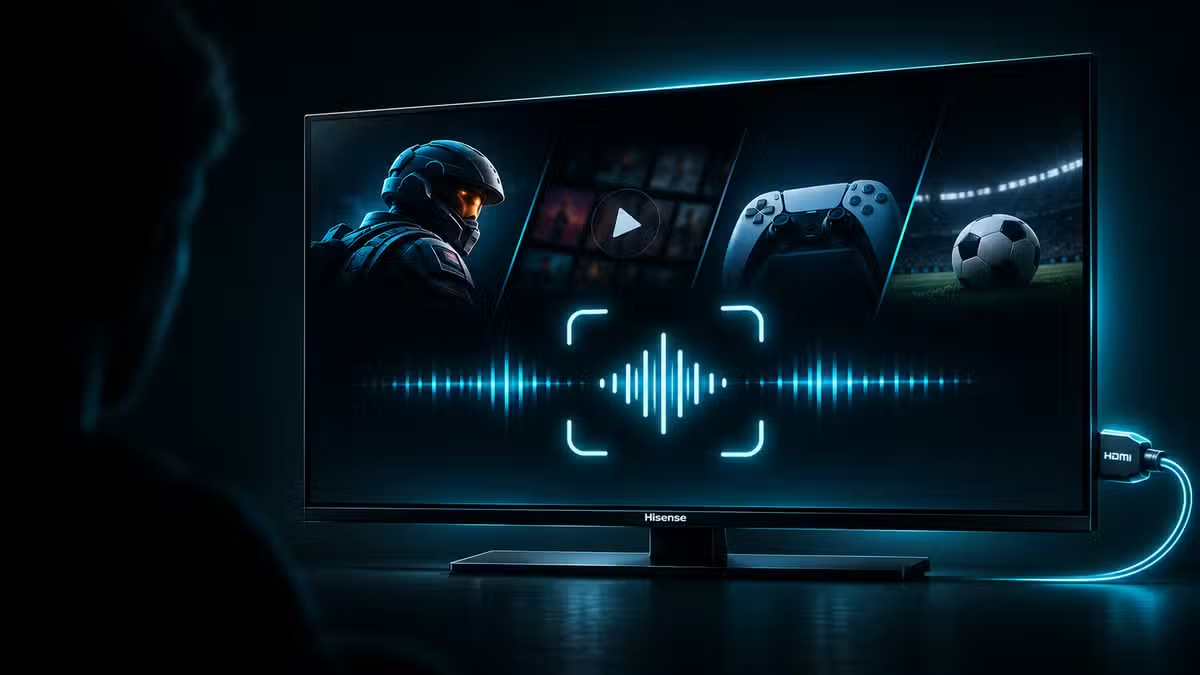
A UK Hisense television owner has raised concerns about Hisense TV tracking after discovering that his television was reportedly sending viewing data to Israeli advertising technology company Nexxen approximately every 2.7 seconds, even though personalised advertisements were switched off.
The investigation, conducted by television owner Gabriel Werneck, found that the tracking system could identify content played through the television, including material from HDMI-connected gaming consoles and streaming devices.
The discovery has renewed concerns about how smart televisions collect, process and share information about users’ viewing habits. It also highlights the importance of understanding privacy settings that may operate separately from personalised advertising preferences.
How Hisense TVs Collect Viewing Information
Werneck examined his Hisense 55U65QEVS television, which runs VIDAA U09.60 software, and investigated the data being transmitted by the device.
According to his findings, background software on the television analyses the sound being played and converts it into digital patterns known as audio fingerprints.
The system reportedly creates a 72-bit fingerprint using approximately one second of audio. It generates a new fingerprint roughly every quarter-second and sends the information in batches of ten.
These fingerprints can then be compared with known recordings to identify television programmes, films and advertisements.
The captured messages also contained a device identifier, timestamps, the selected television input and a field identifying the application being used.
Werneck identified Nexxen as the recipient of the data. The identifier remained unchanged throughout his recorded test.
However, his investigation noted that further checks into the exact information transmitted during HDMI playback were still unfinished.
Nexxen’s Role in Television Advertising
Nexxen is an advertising technology company headquartered in Israel. Its technology supports advertising, audience measurement and data-driven marketing.
The company’s disclosures explain that its software can recognise content played through compatible televisions, including media players, gaming consoles and other connected devices.
Nexxen also states that viewing information can be used to develop audience groups that are shared or licensed to partners for advertising, market research and audience measurement.
This technology is commonly associated with automatic content recognition, or ACR. It allows compatible televisions to identify what is being watched and use that information for different commercial purposes.
The concern raised by the UK owner is that Hisense TV tracking appeared to continue even when personalised advertisements were disabled.
This suggests that turning off personalised advertising may not necessarily disable every form of viewing-data collection.
Texas Lawsuits Raised Similar Privacy Concerns
The issue is not limited to the UK investigation. Similar concerns about smart television data collection have already led to legal action in the United States.
On December 15, 2025, Texas Attorney General Ken Paxton announced lawsuits against five television manufacturers: Hisense, Samsung, LG, Sony and TCL.
The lawsuits alleged that the companies collected viewing information without providing consumers with adequate knowledge or obtaining appropriate consent.
Two days later, on December 17, the attorney general’s office announced a temporary court order preventing Hisense from collecting, using, selling or sharing Texans’ viewing data obtained through automatic content recognition.
The legal action brought additional attention to the privacy practices of major television manufacturers and the information collected by smart devices.
Earlier Research Also Identified HDMI Tracking
Previous investigations have reported similar activity on other smart televisions.
A 2024 study presented at the ACM Internet Measurement Conference examined Samsung and LG televisions in the UK and United States.
Researchers observed viewing-recognition activity while content was being played through HDMI connections. In their tests, disabling the relevant feature stopped traffic to the tracking servers.
Another investigation, the 2026 Watching the Watchers project, reported HDMI tracking on a Supersonic television running VIDAA software.
Researchers found that disabling the relevant setting stopped the associated traffic on the television they tested.
However, findings differed depending on the television’s software and the streaming applications being used. This means results from one model should not automatically be applied to every smart television.
How to Disable Hisense TV Data Sharing
Werneck said the tracking activity on his television stopped after he removed the permission labelled “Agree to Enhanced Viewing Service.”
On his UK television, the setting was available through the following menu:
Settings → Support → Disclaimer and Privacy → Data Sharing, Privacy and EULA
After changing the permission, he recorded no outgoing data packets for 60 seconds while the television displayed a menu.
His subsequent checks, including tests after restarting the television and installing software updates, reportedly showed the same result.
However, these findings relate to the specific model and software version he examined. Other Hisense televisions may use different menus or privacy controls.
Are Hisense TVs in Pakistan Also Affected?
The investigation involved a Hisense television sold in the UK. It does not establish that every Hisense model uses the same tracking system or sends identical information.
Whether Hisense televisions available in Pakistan have the same tracking configuration remains unverified.
VIDAA has indicated that the availability of services and privacy controls can vary by model and market.
For consumers, the findings highlight the importance of reviewing data-sharing permissions rather than relying only on advertising preferences.
As smart televisions become increasingly connected, understanding what information devices collect and where that information goes is becoming an important part of protecting personal privacy.