
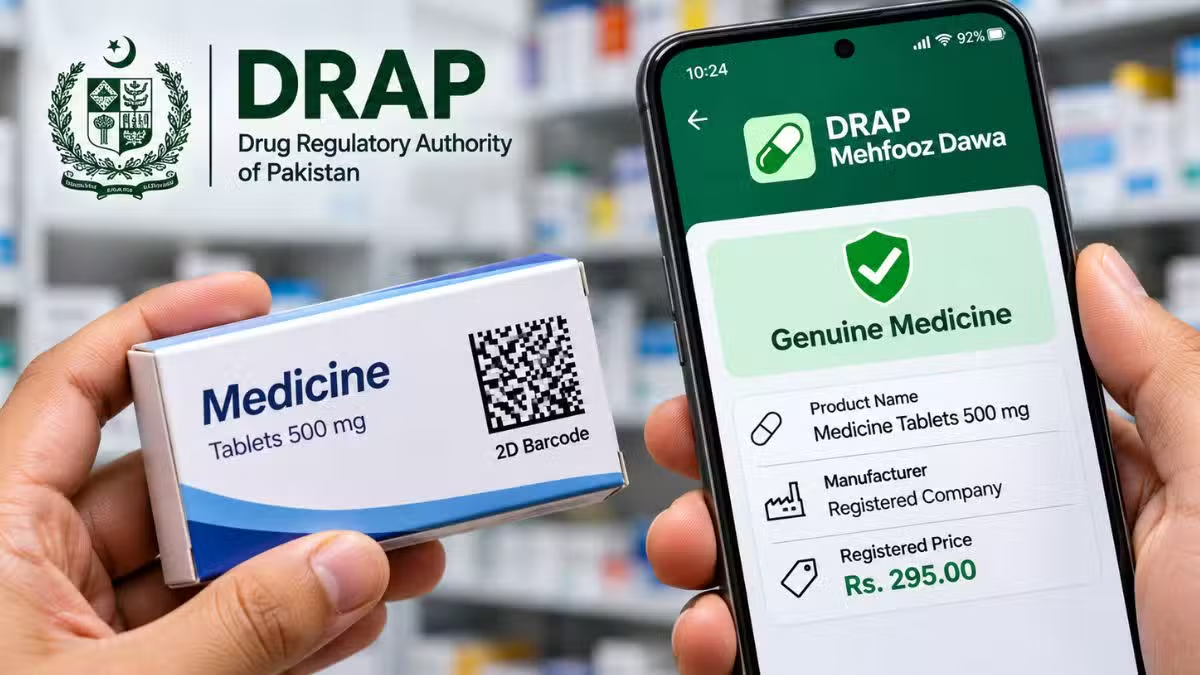
The Mehfooz Dawa app is being promoted by the Drug Regulatory Authority of Pakistan (DRAP) as a digital tool to help consumers verify the authenticity and prices of medicines before purchasing them. Through a 2D barcode scanning system, smartphone users can access registered product information and check whether the medicine they intend to buy matches official records.
The initiative aims to address persistent problems in Pakistan’s pharmaceutical market, including counterfeit medicines, overpricing, expired products and other illegal practices. By making medicine verification more accessible, the system could give consumers greater confidence when purchasing essential healthcare products.
More Than 90,000 Medicines Registered With DRAP
According to Ministry of National Health Services spokesperson Sajid Shah, approximately 800 pharmaceutical companies and more than 90,000 medicines are registered with DRAP.
With such a large number of products available in the market, checking medicine details can be challenging for ordinary consumers. The new digital verification facility is intended to make this process easier.
Using the Mehfooz Dawa app, buyers can scan the 2D barcode printed on medicine packaging with their smartphones. The system then provides information about the registered product, including its details and official price.
This allows consumers to compare the information displayed by the app with the medicine they are purchasing. If the product details or price do not match the registered information, buyers can take that discrepancy into consideration before completing their purchase.
Medicine Track and Trace System Becomes Operational
An important development in Pakistan’s pharmaceutical sector is the introduction of a centralised Medicine Track and Trace System. According to the Ministry of National Health Services, the system became operational on October 9, 2026.
The technology is designed to help authorities monitor medicines as they move through the country’s pharmaceutical supply chain. This means regulators can gain better visibility into the distribution process, rather than relying entirely on traditional inspection methods.
The system could also help authorities identify and recall particular medicine batches if safety complaints, quality concerns or other problems emerge.
For consumers, the Mehfooz Dawa app provides a convenient way to access product information, while the wider tracking mechanism supports regulatory monitoring. Together, these measures are intended to improve transparency and strengthen oversight of medicines distributed across Pakistan.
How to Use the Mehfooz Dawa App
The verification process is designed to be straightforward and requires a smartphone.
Consumers can follow these basic steps:
- Open the Mehfooz Dawa app on a smartphone.
- Locate the 2D barcode printed on the medicine packaging.
- Use the app’s scanning feature to scan the barcode.
- Review the product information displayed by the system.
- Compare the registered price with the amount being charged by the seller.
The purpose is to help buyers determine whether the medicine corresponds with DRAP’s registered product information and whether its price is consistent with official records.
Consumers should still purchase medicines from authorised pharmacies and licensed outlets. Barcode verification is an additional safeguard, not a replacement for professional medical advice or proper pharmacy checks.
Barcode System Faced Years of Delays
Pakistan’s medicine barcode initiative has taken several years to reach implementation.
The government first proposed introducing a barcode-based medicine verification mechanism in 2015. The federal cabinet subsequently approved the initiative in 2017, but administrative delays prevented its full implementation for years.
Health Minister Mustafa Kamal later took notice of the prolonged delay and directed the relevant authorities to move forward with the system.
DRAP subsequently announced October 1, 2026, as the cut-off date for launching the barcode mechanism. The initiative was intended to strengthen efforts against counterfeit and expired medicines, as well as black marketing and other illegal activities.
The system’s operational progress represents an important step towards introducing greater digital accountability into Pakistan’s pharmaceutical market.
DRAP Warns Consumers About Fake Medicines
The launch of digital verification measures comes as DRAP continues to issue safety alerts concerning counterfeit, substandard, adulterated and unregistered medicines.
In an alert issued on November 5, the regulator advised consumers to purchase therapeutic products only from authorised or licensed outlets. It also urged buyers to carefully examine medicines and check their authenticity and condition.
These precautions remain important because counterfeit or poor-quality medicines can create serious risks for patients. Consumers should pay attention to product packaging, expiry dates and other relevant details when purchasing pharmaceutical products.
The Mehfooz Dawa app adds another layer of protection by allowing buyers to check registered medicine information directly through their smartphones.
A Step Towards Safer Medicines in Pakistan
Pakistan’s digital medicine verification initiative could improve how consumers and regulators monitor pharmaceutical products. By combining barcode scanning with a centralised tracking mechanism, DRAP aims to make medicine distribution more transparent and reduce opportunities for illegal practices.
The Mehfooz Dawa app gives consumers a practical way to check medicine details and registered prices before buying them. However, its effectiveness will also depend on public awareness, consistent implementation and cooperation from pharmaceutical companies, distributors and pharmacies.
The Ministry of National Health Services has reiterated the government’s commitment to improving access to safe, effective and quality medicines across the country. Wider adoption of the verification system could support that objective and help build greater public confidence in Pakistan’s healthcare supply chain.