The deployment of weapons in space has become a growing international concern after the United States confirmed that it has space-control weapons capable of defending its forces against hostile actions. The disclosure has prompted strong reactions from China and Russia, both of which warned against turning outer space into a battlefield and called for greater international efforts to prevent an arms race beyond Earth.
The US Space Force confirmed that Washington has on-orbit capabilities but did not reveal exactly what weapons have been deployed or how many systems are involved. Officials said these capabilities can be used for both offensive and defensive purposes.
The announcement has intensified concerns among major powers at a time when advances in space technology are rapidly changing the military balance.
China Warns Against Space Arms Race
China strongly criticized the development of weapons in space, warning that outer space should not become another battlefield.
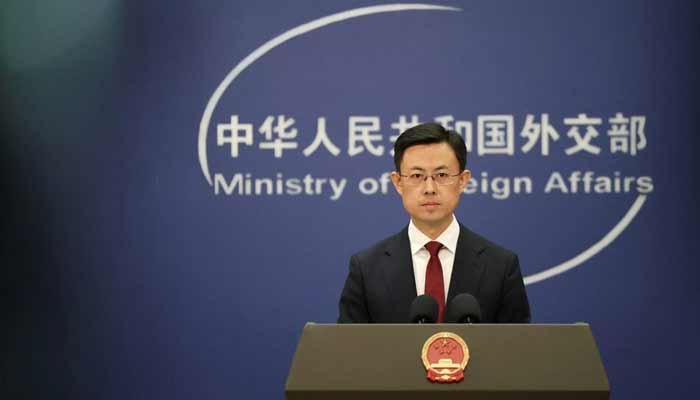
Chinese Foreign Ministry spokesperson Guo Jiakun urged Washington to stop expanding its military capabilities and preparing for potential warfare in space. Beijing has repeatedly called for the peaceful use of outer space and greater international restrictions on military activities beyond Earth.
Analysts, however, said the US announcement was not entirely unexpected. Military capabilities involving space have been known to exist for years, but Washington’s decision to publicly acknowledge them represents a notable change in how the United States discusses its space strategy.
A military analyst based in Hong Kong described the existence of such capabilities as an open secret. He suggested that China’s response could depend heavily on whether the United States moves toward deploying additional offensive systems.
Russia Calls for Demilitarisation
Russia also reacted strongly to the announcement. Kremlin spokesperson Dmitry Peskov said space should remain free of weapons and called for continued international efforts toward the complete demilitarisation of outer space.
Moscow has long advocated restrictions on the deployment of military systems in orbit. Russia and China have also pushed for international negotiations aimed at preventing the placement of weapons in space.
The latest US announcement could therefore increase pressure on the United Nations and other international bodies to address the growing military competition in orbit.
What Are US Space Weapons?
The United States has not provided detailed information about its systems. The US Space Force described “space control” as the ability to challenge and control the space environment using both kinetic and non-kinetic methods.
Non-kinetic capabilities could include technologies designed to interfere with satellites without physically destroying them. These may involve lasers capable of disrupting satellite sensors, electromagnetic interference or cyber operations targeting communications and data links.
Such systems could potentially be used to protect American satellites or disrupt an opponent’s space-based capabilities during a conflict.
Satellites play a crucial role in modern military operations. They support communications, navigation, surveillance, intelligence gathering and targeting. Disabling an opponent’s satellites could therefore significantly affect its ability to conduct military operations on Earth.
Space Militarisation Is Not New
The competition involving weapons in space is not a completely new development. Military powers have been considering the strategic importance of space since the beginning of the space age.
After the Soviet Union launched Sputnik in 1957, the United States and Soviet Union began exploring technologies that could protect their own satellites and potentially interfere with those of an adversary.
The United States, Russia, China and India have all demonstrated or developed capabilities associated with counterspace operations. India, for example, conducted an anti-satellite missile test in 2019, destroying a satellite in low Earth orbit.
These developments demonstrate how space has gradually become an important component of national security strategies.
Can International Law Prevent a Space Arms Race?
The biggest challenge is that existing international law does not comprehensively prohibit all weapons in space.
The 1967 Outer Space Treaty prohibits placing nuclear weapons and other weapons of mass destruction in orbit. However, it does not ban every conventional military capability or technology that can interfere with satellites.
This has created what experts describe as a significant regulatory gap.
Space law expert Laetitia Cesari has argued that the treaty’s restrictions are limited because conventional weapons and certain counterspace technologies fall outside its main prohibitions.
Russia and China have supported efforts to create new international rules preventing the placement of weapons in orbit. Western countries, meanwhile, have generally focused more on developing standards for responsible behaviour in space.
A New Strategic Challenge
The US disclosure could make international negotiations more urgent. As military dependence on satellites increases, countries have greater incentives to protect their own systems while developing ways to disrupt those of potential adversaries.
The danger is that a competition over weapons in space could create a cycle in which one country’s defensive system is viewed by another as an offensive threat.
For now, the United States, China and Russia remain major players in this evolving competition. Whether they can establish stronger international rules before the situation escalates will be one of the most important questions facing global security in the coming years.
Outer space has long been viewed as a domain for scientific exploration and peaceful cooperation. The growing military competition now raises concerns that it could increasingly become another arena of geopolitical rivalry.