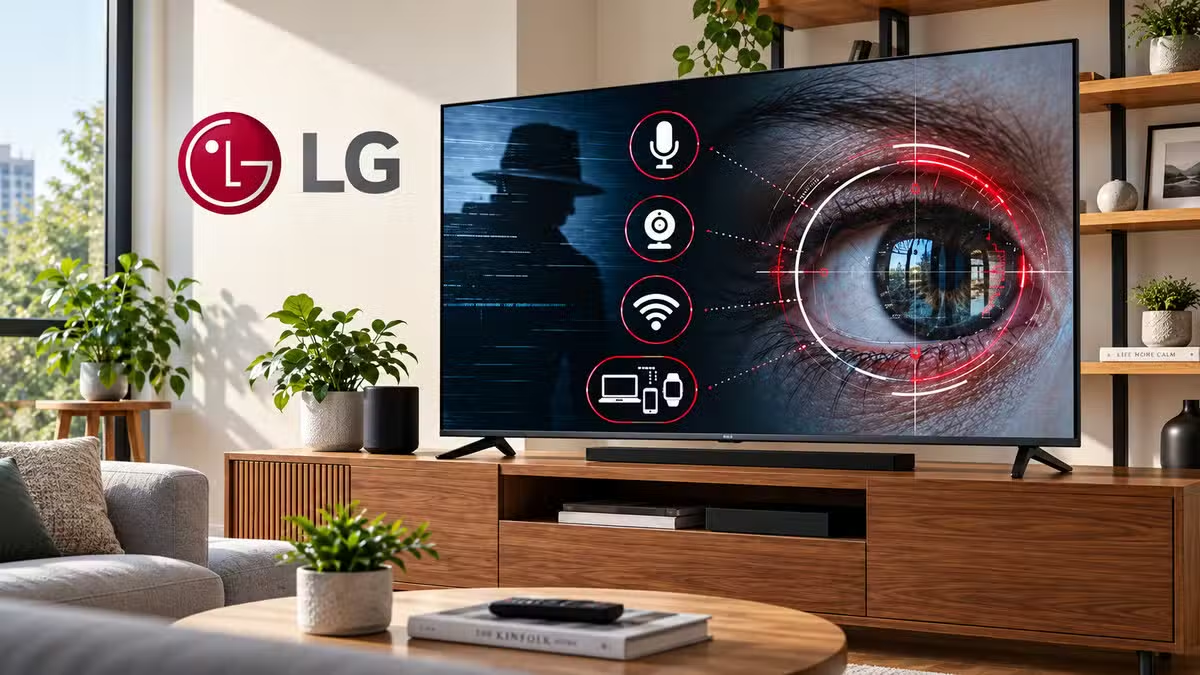
Concerns over LG Smart TV privacy are growing after an investigation by YouTube channel Gamers Nexus alleged that some LG televisions collect extensive information about users, nearby devices and viewing habits. The investigation, conducted with Level1Techs and independent security researchers, examined retail LG OLED televisions and raised questions about what smart TVs may continue doing when owners believe the devices are inactive or disconnected.
According to the investigation, certain data collection activities may continue while an LG television is in standby mode. Researchers also claimed that disconnecting a TV from the internet does not necessarily stop information from being collected. Instead, data could reportedly be stored locally and transmitted once the television reconnects.
LG TVs Reportedly Scan Nearby Devices
One of the major findings discussed in the investigation involved local network activity. Researchers used packet captures to examine communications generated by LG OLED televisions and claimed that the TVs scanned their surrounding networks for other connected devices.
The devices reportedly included smartphones and smartwatches. Such activity has raised questions about how much information a television needs to collect to provide its advertised smart features and whether users are adequately informed about these processes.
The researchers also identified activity related to location information and nearby Wi-Fi networks. According to the investigation, some of this information was reportedly sent to LG Ad Solutions, adding another dimension to the ongoing debate surrounding LG Smart TV privacy.
For consumers, the issue is not simply whether information is collected, but also what type of information is involved, why it is being gathered and how long it is retained.
Microphone Activity Raises Additional Questions
Perhaps the most concerning claim from the investigation involved microphone activity.
Gamers Nexus and its research partners alleged that certain LG televisions could record microphone audio while operating in standby mode. Researchers further claimed that this behavior could continue even when the television was not connected to the internet.
In that scenario, audio files were reportedly stored on the TV itself and transmitted once the device regained an internet connection.
If confirmed, such behavior could raise significant questions about user awareness and consent. Consumers generally expect standby mode to reduce a television’s activity, while an offline device may be assumed to have limited ability to communicate externally.
However, the investigation’s findings highlight why understanding smart-device settings and privacy controls can be important.
Automatic Content Recognition Tracks Viewing Habits
Another major part of the investigation focused on Automatic Content Recognition, commonly known as ACR.
ACR technology can analyze samples of audio and video to identify what is being displayed on a television. This can include content viewed through built-in streaming applications as well as material coming from external devices connected through HDMI.
That means a smart TV may potentially identify viewing activity even when the content itself is coming from another device rather than directly from the television’s built-in applications.
ACR is not unique to LG, however. Research across the smart TV industry has found that similar technologies are used by multiple television manufacturers. These systems can help companies and advertisers understand viewing patterns, but they also raise broader questions about transparency and consumer control.
The findings therefore place LG Smart TV privacy within a much larger industry debate about connected televisions and data collection.
Previous LG Privacy Concerns
This is also not the first time Gamers Nexus has raised concerns about LG software.
In July, the channel reported that some LG monitors were automatically installing an application that collected device information and displayed promotional pop-ups for LG software and McAfee antivirus products.
The issue attracted criticism, and Microsoft reportedly became involved before LG disabled the pop-up advertisements.
The latest investigation has once again drawn attention to LG’s approach to software, data collection and user consent.
What the Investigation Means for Consumers
The claims do not necessarily mean that every LG television behaves in exactly the same way. Different models, software versions and regional settings may have different features and privacy controls.
Nevertheless, the investigation highlights an important issue for anyone purchasing a connected television. Smart TVs are increasingly sophisticated computers with microphones, network connections, applications and advertising technologies built into them.
Consumers may therefore want to review privacy settings, understand ACR options and examine which permissions are enabled on their devices.
The debate over LG Smart TV privacy reflects a wider challenge facing the connected-device industry. As televisions become more intelligent and more deeply integrated with online services, manufacturers will need to provide clearer explanations about what information is collected, when collection occurs and how users can control it.
The investigation has not settled those questions, but it has certainly renewed scrutiny of what smart TVs may be doing behind the scenes.