The Imran Khan Pims transfer has become the latest point of disagreement between the federal government and Pakistan Tehreek-e-Insaf (PTI), after authorities took the party founder to the Pakistan Institute of Medical Sciences (Pims) instead of Shifa International Hospital for a medical examination. The government says the decision was made because of security concerns, while PTI has questioned whether the move complied with the Supreme Court’s directions.
Government Explains Pims Decision
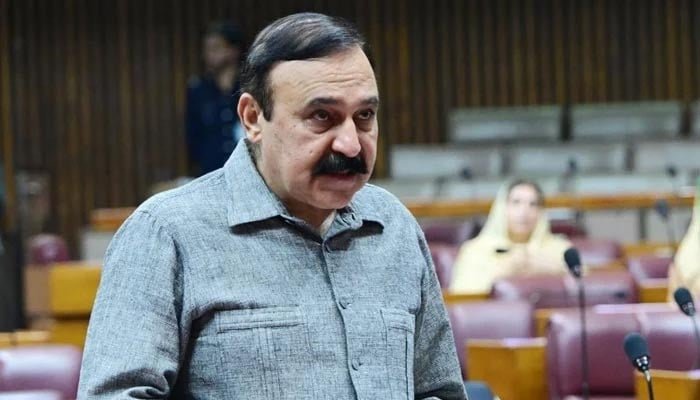
Federal Minister for Parliamentary Affairs Tariq Fazal Chaudhry defended the administration’s decision during an appearance on Geo News programme Aaj Shahzeb Khanzada Kay Sath. He said the decision to take Imran Khan to Pims was made by the administration and was unrelated to the Punjab government.
According to Chaudhry, both Imran Khan’s health and security were considered important. He said authorities knew that choosing Pims instead of Shifa International Hospital could create controversy, but security concerns ultimately influenced the decision.
The minister maintained that the Imran Khan Pims transfer was not intended to deny medical treatment. He said all tests recommended for the former prime minister were available at Pims and emphasized that the government had adopted a zero-tolerance approach toward risks involving his health and security.
Doctors from Shifa International Hospital were also present at Pims during the medical examination, according to the minister.
Supreme Court Order at Centre of Dispute
The controversy follows an August 18 Supreme Court order directing authorities to transfer Imran Khan to Shifa International Hospital for a medical examination.
Instead, the former prime minister was taken to Pims, where the medical assessment was conducted before he was returned to Adiala jail.
The difference between the hospital named in the court order and the facility ultimately used has become the central issue in the dispute. PTI subsequently filed a contempt petition in the Supreme Court, alleging that the authorities had failed to comply with the court’s instructions.
For the government, however, the Imran Khan Pims transfer was justified by the practical security situation surrounding the former prime minister.
Chaudhry argued that Pims could provide the required medical services while allowing authorities to maintain tighter security arrangements.
PTI Raises Concerns Over Family Contact
PTI lawyer Salman Akram Raja offered a different perspective during an appearance on Capital Talk. He said Dr Faisal Sultan had not made any statement that contradicted the court’s order and argued that Imran Khan’s medical report should remain confidential between the doctor, the former premier and his family.
Raja also questioned the government’s position on access to private hospitals. He argued that if another prisoner were in a similar medical condition, that individual should also have the right to receive treatment at a private facility.
More significantly, Raja claimed that Imran Khan’s contact with his family had been severed since December 2. He raised concerns about the reported lack of family meetings and questioned whether other prisoners had been subjected to similar restrictions.
These allegations have added another dimension to the controversy surrounding the Imran Khan Pims transfer, shifting the discussion beyond the choice of hospital to broader questions about prisoner rights, medical access and family contact.
Government Rejects Political Interpretation
The government has repeatedly insisted that Imran Khan’s medical treatment should not be turned into a political issue.
Officials say security considerations are particularly important when dealing with a high-profile political prisoner whose supporters can gather quickly around locations associated with his movements.
The authorities’ argument is that moving Imran Khan to a heavily secured government hospital can reduce potential risks while still providing access to appropriate medical facilities.
At the same time, PTI maintains that compliance with judicial orders should not be compromised by administrative concerns. This difference of interpretation is likely to remain central to the legal proceedings surrounding the Imran Khan Pims transfer.
Political Dispute Continues
The hospital controversy has also become part of the wider political confrontation between PTI and the federal government.
Prime Minister’s Adviser on Political and Public Affairs Rana Sanaullah said negotiations with political parties were possible, but claimed PTI had shown little interest in sitting with the government. He argued that most opposition parties were prepared to engage in political dialogue.
Sanaullah also accused PTI of disregarding certain directions issued by the court, further illustrating the deep mistrust between the two sides.
For PTI, the dispute is about more than one medical examination. The party sees the issue as connected to Imran Khan’s legal rights, access to his family and implementation of judicial orders.
The Supreme Court will ultimately have the authority to consider the competing claims surrounding the Imran Khan Pims transfer and determine whether the government’s explanation satisfies the requirements of its earlier order.
The government’s security argument could become an important part of the legal debate, particularly if officials can demonstrate that moving Imran Khan to Shifa International Hospital posed a credible and specific security risk.
For PTI, the focus will remain on whether the court’s instructions were followed exactly and whether the former prime minister has received adequate access to medical care and family communication.
As the legal and political dispute continues, the Imran Khan Pims transfer has become another flashpoint in Pakistan’s already tense political environment. The eventual court proceedings may clarify the limits of administrative discretion when security concerns appear to conflict with a specific judicial direction.