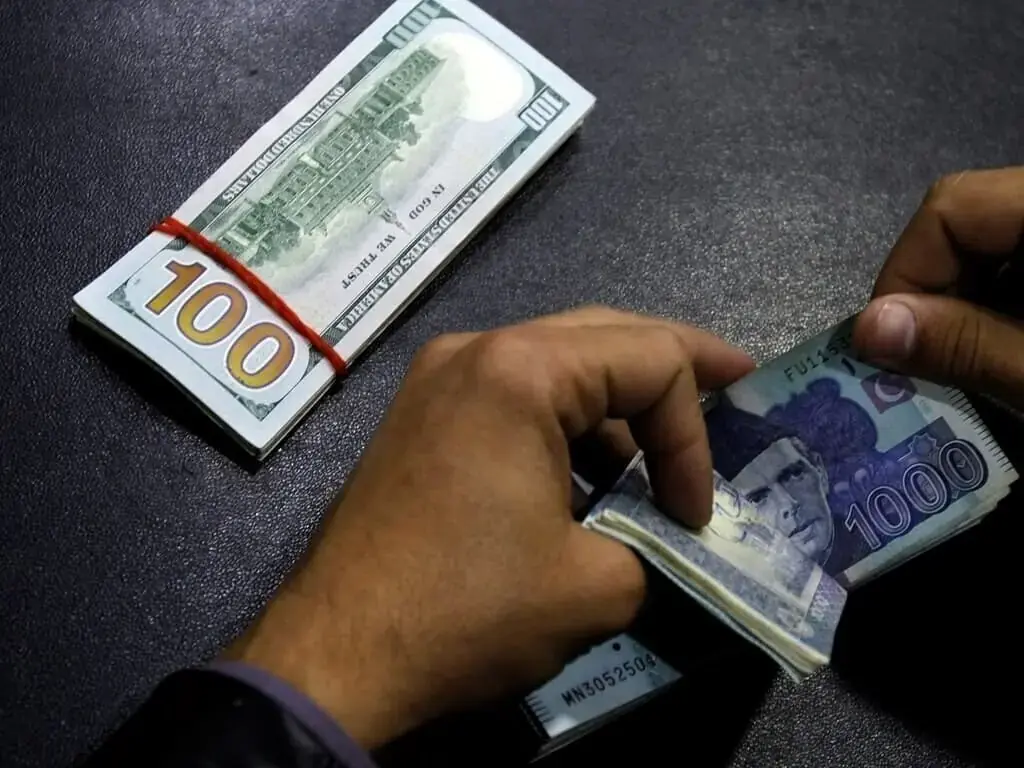
The Pakistani rupee extended its marginal gains against the US dollar on Tuesday, closing at Rs277.61 in the interbank market. The local currency gained one paisa compared with Monday’s closing rate of Rs277.62, continuing a period of relative stability despite pressure from international currency and energy markets.
The modest movement reflects a largely stable foreign-exchange market, with the rupee maintaining its position around the Rs277 level against the dollar. Although Tuesday’s gain was small, currency movements remain closely watched by businesses, importers, exporters and consumers because changes in the exchange rate can influence the prices of imported goods and overall economic activity.
Interbank Dollar Rate
In the interbank market, the Pakistani rupee closed at Rs277.61 per US dollar on Tuesday. The dollar’s selling rate stood at Rs277.81.
| Currency | Buying Rate | Selling Rate |
|---|---|---|
| US Dollar | Rs277.61 | Rs277.81 |
The previous session had ended with the rupee at Rs277.62, meaning the currency improved by just one paisa during Tuesday’s trading.
The limited movement suggests that demand and supply conditions in the foreign-exchange market remained relatively balanced. The rupee has faced considerable pressure over recent years because of import requirements, external financing needs and fluctuations in global commodity prices. Maintaining stability is therefore important for economic planning.
Open Market Performance
The Pakistani rupee recorded mixed movements in the open market against major international currencies.
Against the US dollar, the currency remained unchanged on the buying side at Rs278.46, while its selling rate improved by six paisa to Rs279.41.
The rupee also strengthened noticeably against the euro. Its buying rate increased by 72 paisa to Rs320.85, while the selling rate rose by 82 paisa to Rs323.79.
Against the UAE dirham, the rupee gained seven paisa on the buying side and 11 paisa on the selling side, closing at Rs75.69 and Rs76.35 respectively.
The local currency also gained against the Saudi riyal. Its buying rate improved by nine paisa to Rs73.99, while the selling rate increased by eight paisa to Rs74.60.
These movements indicate that the Pakistani rupee remained broadly stable across several major currencies during Tuesday’s session.
Dollar Remains Under Pressure
International currency markets also influenced the day’s trading environment. The US dollar remained close to multi-month lows against several major currencies.
The euro traded around $1.1581 during early Asian trading, remaining close to the two-month high of $1.1614 recorded on Monday. Sterling stood at approximately $1.3548, also near a three-month peak.
A weaker dollar internationally can influence currency markets across emerging economies, although domestic economic conditions remain an important factor in determining the performance of the Pakistani rupee.
Oil Prices Add to Market Concerns
Another major factor being monitored by currency and financial markets is the movement in global oil prices.
Oil prices increased for a third consecutive session on Tuesday as expectations for an end to the Middle East conflict weakened. Concerns about prolonged disruptions to energy supplies have increased following developments involving Iran and the United States.
Brent crude futures rose 20 cents, or 0.22%, to $91.07 a barrel, while US West Texas Intermediate crude gained 49 cents, or 0.58%, to $84.99.
Higher oil prices can present challenges for Pakistan because the country relies significantly on imported energy. An extended rise in crude prices could increase the country’s import bill and place additional pressure on foreign-exchange reserves.
Outlook for the Pakistani Rupee
The latest figures show that the Pakistani rupee remains relatively stable against the dollar, although the one-paisa improvement is too small to indicate a major shift in market conditions.
For Pakistan, sustained currency stability will depend on several factors, including foreign-exchange inflows, import demand, oil prices, external financing and developments in international markets.
The Pakistani rupee also remains sensitive to regional geopolitical developments. Any prolonged disruption to energy supplies or international shipping routes could affect oil prices and, consequently, Pakistan’s external account.
For now, Tuesday’s closing rate of Rs277.61 indicates another largely stable session for the local currency. Market participants will continue watching oil prices, global dollar movements and domestic economic indicators for signs of the rupee’s next major direction.