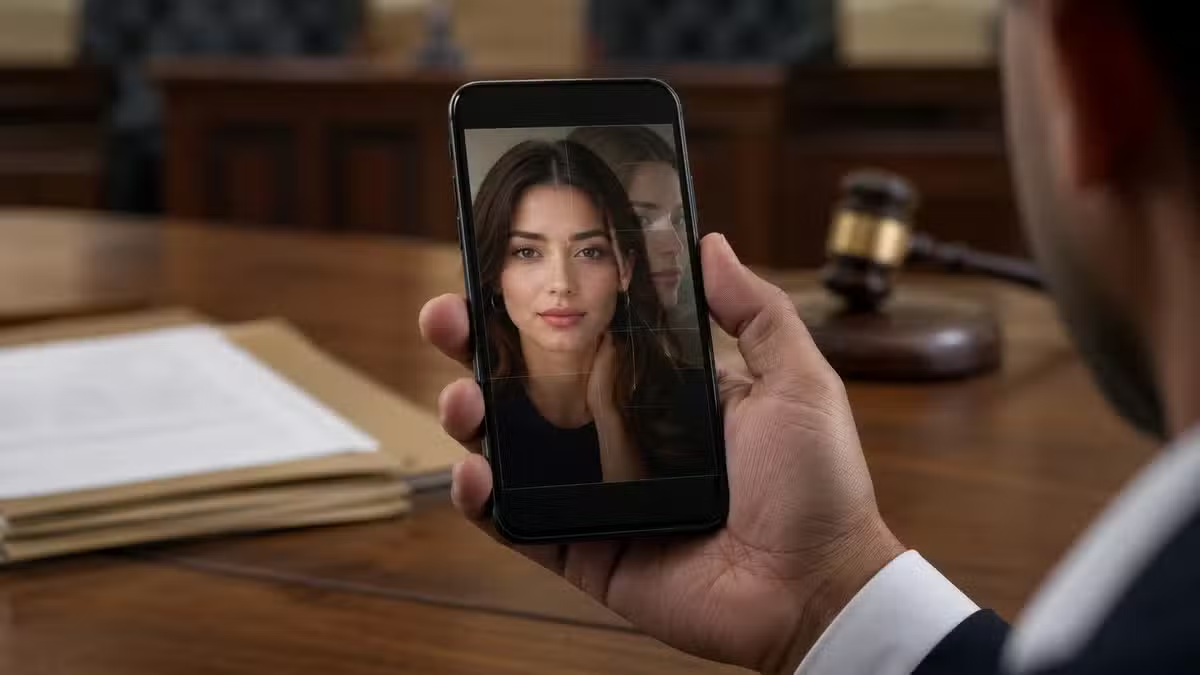
Former Sindh Assembly member Ghulam Rasool Unar has approached a Karachi court seeking legal action over an alleged AI photo fraud involving a woman he says used artificial intelligence-generated photographs while communicating with him online. The case raises questions about the growing risks of digitally manipulated identities and deception on social media.
Marriage Began Through Social Media
According to the application submitted before an Additional District and Sessions Judge South, Unar said he initially became acquainted with the woman through social media.
He claimed that the relationship eventually led to marriage, despite the fact that he had never seen her actual appearance before the ceremony. According to his lawyer, Aamir Nawaz Warraich, the marriage took place through a video call on February 23, 2026.
Unar’s application alleges that whenever he asked the woman to show her face, she sent photographs that were allegedly created or manipulated using artificial intelligence.
The allegations form the central part of the AI photo fraud claim being presented before the court. The case highlights how realistic AI-generated images can potentially make it difficult for people to determine whether an online profile represents a real person.
Alleged Use of AI-Generated Images
Unar’s lawyer told the court that the woman also wore a veil during the video-call marriage ceremony. According to the application, this meant Unar did not get a clear opportunity to verify her appearance before the marriage.
The former lawmaker claimed that he was shocked when he eventually met the woman in person because her appearance was significantly different from the photographs she had previously shared.
He subsequently distanced himself from her but initially chose not to end the marriage.
The allegations, if established, could make the case an unusual example of how artificial intelligence is being used in personal relationships. While digitally manipulated images have existed for years, increasingly sophisticated AI tools can now create highly realistic photographs that may be difficult for ordinary users to identify as artificial.
Dispute Escalated After Divorce
The situation reportedly became more serious after Unar decided to divorce the woman on August 2.
According to his application, the woman allegedly began demanding tens of millions of rupees following the divorce. His lawyer further alleged that she engaged in blackmail and issued threats against Unar.
The application also claims that the woman published allegedly fabricated photographs and social media posts suggesting that Unar had died.
These allegations have not been established in court, and the woman will have an opportunity to respond through the legal process.
Unar has also reportedly filed a complaint with cybercrime authorities over the matter. The case could therefore involve both conventional criminal allegations and issues related to digital deception and online harassment.
Court Seeks Police Report
The Karachi court has now taken initial steps to examine the allegations. Notices have been issued to the SP Complaint Cell and SHO Defence.
The police have been directed to submit a report by August 17. The report could help the court determine what action, if any, should follow based on the allegations and available evidence.
The court proceedings will be important because claims involving AI photo fraud require careful examination of digital evidence. Investigators may need to determine whether the photographs were actually AI-generated, who created them and how they were distributed.
Digital records, social media accounts, messages, photographs and other electronic material could become relevant to establishing what happened.
Growing Risks of Digital Identity Fraud
The case also highlights a broader problem emerging with the rapid development of artificial intelligence.
AI image-generation tools can create convincing faces, photographs and other visual material within seconds. While these technologies have legitimate applications in entertainment, design and business, they can also be misused to create false identities or misleading evidence.
An AI photo fraud case can be particularly difficult because victims may initially believe that the images they receive are genuine. Traditional methods of verifying someone’s identity may not always be sufficient when communication takes place entirely online.
Experts have increasingly warned social media users to verify identities through multiple methods before making important personal or financial decisions.
Importance of Digital Verification
The allegations made by Unar demonstrate why people should exercise caution when developing relationships online. A photograph alone may no longer provide reliable proof of someone’s identity.
Video calls, independent verification, consistent social media histories and other forms of authentication can help reduce the risk of deception. However, even video communication can potentially be manipulated using increasingly sophisticated technology.
The AI photo fraud allegations in this case will ultimately have to be assessed through evidence and the legal process. Until investigators complete their work and the court considers the findings, the claims remain allegations.
The upcoming police report could provide the next major development in the case and determine whether further legal proceedings will follow. Regardless of the outcome, the dispute highlights an increasingly important challenge of the digital age: distinguishing genuine identities from carefully constructed artificial ones.