The Indus Robotics Expo 2026 has highlighted Pakistan’s growing ambitions in robotics, artificial intelligence, and autonomous technologies. Held at the Pak-China Friendship Centre in Islamabad, the two-day event brought together researchers, startups, universities, government organizations, and technology companies to showcase locally developed innovations. From combat robots and surveillance drones to AI-powered machines and robotic dogs, the exhibition demonstrated how Pakistan is steadily building its capabilities in advanced technology while encouraging innovation across multiple industries.
A Platform for Pakistan’s Emerging Technologies
The Indus Robotics Expo 2026 served as more than just a technology exhibition. It provided a platform where research projects moved beyond laboratories and into public view. Visitors had the opportunity to witness practical applications of robotics and autonomous systems that could shape the country’s future in manufacturing, healthcare, agriculture, transportation, and national security.
More than 25,000 registered visitors attended the event, including students, entrepreneurs, engineers, investors, researchers, and families. Their participation reflected growing public interest in emerging technologies and the role they could play in Pakistan’s digital future.
Advanced Robotics on Display
One of the biggest attractions at the exhibition was the impressive collection of locally developed robots and autonomous machines. Visitors explored a wide variety of technologies designed to solve real-world challenges.
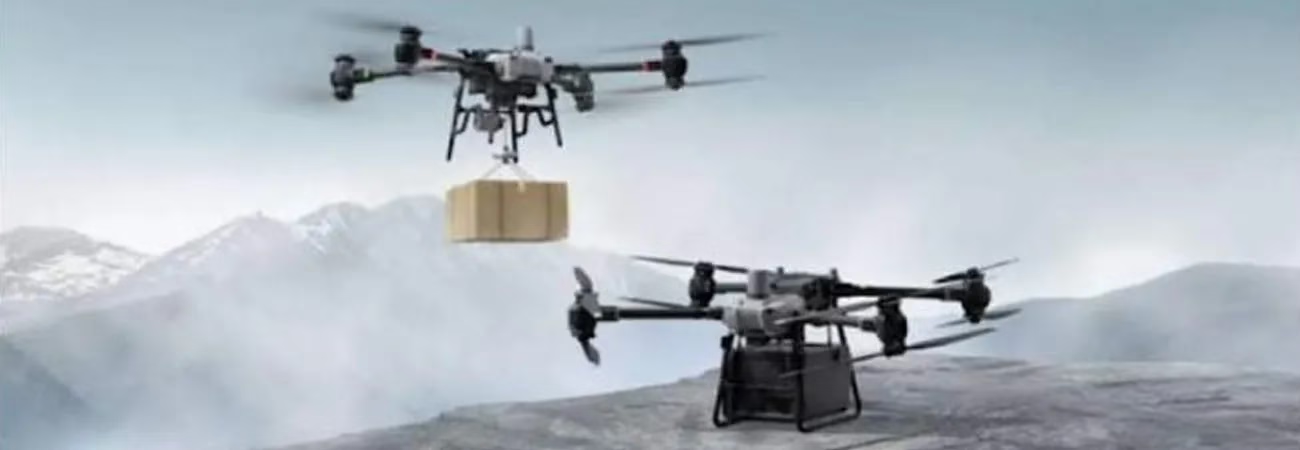
The National Radio and Telecommunication Corporation displayed robotic dogs, unmanned aerial vehicles, unmanned ground vehicles, logistics robots, and counter-drone systems. These technologies demonstrated Pakistan’s increasing focus on automation and intelligent defense solutions.
Another highlight was the Cu-bit 4.0 Pro, an autonomous ground vehicle capable of obstacle avoidance, environmental sensing, robotic manipulation, and independent navigation. Such platforms have potential applications in industrial inspection, logistics, surveillance, and disaster response.
Universities and research centers also presented robotic arms, drone systems, machine vision technologies, Edge AI solutions, and multi-robot coordination systems, highlighting the country’s growing expertise in robotics research.
AI and Human-Machine Collaboration
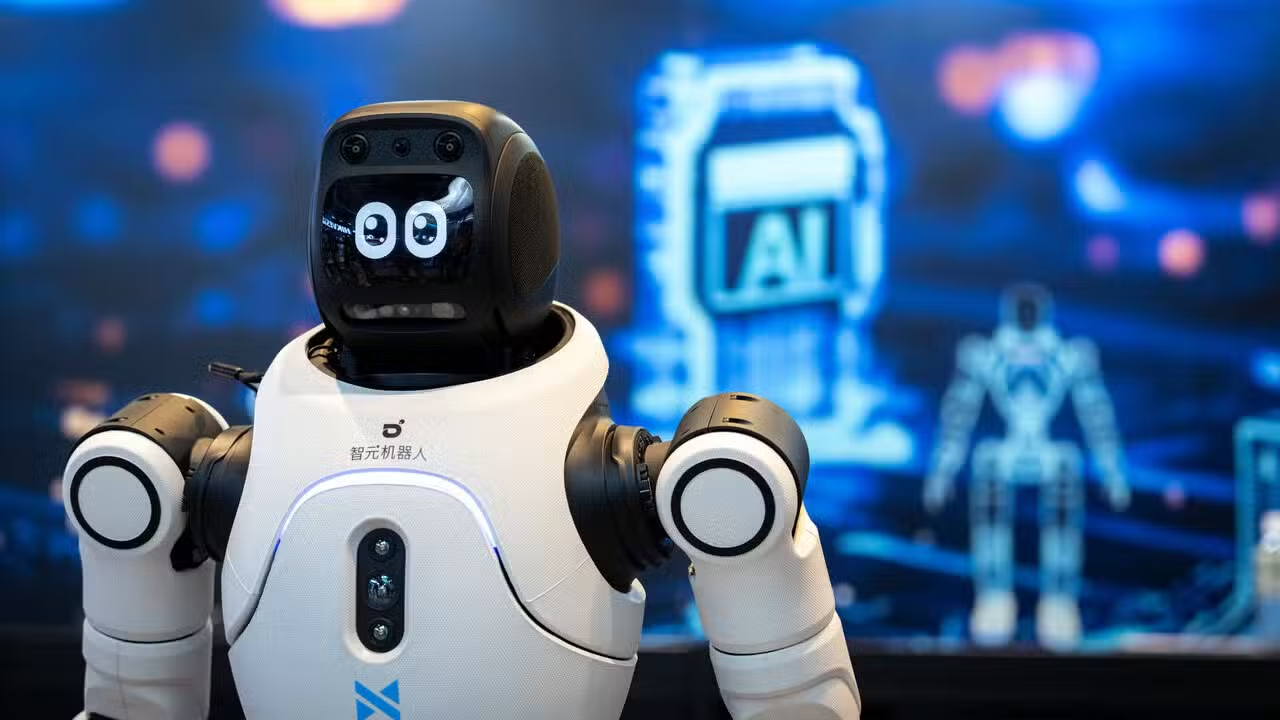
Artificial intelligence remained one of the central themes throughout the Indus Robotics Expo 2026. Many exhibits focused on AI-powered decision-making systems designed to improve efficiency across different industries.
Visitors experienced demonstrations of brain-controlled robotics, healthcare service robots, hospitality automation, industrial robots, maritime autonomous systems, and intelligent manufacturing solutions.
These innovations showcased how AI is moving beyond software applications into physical machines capable of interacting with the real world. Human-machine collaboration is expected to become increasingly important as businesses adopt smarter automation technologies.
Live Competitions and Interactive Experiences
The event wasn’t limited to static displays. Several live activities allowed visitors to experience robotics firsthand.
One of the most exciting attractions was RoboWars, where locally built combat robots competed inside specially designed arenas. Engineering students and startups also participated in the Robotics and Autonomous Systems Innovation Challenge by presenting original technology solutions before industry experts.
Together, both competitions offered prize money worth Rs. 5 million, encouraging innovation among young engineers and technology entrepreneurs.
Live drone demonstrations attracted large crowds, while interactive workshops gave participants the opportunity to build and program robots themselves. The Immersive Experience Dome used 360-degree digital presentations to introduce visitors to emerging technologies and Pakistan’s vision for a technology-driven economy.
These activities made the exhibition engaging for both technical professionals and the general public.
Government Support for Innovation
A major announcement during the Indus Robotics Expo 2026 was the launch of the Pakistan Venture Fund. The government committed an initial investment of $20 million to support startups and technology innovation.
Prime Minister Shehbaz Sharif also introduced the SPARK and ELEVATE initiatives, which aim to help researchers transform innovative ideas into commercially successful businesses.
These programs are expected to strengthen Pakistan’s startup ecosystem by providing financial support, mentorship, commercialization opportunities, and industry partnerships for local innovators.
Government representatives emphasized that investing in research and technology is essential for long-term economic growth and global competitiveness.
Strengthening Pakistan’s Robotics Ecosystem
The exhibition also hosted several panel discussions and workshops involving industry experts, researchers, policymakers, and entrepreneurs.
Topics included robotics commercialization, startup development, AI adoption, industrial automation, research collaboration, technical education, and the future of robotics policy in Pakistan.
Experts discussed the importance of stronger partnerships between universities, government institutions, and private companies to accelerate technological development.
Participants agreed that building a successful robotics ecosystem requires continued investment in research, skilled professionals, modern infrastructure, and supportive public policies.
Why the Expo Matters
The Indus Robotics Expo 2026 represents an important milestone in Pakistan’s technological journey. Rather than relying solely on imported technologies, local researchers and companies are increasingly designing innovative solutions tailored to national needs.
Industries such as manufacturing, agriculture, healthcare, logistics, education, and defense can all benefit from locally developed robotics and AI systems. As these technologies mature, they have the potential to improve productivity, reduce operational costs, and create high-skilled employment opportunities.
The exhibition also inspired students and young innovators by demonstrating that world-class technology can be developed within Pakistan.
The success of the Indus Robotics Expo 2026 highlights the country’s growing commitment to innovation and advanced technologies. By bringing together government agencies, universities, startups, investors, and private companies, the event created valuable opportunities for collaboration and future investment.
As robotics and artificial intelligence continue transforming industries worldwide, Pakistan appears determined to become an active participant in this technological revolution. Continued support for research, commercialization, and entrepreneurship will be essential in helping local innovations compete internationally.
With increasing investment, stronger industry partnerships, and a talented pool of young engineers, Pakistan’s robotics sector has the potential to become an important driver of economic growth, technological advancement, and global competitiveness in the years ahead.