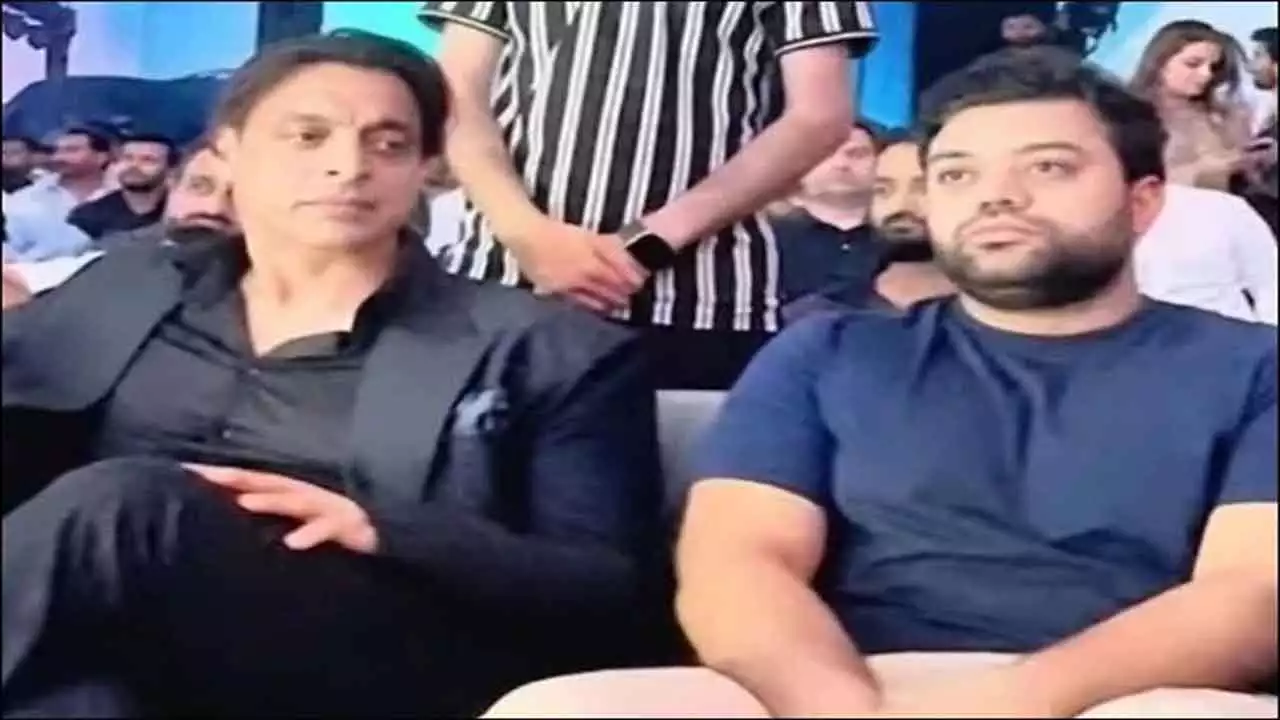
The Ducky Bhai Shoaib Akhtar viral video recently sparked widespread discussion on social media, with many users claiming that the popular YouTuber intentionally ignored former Pakistani fast bowler Shoaib Akhtar during a public event. As the clip spread across different platforms, speculation about a possible disagreement between the two personalities quickly gained attention. However, Ducky Bhai has now addressed the controversy, explaining what actually happened and urging people not to believe unverified claims.
How the Viral Video Started
The controversy began after a short video from a public event circulated on social media. In the clip, some viewers believed that Ducky Bhai walked past Shoaib Akhtar without greeting him. The brief footage led several social media pages to suggest there was tension between the two.
As the Ducky Bhai Shoaib Akhtar viral video gained traction, online discussions intensified. Many users started sharing their own opinions, while others created theories about the relationship between the YouTuber and the former cricketer.
However, the video only captured a few seconds of the event and did not show what happened before the cameras started recording.
Ducky Bhai Responds to the Rumors
To clear the confusion, Ducky Bhai shared a detailed explanation through his Instagram Story.
According to him, he had already met Shoaib Akhtar privately before the event officially began. The two greeted each other, exchanged a brief conversation, and Shoaib Akhtar later proceeded to the stage.
Ducky Bhai explained that since they had already met away from the cameras, there was no reason to repeat the greeting simply for public attention.
He emphasized that the Ducky Bhai Shoaib Akhtar viral video created an inaccurate impression because it only showed a small part of the overall event.
Why There Was No Second Greeting
One of the key points raised by Ducky Bhai was that people often expect public figures to perform interactions for the camera.
He clarified that personal greetings do not always happen in front of an audience. Since both individuals had already met privately, there was nothing unusual about not greeting each other again during the event.
According to Ducky Bhai, the viral clip lacked important context, causing many viewers to reach incorrect conclusions.
His response highlighted how short videos can sometimes present incomplete stories that are easily misunderstood.
Different Careers, Different Circles
Ducky Bhai also addressed speculation about his relationship with Shoaib Akhtar.
He pointed out that both belong to entirely different professions.
While Shoaib Akhtar is one of Pakistan’s most famous former cricketers, Ducky Bhai is known primarily as a digital content creator and YouTuber.
He explained that they do not work together regularly, nor do they have a professional partnership that requires every interaction to be publicly documented.
Using a lighthearted comparison, Ducky Bhai remarked that he is not a cricketer, and Shoaib Akhtar is not a wrestler, emphasizing that their careers operate in completely different fields.
Social Media and Quick Judgments
The Ducky Bhai Shoaib Akhtar viral video also highlights a larger issue surrounding social media.
Short video clips often spread rapidly without providing complete context. Viewers sometimes make assumptions based on only a few seconds of footage, leading to unnecessary controversies.
Algorithms on social media platforms tend to promote content that generates reactions, making sensational claims spread faster than verified information.
In many cases, creators and public figures later find themselves responding to rumors that began with incomplete or misleading videos.
Importance of Verifying Information
At the end of his message, Ducky Bhai appealed to his followers to avoid spreading rumors without confirming the facts.
He encouraged users to verify information before sharing it and to avoid turning ordinary situations into unnecessary controversies.
His response serves as a reminder that not every viral clip accurately represents reality.
Public figures are often judged based on limited footage, making responsible social media behavior increasingly important.
Public Reaction
Following Ducky Bhai’s clarification, many users appreciated his calm explanation.
Several supporters noted that social media frequently exaggerates ordinary moments, especially when famous personalities are involved.
Others agreed that meeting someone privately before an event naturally eliminates the need for another formal greeting on camera.
While some users continued discussing the original clip, many accepted Ducky Bhai’s explanation after learning about the events that took place before the recording.
The controversy gradually shifted from speculation toward a broader conversation about responsible content sharing.
Lessons from the Incident
The Ducky Bhai Shoaib Akhtar viral video demonstrates how easily misunderstandings can develop online.
A few seconds of video, viewed without context, created assumptions about personal relationships that were later proven inaccurate.
As social media continues to influence public opinion, viewers are increasingly encouraged to seek complete information before forming conclusions.
Likewise, content creators and celebrities often face situations where they must clarify stories that emerge from incomplete or edited clips.
The Ducky Bhai Shoaib Akhtar viral video initially sparked rumors suggesting that the YouTuber had deliberately ignored the former cricket star. However, Ducky Bhai’s explanation revealed that both had already met privately before the event, making another public greeting unnecessary.
The incident serves as an important reminder about the dangers of drawing conclusions from short viral clips without understanding the full context. As online platforms continue to shape public conversations, verifying facts and avoiding unnecessary speculation remain essential for responsible social media use.