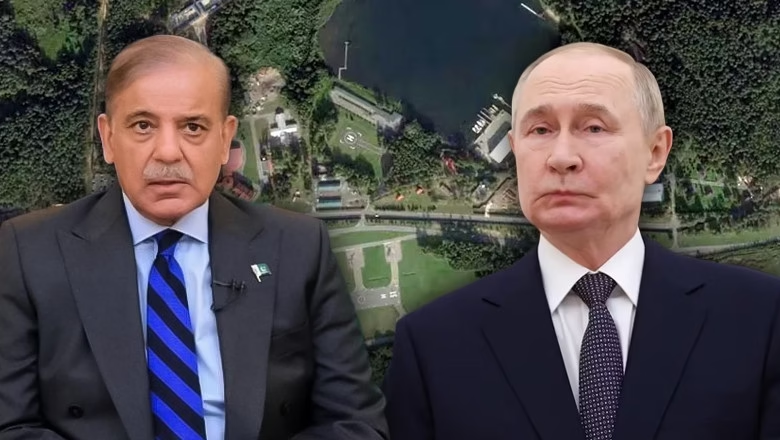
PM Shehbaz Sharif Iran Visit has become a major focus of regional diplomacy as Pakistan’s prime minister prepares to travel to Tehran to attend the funeral prayers of Iran’s late Supreme Leader, Ayatollah Ali Khamenei. The visit reflects Pakistan’s longstanding relationship with Iran and highlights Islamabad’s commitment to maintaining close diplomatic ties with its neighboring country during a period of regional uncertainty.
According to Pakistan’s Foreign Office, Prime Minister Shehbaz Sharif will leave for Tehran accompanied by Deputy Prime Minister and Foreign Minister Ishaq Dar, along with other members of the federal cabinet. The delegation is expected to participate in the funeral ceremony and convey Pakistan’s condolences and solidarity with the Iranian people.
Pakistan Reaffirms Support for Iran
The PM Shehbaz Sharif Iran Visit is being viewed as a symbolic gesture that underscores the close relationship between Pakistan and Iran. Islamabad has consistently emphasized the importance of cooperation with Tehran on regional security, economic development, and diplomatic engagement.
By attending the funeral prayers, Pakistan aims to demonstrate respect for Iran’s leadership while reaffirming its support during a significant national event.
Officials have stated that the visit reflects Pakistan’s commitment to maintaining friendly relations with neighboring countries and promoting regional stability through diplomacy.
Funeral Ceremony in Tehran
Iranian authorities have announced that funeral prayers for Ayatollah Ali Khamenei will take place in Tehran before his burial in his hometown of Mashhad.
The ceremony is expected to attract leaders, diplomats, and official delegations from several countries, making it one of the largest international gatherings in the region this year.
Pakistan’s participation highlights the importance Islamabad places on its diplomatic relationship with Tehran despite ongoing regional challenges.
Next Stop: Turkiye
After concluding his visit to Iran, Prime Minister Shehbaz Sharif is scheduled to travel to Turkiye at the invitation of President Recep Tayyip Erdogan.
During his stay in Istanbul, the prime minister is expected to address a business conference aimed at strengthening trade, investment, and economic cooperation between Pakistan and Turkiye.
The back-to-back diplomatic visits reflect Pakistan’s broader strategy of enhancing political and economic partnerships with key regional allies.
Progress in US-Iran Talks
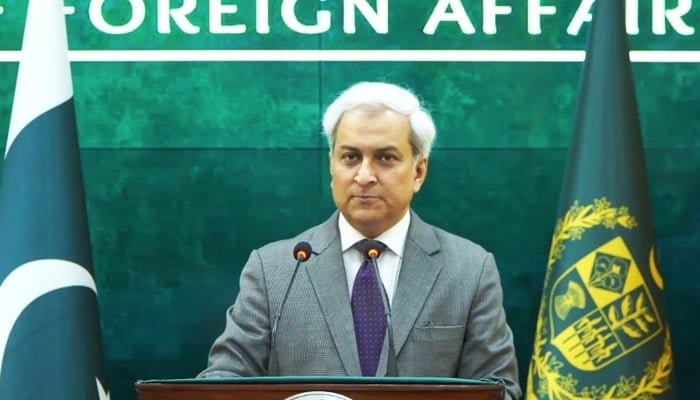
During the weekly media briefing, the Foreign Office also shared updates regarding indirect negotiations between the United States and Iran.
Pakistani mediators reportedly held separate meetings with representatives from both countries in Doha, where discussions focused on various aspects of the Islamabad Memorandum of Understanding (MoU).
Officials described the talks as constructive and confirmed that both sides agreed to continue negotiations in future rounds.
Pakistan, alongside Qatar, will continue facilitating dialogue aimed at reducing tensions and encouraging peaceful diplomatic solutions.
Active Regional Diplomacy
Pakistan’s diplomatic engagement has remained active across multiple international fronts.
According to the Foreign Office, Deputy Prime Minister Ishaq Dar has maintained communication with senior officials and foreign ministers from several countries, including Saudi Arabia, China, Bahrain, Iran, the United Kingdom, and the European Union.
These diplomatic efforts demonstrate Pakistan’s intention to remain actively involved in regional dialogue while promoting cooperation on political, economic, and security issues.
Pakistan Raises Security Concerns
The Foreign Office briefing also addressed recent security developments following an attack on a Pakistan Rangers camp in Karachi.
Officials stated that Afghanistan’s charge d’affaires was summoned to register Pakistan’s protest regarding the incident.
Pakistan also delivered a formal diplomatic note to Afghan authorities, expressing concerns over the alleged involvement of Afghan nationals in cross-border terrorism.
The government reiterated its commitment to protecting national security while calling for greater regional cooperation against terrorism.
Focus on the Indus Waters Treaty
Another important issue discussed during the briefing was the recent international seminar on the Indus Waters Treaty held in Islamabad.
Participants emphasized the importance of respecting international agreements governing shared water resources and resolving disputes through peaceful dialogue.
Pakistan once again rejected any unilateral suspension of the treaty and stressed that water should never be used as a political or strategic weapon.
Officials warned that any attempt to restrict shared water resources could undermine regional peace and create long-term security challenges.
Importance of Regional Cooperation
The PM Shehbaz Sharif Iran Visit comes at a time when the Middle East and South Asia continue to face complex geopolitical challenges.
Diplomatic engagement, constructive dialogue, and mutual respect remain essential tools for reducing tensions and building stronger regional partnerships.
Pakistan has consistently advocated peaceful negotiations as the preferred approach for resolving disputes, whether related to security, trade, or international agreements.
Visits such as this reinforce Pakistan’s commitment to maintaining balanced foreign relations while promoting stability throughout the region.
The PM Shehbaz Sharif Iran Visit represents more than attendance at a state funeral. It reflects Pakistan’s broader diplomatic approach of maintaining strong regional relationships, supporting neighboring countries during difficult times, and encouraging dialogue over confrontation.
With additional engagements planned in Turkiye and continued participation in international mediation efforts, Pakistan is positioning itself as an active diplomatic player focused on regional cooperation and peaceful conflict resolution. As developments continue across the region, such high-level visits remain important opportunities to strengthen partnerships and promote long-term stability.