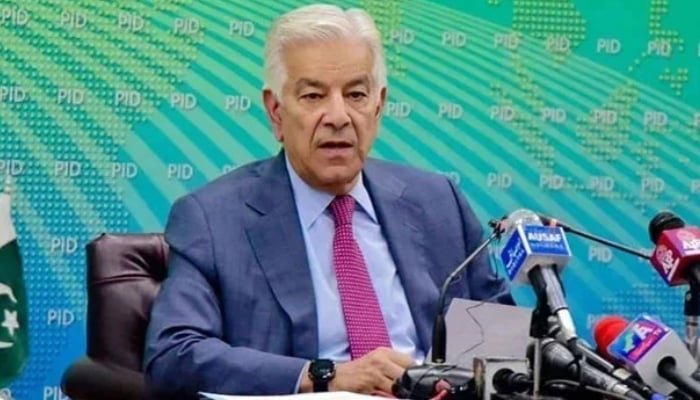
The ongoing AJK Political Controversy has become a major topic of discussion in Pakistan’s political landscape, drawing strong reactions from leaders of both the government and coalition parties. The debate intensified after Defence Minister Khawaja Asif defended his remarks regarding Azad Jammu and Kashmir (AJK) while responding to criticism from Pakistan Peoples Party (PPP) Chairman Bilawal Bhutto-Zardari.
The issue has not only highlighted differences within the ruling alliance but has also reignited discussions about representation, refugee rights, and the political future of Azad Kashmir. As tensions continue, political observers believe the matter could influence both parliamentary debates and public opinion in the coming weeks.
How the Controversy Began
The AJK Political Controversy emerged following remarks attributed to Khawaja Asif regarding residents of certain areas in Azad Kashmir. His comments were met with criticism from various political figures, particularly PPP Chairman Bilawal Bhutto-Zardari, who argued that such statements could worsen an already sensitive situation.
Bilawal expressed concern that federal ministers should focus on reducing tensions rather than making statements that could deepen divisions. He urged Prime Minister Shehbaz Sharif to ensure greater discipline within the government and called for a more constructive approach to resolving the issue.
The debate quickly moved beyond political circles and became a subject of widespread discussion among citizens, media analysts, and civil society groups.
Khawaja Asif Defends His Position
Despite criticism, Khawaja Asif maintained his stance during a television interview. Addressing the AJK Political Controversy, he stated that he respected differing opinions but remained firm in his viewpoint.
The defence minister emphasized that political narratives were being built around the issue and argued that certain aspects of the debate were being misrepresented. At the same time, he acknowledged Bilawal’s right to criticize his comments and welcomed political discussion on the matter.
His remarks demonstrated that while disagreements exist within the coalition, leaders continue to engage through democratic channels rather than allowing disputes to escalate further.
Bilawal Bhutto-Zardari’s Response
Bilawal Bhutto-Zardari has emerged as one of the most vocal critics during the AJK Political Controversy. Speaking in the National Assembly, he questioned why statements that could offend residents of Azad Kashmir were being made by members of the federal government.
He argued that leaders should focus on building unity and understanding rather than creating additional political tensions. Bilawal also stressed the importance of respecting the identity and concerns of people living in Azad Kashmir.
His comments reflected the PPP’s position that dialogue and sensitivity are essential when dealing with issues connected to Kashmir and refugee communities.
The Refugee Seats Issue
At the heart of the AJK Political Controversy is the debate surrounding reserved seats for refugees in the Azad Kashmir Legislative Assembly. The issue gained momentum ahead of upcoming elections, where a number of seats have been allocated to refugees who were displaced from Indian-administered Jammu and Kashmir.
Supporters of the arrangement argue that refugees have a legitimate right to political representation because they remain directly connected to the Kashmir dispute. They believe their voices should be included in decision-making processes affecting the region.
Critics, however, have raised concerns about electoral balance and representation. These differing perspectives have contributed to protests and political disagreements across various parts of Azad Kashmir.
Calls for Mediation
Amid the growing debate, several political leaders have suggested that mediation could help reduce tensions. During discussions surrounding the AJK Political Controversy, the name of JUI-F chief Maulana Fazlur Rehman was repeatedly mentioned as a possible facilitator.
Many politicians view him as a senior leader capable of engaging with different political groups and encouraging dialogue. Calls for mediation indicate that political stakeholders are seeking peaceful solutions rather than allowing divisions to deepen.
Constructive engagement could help address concerns related to representation, elections, and political rights while preserving stability in the region.
Why Azad Kashmir Matters Politically
The AJK Political Controversy highlights the unique political significance of Azad Kashmir within Pakistan’s broader national framework. The region holds both symbolic and strategic importance because of its connection to the longstanding Kashmir dispute.
Political developments in Azad Kashmir often attract national attention, especially when they involve questions of representation, governance, or constitutional rights. As a result, statements made by federal leaders are frequently examined closely by political parties and the public.
This sensitivity explains why the current debate has generated such strong reactions across the political spectrum.
The Importance of Responsible Political Dialogue
One of the key lessons emerging from the AJK Political Controversy is the importance of responsible communication in politics. Public statements made by influential leaders can shape perceptions and influence public sentiment.
Political analysts argue that careful language and respectful dialogue are essential when discussing issues that affect identity, representation, and regional interests. Open discussion remains important, but it should be conducted in a manner that promotes understanding rather than division.
Building consensus through dialogue can help strengthen democratic institutions and encourage political stability.
The AJK Political Controversy has become a significant political issue involving coalition partners, parliamentary debate, and public discussion. While Khawaja Asif has defended his remarks, Bilawal Bhutto-Zardari and other leaders have called for a more cautious and unifying approach.
As discussions continue, attention will remain focused on how political leaders address concerns related to refugee representation and electoral arrangements in Azad Kashmir. Ultimately, constructive dialogue and mutual respect will be essential in finding solutions that reflect democratic values and promote long-term stability in the region.